Saturday, 13 August 2016

Tennyson Down and The Needles

On Wednesday, Jayne and I spent a good few hours walking around Tennyson Down and The Needles, on the far west of the Island. The weather was kind, and we enjoyed some great views, along with some new insects, flowers and a "year tick"; a Dartford Warbler.

We started our walk in the High Down Chalk Pit car park, an old quarry. There were plenty of buddleia bushes here, so we had a quick scan, picking up a number of butterflies; 2 Dark Green Fritillaries, 2 Red Admirals, 1 very tatty Ringlet and  3 Painted Ladies (our first of the year). We also had a male Migrant Hawker, and 2 Peregrine Falcons (1 adult and a juvenile bird).

Painted Lady

We walked up from the car park ( a very steep walk!!), to the monument on the top of Tennyson Down, and walked the 2 miles to The Needles. Along the way we spotted dozens of Gatekeepers, Meadow Browns  and Chalkhill Blues, along with another Red Admiral and another Painted Lady. Bird wise we saw a male Stonechat, with at least 3 juveniles, 3 migrating Wheatear, a hunting Kestrel,  Herring and Great Black-backed Gull, and, best of all, a Dartford Warbler.

When we arrived at The Needles, we spent some time looking around the Old and New Battery, and also enjoyed watching a pair of Ravens flying around, and then sat on the floor, and perched on a telephone mast!

The Needles

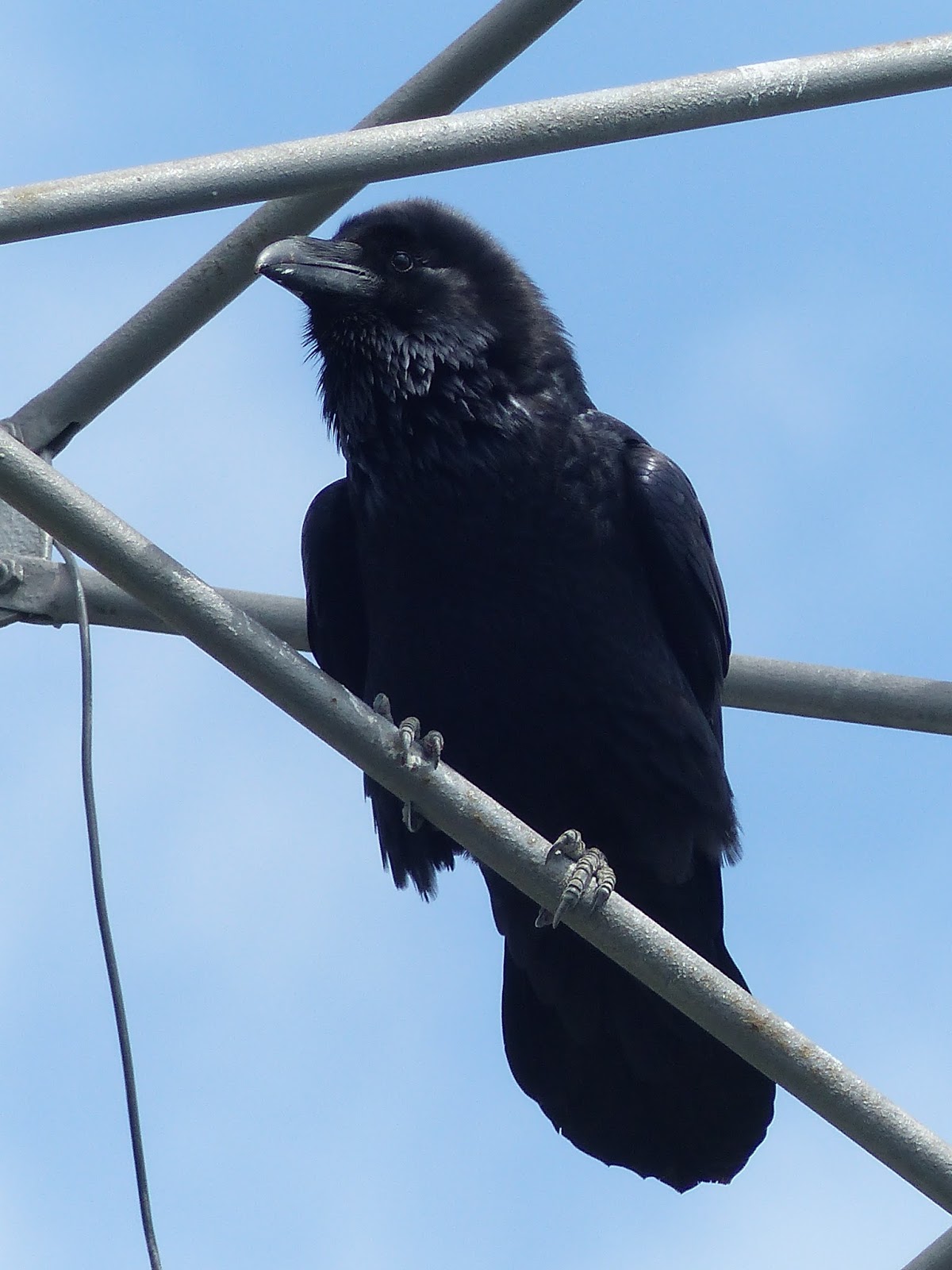
Raven
The last thing I wanted to mention was a type of flower called Yellow Wort. This is a chalk loving species, and was quite  common all along the chalky downs. It's a new plant for me, and I like the way the leaves wrap around the stalk. Unfortunately, the petals close up unless there's full sun, so my photo isn't great, but it was nice to see, nonetheless.

Yellow Wort

Year List update:
165 - Dartford Warbler

Friday, 12 August 2016

Mottistone Gardens

While we're away, Jayne and I like to visit National Trust properties in the area. On Monday we went to the National Trust's Mottistone Gardens, and had a few hours walking around the gardens and nearby countryside.

Whilst there, we looked at the wildlife, especially the insects, and Jayne spotted this amazing creature, a Great Green Bush-cricket.

Great Green Bush-cricket

This one was a male, and about 4cm long, but the females can grow up to 7cm long! More details here.

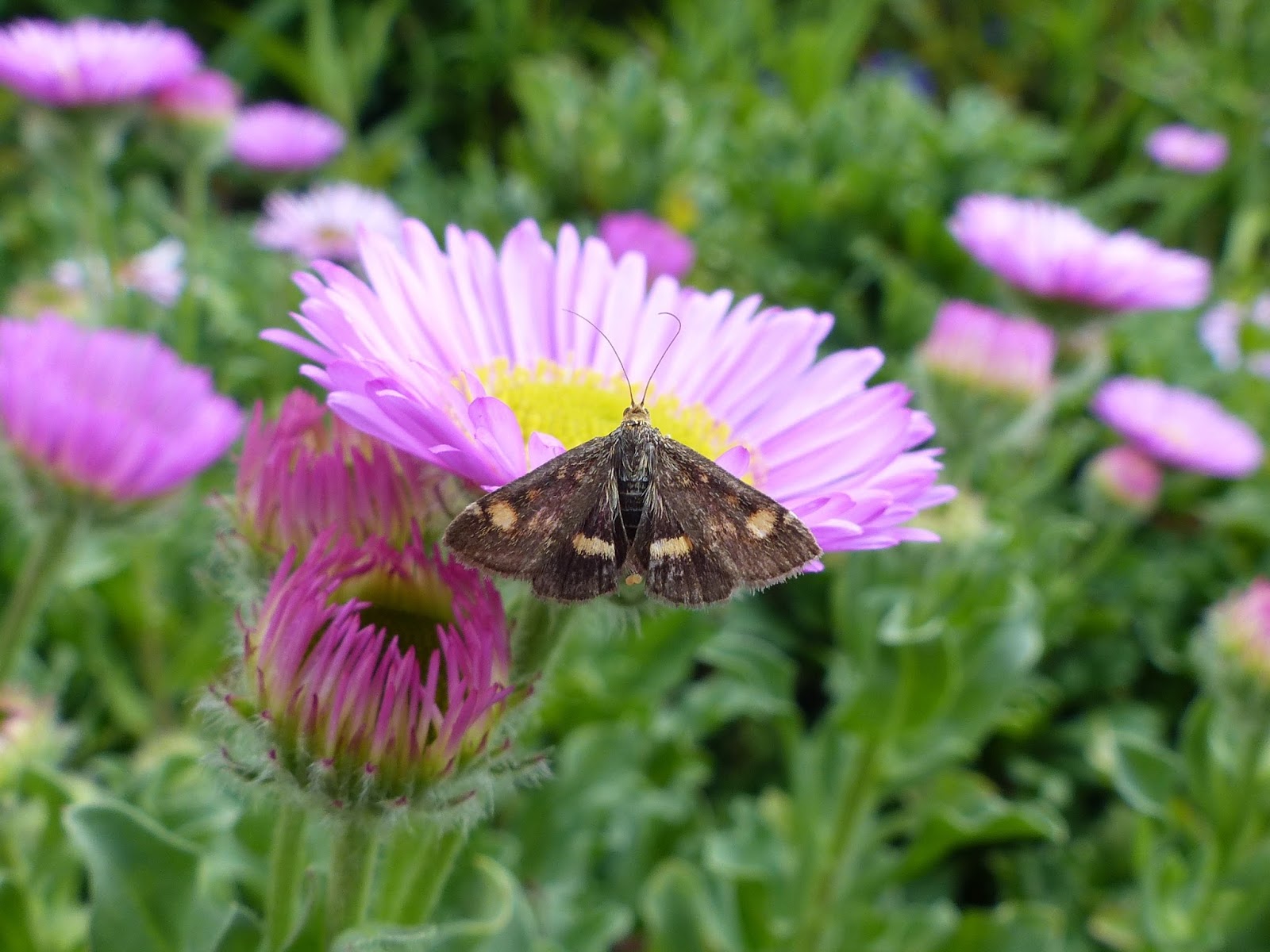
Whilst there, we also spotted Gatekeepers, Meadow Browns and Red Admiral, along with this lovely Mint Moth, which I believe is Pyraustra aurata.

Pyraustra aurata

Thursday, 11 August 2016

Newtown NNR

One of the places I was very keen to revisit on the Isle of Wight was the National Trust's  Newtown National Nature Reserve, a large estuary on the north of the island. I last visited this reserve back in 2002, when I was last on the island, looking for a very special bird, the Little Egret. At the time, this was a new species for me, and still a relatively rare bird in Britain. We managed to see one then, after quite a lot of searching. This year's visit was much easier, with 4 birds seen.

Newtown Estuary and Little Egret

The tide was well in when we got to Newtown, so we didn't see too many other coastal birds, except a couple of Oystercatchers, 3 Curlews, Redshank (heard) and 2 Greenshank.

As well as the birds, we also spent some time looking at the insects on the reserve. Butterflies seen were: Comma (1), Peacock (1), Gatekeeper (dozens), Meadow Brown (dozens), Speckled Wood (3), Small Skipper (1), Common Blue (3 - 2 males and a female) and Marbled White (1).  

Common Blue (male)

Two other insects of note were both new to me and Jayne, namely Wasp Spider and a type of horsefly (nice!!) called Tabanus autumnalis.

The Wasp Spider is a relative newcomer to Britain, and is still confined mainly to the south of the country (see here).  We saw 3 webs within a small, 1m patch of grass near the public bird hide. The pictures show the upper and underside of a female. She sits in the middle of the web. The male is much smaller, and less colourful, and  is usually eaten by the female after mating.

Wasp Spider (upperside)

Wasp Spider (underside)

The final picture is of the horsefly Tabanus autumnalis. This "beauty", about 2cm long, landed on my bag, and then flew into a bush, where I was able to get this photo. Luckily, it didn't manage to take a bite out of me or Jayne.

Tabanus autumnalis

Sunday, 7 August 2016

Isle of Wight Insects

Following on from my first post about the butterflies of the Isle of Wight, I thought I'd better blog about some of the other insects that Jayne and I have spotted this week. We've been pretty lucky with sightings, including a few new ones!

First up, the dragonflies and damselflies. In addition to the Beautiful Demoiselle, we have seen Azure Damselfly (pair ovipositing in a small pond at Osborne House), Common Blue Damselfly (1 male at the Garlic Farm) and Blue-tailed Damselfly (6+, including ovipositing females) at Ventnor Botanical Gardens.
Azure Damselflies

Dragonflies seen are: Emperor (1 male flying around Ventnor Botanical Gardens), Common Darter (1 female in Ventnor Botanical Gardens), and a hawker species, either Migrant or Southern Hawker seen flying around the Botanical Gardens.

Surprisingly, we've also managed to see a few moths. The first one ( a new species for me) was a Brown-Tail that was found on a chair outside a restaurant in Ventnor last Saturday. Also seen in Ventnor during the day was a Magpie. The last three species were seen yesterday evening. Two, Mother of Pearl (new) and Small Magpie were seen near St Boniface Down in Ventnor, whilst the final species, Jersey Tiger (new) was found on the cliff side at Wheelers Bay, just outside Ventnor.

Brown -Tail

Mother of Pearl

Jersey Tiger

I haven't seen too many different hoverflies so far, but I have managed to see a couple of Volucella species; Volucella pellucens (also known as Great Pied Flycatcher) and Volucella zonaria. The first species, V. pellucens is a common species seen regularly in Derbyshire and at Linacre, whilst the second species; V. zonaria, is much less common. It was first reported in Britain in the late 1930's and has not yet, as far as I know, been reported in Derbyshire. It is also the largest and most impressive British hoverfly, growing up to 19mm in length! So far we've seen this species at Ventnor Botanical Gardens and at Osborne House.

Volucella zonaria
The last two species of note are two beetles; Rose Chafer seen at Ventnor Botanical Gardens (thanks Jayne) and an, an interesting beetle called a Bloody-nosed Beetle seen at the Garlic Farm today.

Rose Chafer

Bloody-nosed Beetle

Saturday, 6 August 2016

Isle of Wight Birds- Part 1

Jayne and I have been in the Isle of Wight for a week today, so I thought it was about time I wrote a post about birdlife here.

The first birds we saw this week, were, of course, gulls, with Black-headed, Mediterranean and Herring Gull all seen on the ferry trip over to the island. Great Black-backed was added when we arrived in Ventnor (1 adult and 1 juvenile), a Common Gull was seen in Bembridge and a single Lesser Black-backed Gull was on the seafront at Sandown today.

Mediterranean Gull (Ryde Esplanade)

Tern species seen so far are Sandwich (5 in Bembridge harbour - year tick), and Common Tern.

The crow family has also been well represented so far with Carrion Crow, Jackdaw, Rook, Magpie and Jay all seen in and around Ventnor, while 2 Ravens were also seen flying over Afton Down.

Waders are a bit thin on the ground, but we have seen Oystercatcher, Redshank and a single Greenshank (at Bembridge on Thursday- year tick).

As far as birds of prey are concerned, we've had a couple of sightings of Peregrine Falcon (1 mobbing a Raven at Afton Down, and 1 over Osborne House). We've also had daily sightings of Common Buzzard, and a couple of Kestrel sightings (1 over the cliffs in Ventnor, and 1, which, judging by the state of the plumage, is a juvenile, perched on the cliff side below Afton Down yesterday morning).

Kestrel

Passerines seen include Stonechat (2 on Afton Down), Meadow Pipit (several birds, including one carrying food on Afton Down), Skylark ( 1 singing on Afton Down), Linnets (group of c.10 on Afton Down), House Sparrow, Starling, Yellowhammer, Swift (10 flying over Afton Down on 5th, and a large flock of c.30 over Sandown today), Swallow, Goldfinch, Wren, Robin ( seen daily, including juveniles in Shanklin Chine and Osborn House), Blackbird, Green Woodpecker (heard daily from bed (!) and seen around Ventnor Park), Great-spotted Woodpecker (heard in Osborne House gardens/woods), Woodpigeon, Collared Dove, Blue, Great and Long-tailed Tits.

Water birds seen are: Mute Swan (in Ryde), Mallard, Little Egret (1 in Ryde) and Coot.

This isn't bad considering we haven't been "bird watching" yet, so hopefully we can add a few more species next week.

Year List update:
163: Greenshank
164: Sandwich Tern

Wednesday, 3 August 2016

Two new insects

Yesterday, Jayne and I spent some time in and around Shalfleet, a small village on the north coast of the Isle of Wight. We went there to search for a new species of damselfly; Beautiful Demoiselle. This is a damselfly with a limited range in the UK, and, as far as I know, is absent from Derbyshire. Find out more about this species on the British Dragonfly Society's website here.

We managed to find 4 individuals (3 males and 1 female) flying around the churchyard, and I managed to get a photo of one of the males perched up.

Beautiful Demoiselle

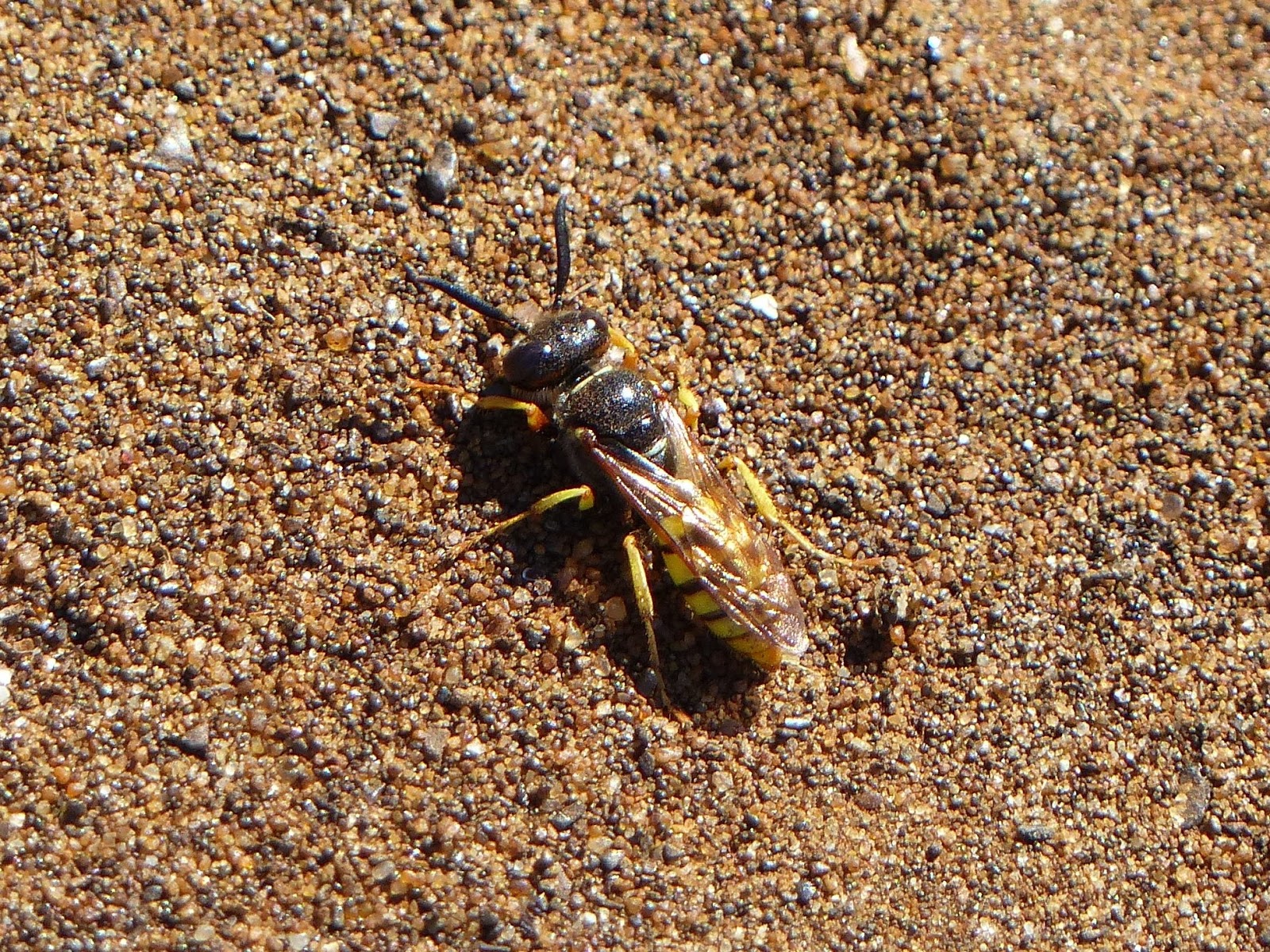
The other new species of insect I've seen this week is a species of Bee Wolf, the European beewolf or Philanthus triangulum. This insect isn't a bee at all, but a species of solitary, mining wasp. It is mainly found in the south of England, but appears to be spreading north. The individual I saw was on the cliff sides at Compton Chine on Sunday. More information here.

European beewolf

Monday, 1 August 2016

Year List update- 6 new species

I haven't blogged about this year's "year list" for a few weeks, and, as you can see from the title of this post, I've managed to add 6 new species to this year's list.

The first two species, Grasshopper Warbler and Sabine's Gull, were added at Derbyshire Wildlife Trust's Carr Vale reserve a few weeks back.

The next two species, Sedge and Garden Warbler, were added last weekend, whilst ringing at Poolsbrook Marsh last weekend.

The final two species, Yellow-legged Gull and Little Egret were added this week. The Yellow-legged Gull, a nice adult bird, was reported on the Sheffield Bird Study Group website, as being on playing fields in Low Edges, a five minute drive from home, so I popped along and "ticked" it. The Little Egret was seen today fishing in the Boating Lake on the Esplanade in Ryde, Isle of Wight.

Whilst in Ryde, Jayne and I also spotted 5 moulting adult Mediterranean Gulls. Although not a year tick, there are always nice to see and photograph. Here are a couple of photos.


Mediterranean Gull (back bird) and Black-headed Gull

Year List update:
157 – Grasshopper Warbler
158 – Sabine's Gull
159 – Sedge Warbler
160 – Garden Warbler
161 – Yellow-legged Gull
162 – Little Egret