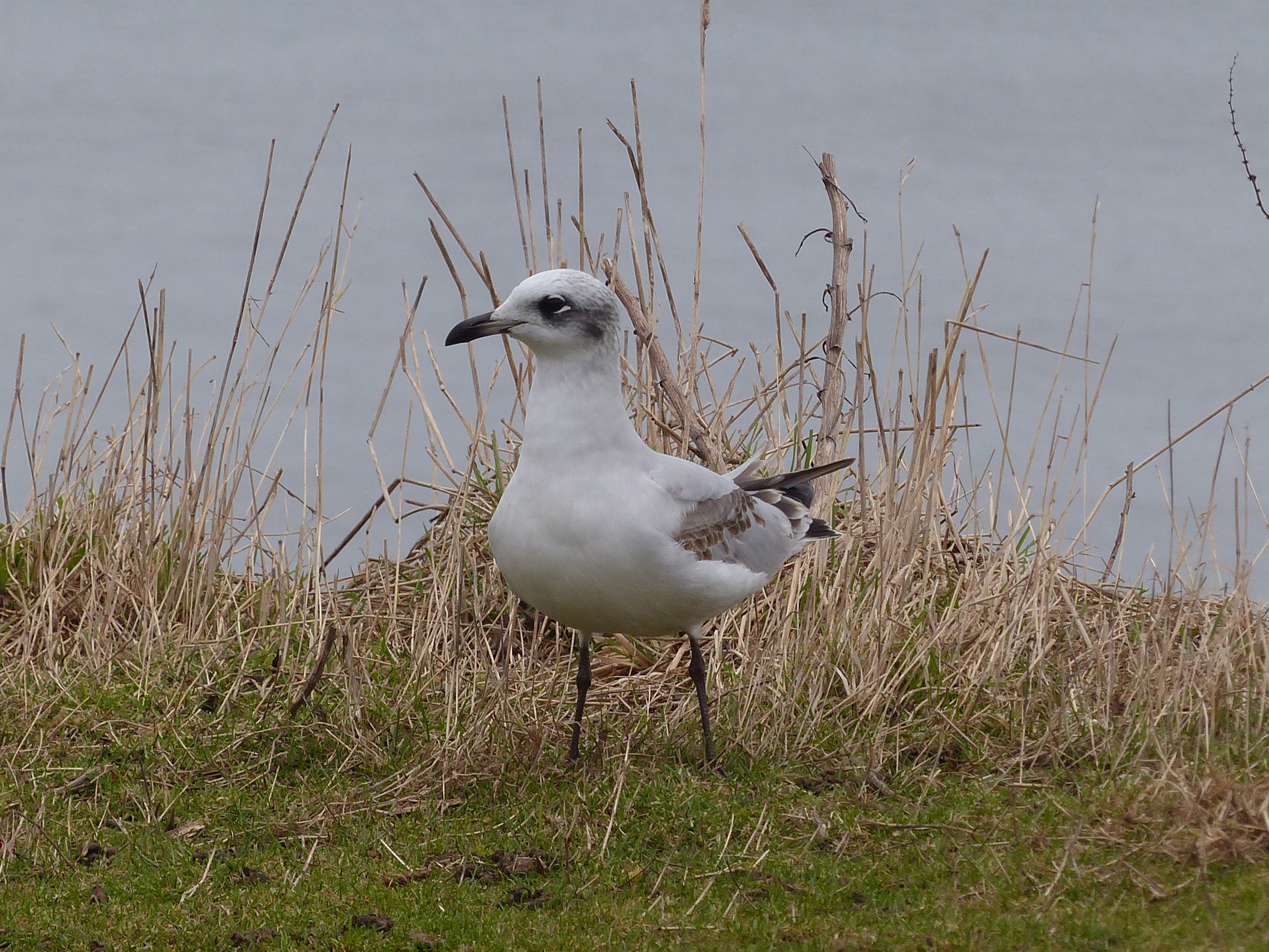
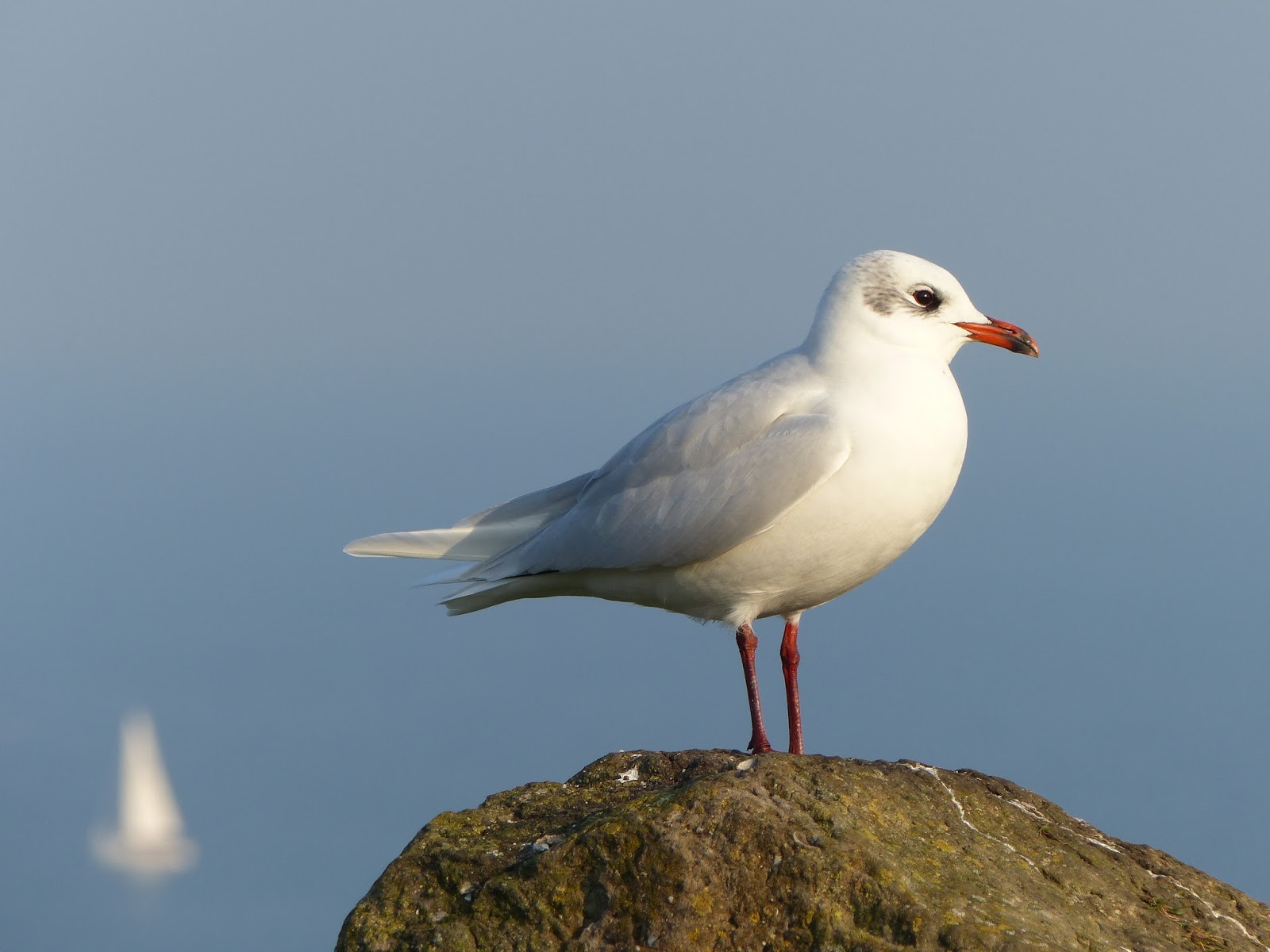
Most years at around this time, Jayne and I pop across to Scarborough for a day to spot a few birds, including one of my favourite birds, the Mediterranean Gull. This year, we saw four individual birds, an adult, a 3rd calendar year (dark primaries, born in 2021) and two first winters (2nd calendar years, born in 2022).
Saturday, 4 February 2023
Scarborough Med Gulls
Wednesday, 2 September 2020
Northumberland Birding
This Bank Holiday weekend I was up in Northumberland with Jayne. We had visits to St Mary's Island (Whitley Bay), Amble and Bamburgh, and recorded some nice birds, including six "year ticks".
We started at St Mary's Island on Saturday in 40 mph winds and driving rain!! Despite the weather conditions we saw many wader species including Dunlin, Sanderling, Turnstone, Ringed Plover, Golden Plover, Curlew, Redshank and Oystercatcher. Other birds seen here were: Herring, Black-headed and Lesser Black-backed and Great Black-backed Gulls; Sandwich and Arctic Terns, Eider Ducks and 5 fly-by Pale-bellied Brent Geese.
On Sunday we had a walk around the harbour at Amble, where we added Mediterranean Gull (1 adult) and Shag to the weekend's bird list. The Shag, a first year bird, was ringed with a darvic XUN, and had been ringed on 20th June 2020, as a chick, on the Isle of May.
After a quick walk around Warkworth, we headed up to Bamburgh, where we had a walk around "Stag Rocks", adding Purple Sandpiper (1 bird) to the Year List.
Year List update:
158 – Pale-bellied Brent Goose
159 – Eider Duck
160 – Arctic Tern
161 – Golden Plover
162 – Sanderling
163 – Purple Sandpiper
Monday, 30 December 2019
Northumberland Birding - December 2019
Whilst there, we visited Embelton Bay, Seahouses, Alnmouth, Stag Rock at Bamburgh, St Mary's Island and the Fish Quay at North Shields. Birds seen included; Purple Sandpiper (20+) at Stag Rocks, Turnstones (everywhere), Eider Ducks, Stonechat, Red-throated Diver and Sanderling (Alnmouth beach).
As always, I kept my eyes peeled for Black-headed Gulls, and managed to see a Polish ringed bird at Stag Rocks and a Lithuanian-ringed bird at North Shields Fish Quay.
Saturday, 23 February 2019
Scarborough Birding - 22nd February 2019
Year List update:
112 – Fieldfare (seen on 3rd Feb)
113 – Willow Tit (seen ringing 17th Feb)
114 – Mediterranean Gull
115 – Shag
116 – Fulmar
117 – Rock Pipit
Friday, 2 November 2018
Year List update- 200 species reached!
The Grey Phalarope was a bird seen at Loscoe Dam on 23rd September. It showed well, but distantly, so no photos unfortunately. It was present for a couple of days, before being eaten by a Pike!!
The Purple Sandpiper was seen this week (thanks Jayne!) on the harbour wall in Brixham.
The other species, which wasn't a year tick, but was good to see, was Great White Egret. Two birds, my highest count in Derbyshire, were present today at Pebley Pond yesterday and again today. Again, they kept a distance away, but I managed to get a record shot!
Year list update:
199: Grey Phalarope
200: Purple Sandpiper
Monday, 23 January 2017
Scarborough Birds
First up, as always, was a stop at the Holbeck Car Park, just above The Spa, for my first Mediterranean Gulls of the year. There were 2 adult birds feeding on the grass as soon as I arrived, but the number of this species and the Black-headed Gulls increased quickly to about 30 birds, as soon as I got the bread out! In total I saw at least 4 adults, 1 2 year old bird and 2 2nd calendar year Mediterranean Gulls. The birds here come within a metre or so, allowing excellent views and photographic opportunities.
59 - Sparrowhawk (1 seen on 21st)
60 – Rook
61 – Mediterranean Gull
62 – Black Redstart
63 – Redshank
64 – Turnstone
65 – Purple Sandpiper
66 – Great Black-backed Gull
67 – Black-necked Grebe
68 – Great Northern Diver
69 – Guillemot
70 – Shag
71 – Peregrine Falcon
72 - Fulmar
Sunday, 19 April 2015
RSPB Bempton, Scarborough and Flamborough
The weekend trip started at RSPB Bempton Cliffs, where the first birds we saw were the Gannets, followed closely by Kittiwakes, Guillemots, Razorbills and a couple of Puffins. Skylarks and Meadow Pipits were singing everywhere, and Tree Sparrows were feeding around the centre.
After Bempton, we drove down into Scarborough. We had a walk around the town, went on the beach, had a spot of lunch at the excellent C.A.L.F. vegetarian café, and added a couple more birds to the list, namely Purple Sandpiper (30 roosting on the breakwaters in the harbour at high tide), and a male Scaup, that was present on the lake in Peasholme Park (no photo, it was just too far away).
Also present in the harbour were about 6 pairs of Kittiwake that were on nests, several Herring Gulls, a pair of Rock Pipits, two Turnstones and a stunning breeding plumaged Redshank.
Year List update:
107 – Guillemot
108 – Razorbill
109 – Puffin
110 – Purple Sandpiper
111 - Scaup
Saturday, 30 August 2014
Northumberland News
The first new bird was an adult Caspian Gull (see here), which had been present in the harbour at Amble for a couple of weeks.
As you can see, this bird was colour-ringed, which showed that it had been ringed at a Caspian Gull colony in Poland. Nice and easy to identify!! Other birds seen around the harbour included Black-headed, Lesser Black-backed , Great Black-backed and Herring Gulls, Eider Ducks, Cormorants, Common Terns, Shags, Goosander, Mute Swan, Mallard, Redshank, Dunlin, Ringed Plover, Knot , Shelduck and Starling.
On the Tuesday, we went to Bamburgh and Seahouses. Whilst there, we took a "sunset cruise" around the Farne Islands with Serenity Tours. Unfortunately, all the auks had left, but we did see lots of Kittiwakes and Shags, along with several Fulmars one Purple Sandpiper and a couple of Gannets. The Atlantic Grey Seals have also returned to the islands to breed, so we got some pretty good views of them too.
The final new bird of the week was a Pectoral Sandpiper, that was found on a flash at North Charlton. It was feeding along with 10 Ruff, 2 Snipe, 1 Little Ringed Plover and several Moorhens. Here's a link to a much better photo than I got.
Year List update:
170 - Caspian Gull
171 - Gannet
172 - Pectoral Sandpiper
Thursday, 20 February 2014
Med Gulls in Scarborough
The first new bird was a Red Kite, that we saw on the journey up. It was spotted by Junction 46 of the M1, which is close to Harewood House and is presumably one of the birds from the Yorkshire Red Kite Project.
When we arrived in Scarborough I drove up to the Holbeck Car Park above the South Bay to catch up with the wintering Mediterranean Gulls. After a little encouragement with some bread cobs, the birds came down with the Black-headed Gulls to feed, and I managed to get a few photos.
Whilst waiting for the birds I 'scoped the sea and picked up the first of about 4 Red-throated Divers, as well as some Herring and Great Black-backed Gulls. Several Fulmar pairs were already back on the cliffs above Marine Drive, and a couple of Guillemots were feeding on the sea. A couple of Harbour Porpoises were also feeding close off shore and 3 Rock Pipits were seen and heard on the breakwaters.
We also had a walk around the harbour area where we saw 4 Purple Sandpipers and about 20 Turnstones, many of which were colour ringed. I'll update the details of these birds when I hear back from the BTO.
106- Red-throated Diver
107 – Fulmar
108 – Guillemot
109 – Rock Pipit
Monday, 10 February 2014
Coastal Birding
As you can see from the above photo, the tide was out on my visit, which meant that the are all around the island was exposed, providing lots of rocks and feeding areas for a wide variety of waders, most of which were additions to the "Year List".
I always enjoy seeing waders, but there are two species that really stand out for me; Purple Sandpiper and Sanderling. Both species are rarely seen in Derbyshire, and take a little effort to see, so I was very happy to get great views yesterday. The Sanderling, in particular, were great, because I didn't see them at all last year, and also because of the way they feed. Yesterday's birds, which numbered about 80 in total split into 2 small groups, were running backwards and forwards on the water's edge, and looked amazing. Watch this video for an idea of how great they are!
87- Kittiwake
88 – Shag
89 – Oystercatcher
90 – Ringed Plover
91 – Sanderling
92 – Purple Sandpiper
93 – Turnstone
Wednesday, 30 October 2013
North Berwick and Bamburgh
Birdwise it was quite quiet, but I did record my first Turnstones of the trip (20+), feeding with at least 3 Purple Sandpipers (year tick) on the rocks below the Scottish Seabird Centre. Other waders present on the beach were Oystercatcher, Redshank, Curlew and a couple of Ringed Plovers. Both Grey and Pied Wagtails were feeding on the seaweed, whilst Starlings and House Sparrows were present on the nearby houses. Out on the sea were a couple of Red-breasted Mergansers, dozens of Eider Ducks, including several males trying to attract the attention of the females with their amazing "oooh,oooh" calls (listen here), a stunning 43 Shags feeding in the bay, along with Black-headed, Common, Lesser Black-backed and Great Black-backed Gulls.
On the drive back home, we stopped off at Bamburgh and had half an hour on the beach by Stag Rocks. I was hoping to catch up with some grebes or divers, and a Bonaparte's Gull that was reported yesterday, but no such luck. I did, however, see 5 juvenile Gannets "plunge diving" into the sea, 20+ Eider Ducks, 40+ Turnstones, 5 Purple Sandpipers and Common and Black-headed Gulls.
Year List update:
186 - Purple Sandpiper
Update: the Bonaparte's Gull was spotted about an hour after I'd left!!!!!
Sunday, 28 October 2012
North Berwick birding
My walk this morning started off in the harbour area where the first birds recorded were Starlings, Herring and Black-headed Gulls. A couple of Pied Wagtails were flying around and the first of at least a dozen Shags were fishing in the sea. Two Grey Herons flew up from the rocks below and a party of about 8 Eider Ducks were spotted out on the water. There were a couple of winter plumaged Guillemot out on the sea, along with the Red-throated Divers.
Back on the beach there were several waders: Turnstone (c30), Purple Sandpiper (at least 6), Oystercatcher (c10) and 1 Redshank. Several Rock Pipits were also around on the beach, along with more Starlings and House Sparrows. A great start.
154 - Red-throated Diver
Sunday, 1 April 2012
Brilliant Bempton
First bird of the day was Tree Sparrow with several pairs on the feeding station and nest building around the Visitors' Centre.
Monday, 20 February 2012
Waders, waders and yet more waders!
Wednesday, 26 October 2011
Bamburgh and Seahouses - 24th October 2011
Stag Rocks is one of my favourite places because, during the winter months, views of Purple Sandpiper are almost guaranteed. Today we managed to find a group of approximately 15 feeding with Turnstones and Oystercatchers. There were also a few Common, Black-headed Gulls, an adult Gannet and a late tern species. I managed to get a few photos of the tern, which had a short, black beak. When I checked Collins, it showed adult winter plumaged Common, Arctic and Roseate Tern all with black beaks, so I can't identify it with 100% accuracy. Any ideas?
Sunday, 9 January 2011
St Mary's Island, Northumberland 9th January 2011
St Mary's Island
The first birds that you see as you arrive at this site are the dozens of Black-headed Gulls hanging around the car park. The odd Common Gull was in amongst them, but they were much shyer and kept down to the rocks. Waders were everywhere, the most obvious and noisy being Turnstones, but there were also good numbers of Ringed Plover (at least 10), Sanderling ( a flock of approximately 50/60 feeding on the waters edge), Knot (80+), Golden Plover (60+), Curlew (10+) in the fields by the entrance, Dunlin (10), Redshank (20+), Purple Sandpiper (2) and Oystercatcher (30+). In addition to the waders I also noted a Rock Pipit and a Pied Wagtail feeding on the rocks.
Common and Black-headed Gull
Roosting Knot and Oystercatcher
In addition to being an excellent site for a winter's day visit, it is also worth noting that the rocks are a great site in late summer (end of August especially), for roosting Terns from the nearby Farne Islands. It is particularly good for adult and juvenile Roseate Terns! Hopefully more about that later in the year.