Showing posts with label Myathropa florea. Show all posts

Wednesday, 29 July 2026

Red Squirrels!

 One species that we love to see is the Red Squirrel. Obviously, we don't get them in Derbyshire anymore, but, whilst in Anglesey, Jayne and I have managed to see them in a couple of spots around the island. 

The first spot, Llyn Parc Mawr, is a car park on the Newborough National Nature Reserve. This site was just a 10 minute drive away from our holiday home, so we popped across on our first night. We arrived at about 6.30pm, and, within two  minutes were watching the first of 3 squirrels, taking advantage of the feeding stations there.


The second site, The Dingle or Nant y Pandy, in Llangefni, was a little further afield, and the squirrels were again quite easy to see, as they are often fed by visitors. We had great views of at least 3 different squirrels.


Whilst here, we also saw a Painted Lady, a male Banded Demoiselle and a single Myathropa florea hoverfly.

Monday, 20 July 2026

Seven Hours at Linacre!

 Yesterday (19th), I had a couple of visits to Linacre. The first, from 06.00 - 09.30, was a ringing session, with 3 other members of Sorby Breck Ringing Group, whilst the second from 14.00 - 17.30, was a solo walk, looking for insects and carrying out this month's WeBS walk.

The ringing session was quite a quiet affair, with just 9 birds ringed. Happily, 8 of the 9 birds were juveniles, i.e. born this year, but the low number was quite disappointing, given the time of year. Hopefully, numbers will pick up, as the summer progresses. Bird caught were (new/retrap): Blackcap 1/0 (juvenile), Chiffchaff 4/0 (all juveniles), Robin 1/0 (juvenile), Blue Tit 1/0 (juvenile) and Bullfinch 2/0 (1 adult - born last year, and 1 juvenile).

By the afternoon, the temperature had risen to 22 degrees, so I went back down for a walk around the site. As you can see from the picture below, the bottom reservoir is currently nearly dry. It has been drained as maintenance work is being carried out on the overflow. As a result there were few birds there, but the exposed mud could bring in some waders perhaps.

Bottom reservoir

Waterbirds see were: Mallard (42 - 40 adults and 2 juveniles), Tufted Duck (24 - all adults), Mandarin Duck (17 - all adults), Coot (1 adult), Moorhen (3 adults), Grey Heron (1), Great-crested Grebe (3 adults - no juveniles this year), Herring Gull (1 adult), Lesser Black-backed Gull (5 adults and 1 juvenile),and, the best of all, a juvenile Common Sandpiper!

Whilst on site, I also spent a lot of time (!) looking at the amazing number of butterflies and other insects present. Very conservative estimates of species seen are: Meadow Brown (50+), Gatekeeper (9), Speckled Wood (3), Comma (2), Painted Lady (6 - 5 very fresh looking individuals and 1 very tatty one!), Holly Blue (4), Green-veined White (2), Large White (1), Peacock (3), Small Skipper (1), Silver Y (1), Shaded Broad-bar (1 in the ringing site), Brown Hawker (2), Common Blue Damselfly (100+, including ovipositing pairs), Blue-tailed Damselfly (1 male), Migrant Hawker (6), Volucella inanis (2), Volucella pullecens (3), Myathropa florea (1) and Eristalis sp!

Migrant Hawker

Common Blue Damselfly

Volucella inanis

Sunday, 22 June 2025

Linacre WeBS and Insects

 This month's WeBS count took place yesterday, and whilst there, a few butterflies, 1 species of moth and two damselfly species were also recorded.

Birds seen were: Mallard (38; 36 adults and 2 ducklings), Mandarin Duck (11 adults and 2 ducklings), Tufted Duck (25 adults), Coot (21 birds; 11 adults and 10 young), Moorhen (4 adults), Great-crested Grebe (7 adults and 8 young), Grey Heron (1 young bird), Grey Wagtail (2), Chiffchaff (4 singing), Blackcap (2 singing), Garden Warbler (1 singing), Willow Warbler (1 singing), Swallow (4 juveniles feeding over the top reservoir), Swift (1 - the first Linacre record of 2025!), Skylark (1 singing), Stock Dove (heard), Lesser Black-backed Gull (2 adults) and 3 Racing/Feral Pigeons (complete with rings), drinking in the bottom reservoir.

Racing Pigeon

The butterflies seen were: Ringlet (12 - the highest ever count?), Speckled Wood (3), Comma (2), Meadow Brown (7), a white butterfly, possibly Small White, and a Small Skipper (1st record since 2023).

Small Skipper

The two damselfly species seen were: Common Blue (c.6), and, the best by far, a female Banded Demoiselle - my first female at this site.

Banded Demoiselle (female)

Other species seen were 1 Myathropa florea (hoverfly), Harlequin Ladybirds, 1 Latticed Heath (moth) and a single Brown Hare.

Saturday, 31 May 2025

Linacre Insects - A New Species!

 I was down at Linacre on Thursday (29th) doing the last check on the nestboxes (more details to follow). The weather was pretty decent, with sunny spells and temperatures in the high teens, so I managed to spot a few insects too, including a new species for Linacre - Burnet Companion

Burnet Companion is a species of day-flying moth. It's pretty common, but hasn't been recorded here before, so this sighting was a very nice one.

Burnet Companion

Other species seen were: Common Blue Damselfly (3 males), Wall Brown ( 1 worn male), 1 Scorpion Fly, Nettletap (moth), Swollen-thighed Beetle, Large White (1) and a couple of hoverflies; Helophilus pendulus and Myathropa florea.

Common Blue Damselfly

Sunday, 16 June 2024

Linacre Insects - 3 new species!

 The summer of 2024 has, so far, been pretty awful weather wise, with very few periods of dry, warm weather. Today, the temperature managed to drag itself to 17 degrees (!), and there were a few sunny spells, so Jayne and I had a couple of hours at Linacre, and managed to find 3 new species!!!!

Although it was sunny, the number of insects seen was still pretty low, but it did, at least, have a few new records for the year, along with the new ones. Firstly, we spotted Common Blue Damselflies (c15), followed by 1 Speckled Wood, Swollen-thighed Beetles, Red and Black Froghopper, 3 Green-veined White, 1 Volucella pellucens (Great Pied Hoverfly), Eristalis sp, 1 Myathropa florea, 1 male Sericomyia silentis, 1 Mayfly sp, 3 Cinnabar Moths, 1 Latticed Heath and White-tailed and Common Carder Bumblebees.

Sericomyia silentis

The three new species that we saw today were: 1 Speckled Longhorn Beetle, an Agapeta hamana moth and a Orthotaenia undulana moth!

Speckled Longhorn Beetle

Agapeta hamana

Orthotaenia undulana

Friday, 1 September 2023

Linacre - 31st August 2023

 It was the last day of meteorological summer yesterday, and I had 3 hours down at Linacre. There were several species of butterfly and dragonfly around, a new record count of Lesser Black-backed Gulls and amazing views of a Common Lizard.

Butterflies seen were: Speckled Wood (7), Large White (1), Green-veined White (2), Red Admiral (1), and Small Copper (1). There were dozens of hoverflies, including a sing Myathropa florea ("Batman" hoverfly), Eristalis sp and Syrphus sp. Other insects seen were: Bronze Shieldbug (1, my first Linacre record), 3 Hornets (my highest ever count), a single male Common Blue Damselfly, Migrant Hawker (5; including a pair in tandem) and Brown Hawker (2).

Bronze Shieldbug

Holly Blue

Birdwise, it was quite quiet, but I did hear a single Chiffchaff and Willow Warbler (both singing), two Ravens, over the top reservoir, two Buzzards, again over the top reservoir, Moorhens, Coots, Mallards, Tufted Ducks, Mandarin Ducks, a juvenile Robin and Dunnock and, as previously mentioned, a record count of Lesser Black-backed Gulls (36, made up of 31 adults and 5 juveniles.)
Robin (juvenile)

The final sighting of the visit was a super Common Lizard that was basking on the wall by the boardwalk around the top reservoir. This is a species that is recorded annually at Linacre, and is my second record of 2023. The views that this individual, however, are my best ever! One of the defence mechanisms of this species, is to drop its tail if a predator attacks. As you can see from the picture, this individual has regrown its tail after such an encounter.


Common Lizard

Tuesday, 15 August 2023

Linacre - 13th August 2023

 I had two hours down at Linacre on Saturday afternoon (1pm - 3.15pm). The weather was okay, at 18 degrees, overcast and breezy, but with a few sunny spells.

During the sunny spells I managed to see some butterflies, including my first Linacre records of 2023 of Painted Lady and Wall Brown (both in the ringing area).

Painted Lady

Wall Brown

Other butterflies seen were: Meadow Brown (9), Speckled Wood (6), Peacock (1), Gatekeeper (5), Large White (1), Green-veined White (3), Red Admiral (4), Comma (2), Holly Blue (2) and Small Copper (4). 

Other insects seen were: Grasshopper sp, Eristalis and Syrphus hoverflies, Soldier Beetles, a single Hornet, 1 Brown Hawker, a pair of Common Blue Damselflies (in tandem), a Straw Dot moth, a Black and Yellow Longhorn Beetle, Myathropa florea (3), Volucella pellucens (3) and Volucella inanis (1- my first Linacre record of the year).

Volucella inanis

Bird seen included: Woodpigeon (a group of c20 in the top car park), Corvids, most likely Rooks (a flock of c40 in the field by the main entrance), Grey Heron (1 on the bottom reservoir), a juvenile Robin, 2 Ravens over the top reservoir, a Peregrine Falcon (1 over the top reservoir), Bullfinch (1 in the ringing site), Lesser Black-backed Gull (6; 5 adults and 1 juvenile), House Martin (1), Swallow (1), Kingfisher (1 on the middle reservoir), 6 Grey Wagtails, Chiffchaff (wheeting heard) and Tufted Duck (3 ducklings on the middle reservoir - my first record of 2023).

Tufted Duck

Wednesday, 12 August 2020

Linacre - 12th August 2020

 The temperature was a cracking 27 degrees again today, so I decided to have a couple of hours down at Linacre to see which insects I could see. I started off in the ringing site and saw 4 Gatekeepers, 1 Comma, 2 Peacock, 2 Small Coppers, 1 Red Admiral, 2 Silver Y moths, and 3 Shaded Broad Bars

Silver Y

Small Copper

Walking around the reservoirs, I added Common Blue Damselflies (including pairs ovipositing), 4 Brown Hawkers (my first Linacre record of 2020), a couple of male Blue-tailed Damselflies, and, very nicely, a male Banded Demoiselle flying over the top reservoir (my first Linacre record since 2015, and only my second ever record here). Another hawker, possibly Southern, was seen hunting along one of the paths by the middle reservoir. 

There were plenty of hoverflies around the site, including 1 Volucella pellucens a.k.a. Great Pied Hoverfly, and a single Myathropa florea a.k.a. "Batman hoverfly".

Myathropa florea

Birdwise, it was quite quiet, as is to expected, but I did have 2 Black-headed Gulls on the bottom reservoir (a very unusual August record), 11 Great-crested Grebes (2 family parties with 4 and 3 chicks, and 4 adults) and 2 Kingfishers on the bottom reservoir.

Wednesday, 7 August 2019

Linacre Insects - 6th August 2019

Yesterday morning I went down to Linacre to do the final check of the nestboxes (more of that in another post), and afterwards spent another 3 hours walking around the site recording the insects (and a few birds!).

It was pretty sunny all the time I was there (up to 22 degrees by the time I left), and there were a good number of insects to see. First up the dragonflies and damselflies. The most numerous species, as always, was Common Blue Damselfly, with 20+ seen, including 2 mating pairs. Two male Blue-tailed Damselflies were also seen, along with 3 Southern Hawkers and 5 Brown Hawkers


Southern Hawker (immature male?)

Brown Hawker

Butterflies were also present in good numbers, including a new species for me at Linacre: Peacock 20, Ringlet 2, Large White 1, Small White 1, Green-veined White 4, Gatekeeper 6, Meadow Brown 7, Small Copper 1, Red Admiral 2, Comma 1, Painted Lady 5, Speckled Wood 1, Small Skipper 1, Narrow-bordered 5 spot Burnet moth (1 mating pair), Cinnabar Moth caterpillars, Shaded Broad Bar (1) and Wall Brown 1 female in the ringing site- my first record for Linacre!


Wall Brown

Hoverflies seen were: Volucella inanis (4), Volucella pellucens (2), Eristalis sp and Myathropa florea (1). Other insects were: Black and Yellow Longhorn Beetle (1), 6-spotted Ladybird (1), Tachinid fliesCommon Carder, White-tailed and Red-tailed Bumblebees

Thursday, 10 August 2017

Linacre Insects

I've had a couple of sessions down at Linacre this week looking at the insect life.

Butterflies were well represented with Red Admiral (6+ in the ringing area), Peacock (8 in the ringing area), Meadow Brown (2), Gatekeeper (2), Speckled Wood (1), Comma (2), Common Blue (1) and Large and Green-veined White.

Red Admiral

Hoverflies were also around with Volucella pellucens (a.k.a. Great Pied Hoverfly), Volucella inanis, Drone Flies (Eristalsis sp), Cheilosia illustrata , Leucozona glaucia, Marmalade Hoverfly and Myathropa florea (a.k.a. Batman Hoverfly due to the distinctive marking on the thorax).

Myathropa florea (male)

Dragon and Damselflies seen were: Common Blue Damselfly (dozens, including many pairs copulating), Blue-tailed Damselfly (2 males), Southern Hawker (1) and Brown Hawker (2).

Bees included: White-tailed, Red-tailed, Common Carder, Honey and Tree.

Cinnabar Moth caterpillars were seen as were 3 Yellow Shell moths.

Yellow Shell

Friday, 29 July 2016

Linacre Insects -28th July 2016

Yesterday, while I was down at Linacre looking at the birds. I also spent some time photographing some of the insect and plant life to be found at this site. All these records refer to species that I spotted on the banks of the middle and top reservoirs in a 2 hour period. This area is very good for insects, especially this year, because the grass there has been left uncut, which has allowed a good number of flowers and grasses to grow. I'm not an expert on flowers, but I recognised knapweeds, Betony, Cow Parsley, clovers, plantains, Harebells and Hawkbit, amongst the grasses.

Knapweeds

Betony

The most obvious insects on site are, of course, the butterflies. This year doesn't appear to be great for butterflies, but I still managed to spot the following species: Meadow Brown (10+), Large White (1), Comma (1) Green-veined White (1) and Small Tortoiseshell (1).

Meadow Brown on knapweed

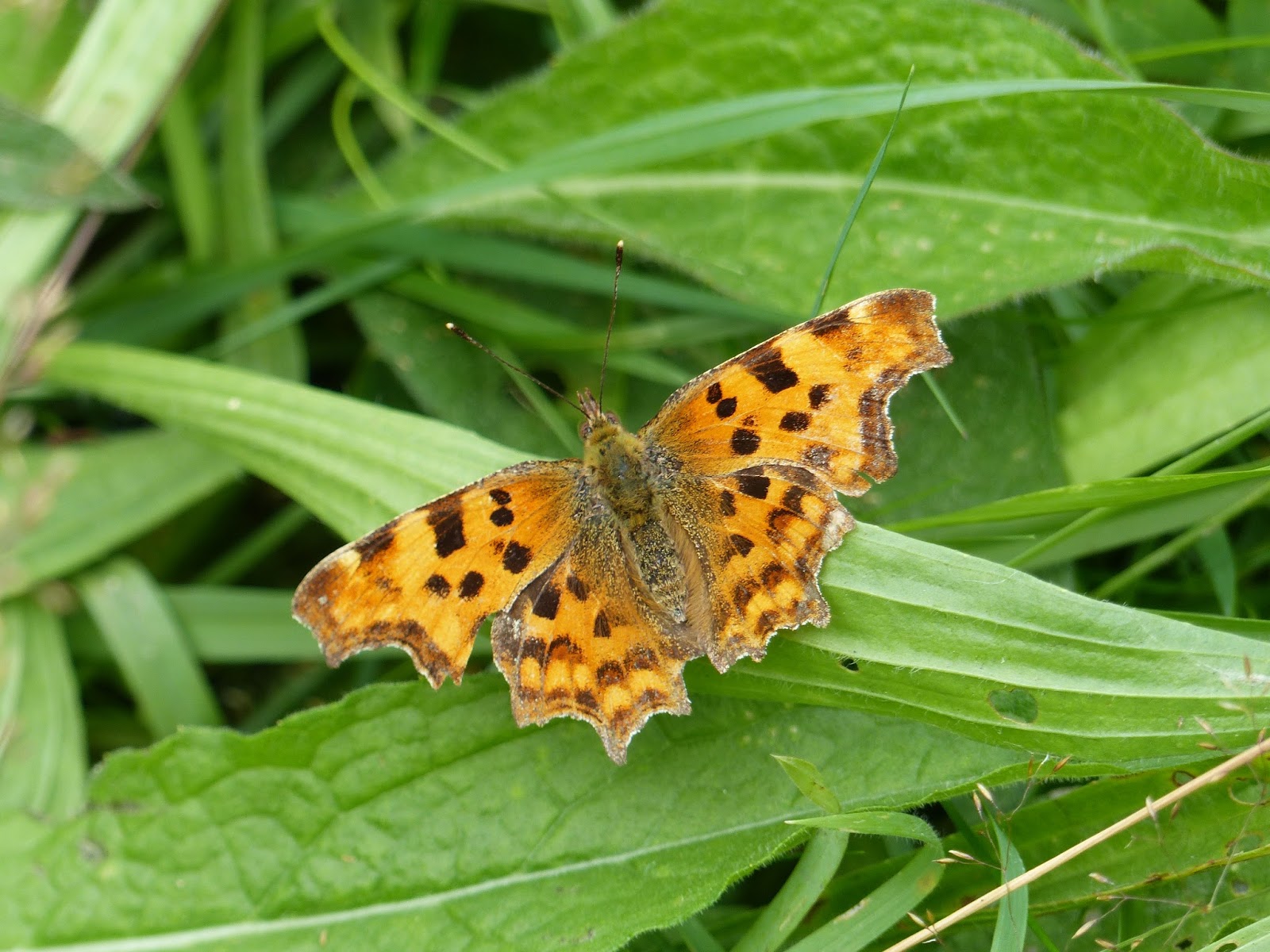
Comma

Small Tortoiseshell

One species of damselfly; Common Blue Damselfly, and 1 species of dragonfly; Brown Hawker, were seen. The hawker was flying and feeding over the banks, while the damselflies, including young ones (tenerals), adults and pairs "in tandem" were all over!!

Common Blue Damselflies "in tandem"

The final two group of insects, the hoverflies and bumblebees, were also present in good numbers. I identified Red-tailed, White-tailed and Common Carder Bumblebees.

The hoverflies are a bit trickier(!), but I think I managed to identify five different species, none of which have English names. There were: Eristalsis pertinax, Eristalsis tenax, Eristalsis horticola (known collectively as Drone Flies), Myathropa florea and a Syrphus species, possibly Syrphus ribessi. Please let me know if you think otherwise.

Eristalsis pertinax

Eristalsis tenax

Eristalsis horticola

Myathropa florea

Syrphus ribesii

Hopefully, these photos will inspire you to stop and have a look at the many hoverfly species that can be found on a sunny day. If you would like a good field guide, have a look at this one here, it's very informative, with super photos and explanations about the different species.

Monday, 29 June 2015

7 Birds!

I was back down at Linacre at 5.00 am on Saturday morning, for my first mist net ringing session there since the start of May. As you can seen from the blog title, the session was a very quiet one, with just 7 birds ringed, consisting of 3 Blackcaps (2 new and a re trap), 1 Chiffchaff ( a new bird that had been born this year), 2 Great Tits (1 retrap and 1 new juvenile bird), and 1 Blue Tit (another of this year's juveniles).

After the ringing session I stayed on for a couple of hours to look at the insects, and spotted a male Common Blue Butterfly, several Common Blue Damselflies,  a Meadow Brown, Red-tailed, White-tailed and Common Carder Bees, Drone Flies, Myathropea florea, (a species of hoverfly), a Bloodvein moth, a sheildbug and a species of Long-horned moth called Nemophora degeerella!

Bloodvein

Nemophora degeerella

Myathropea florea