Showing posts with label Carsington Water. Show all posts

Saturday, 12 September 2026

Another Derbyshire Tick - Pectoral Sandpiper x 2!

 News broke of not one, but two, juvenile Pectoral Sandpipers (196) at Carsington Water, Derbyshire, yesterday. Amazingly, I haven't seen this species since 2016, and never in Derbyshire, so Jayne and I drove across this morning to see them.

We parked up in the Visitors' Centre, just to hear that both birds had just been flushed, and has flown to the other end of the reservoir! We set off, along the dam wall, and 15 minutes later, were watching both birds feeding happily, about 90m away. Derbyshire tick! They continued to feed in the same area, so we settled down to get some photos and video.


Pectoral Sandpiper

Sunday, 23 February 2025

Year List Update and a Lifer (nearly!)

 I last updated the Year List at the end of January, and, since then, I've added 6 new species, including a "near lifer"!

First up, the easy ones: Peregrine Falcon (119) and Little Owl (120), both familiar birds, seen in Chesterfield and Holmesfield respectively.

The next two, Great Northern (121) and Red-throated Diver (122), were seen at Carsington Water on Monday 17th (along with a female Ring-necked Duck, my second of the year!) Next up, was the Ring-necked Parakeet (123), 10s of which were seen in and around London (Hampstead Heath and St James' Park).

The latest new bird of the year, a 1st winter, female Lesser Scaup (124, and the first Derbyshire record) was also seen at Carsington Water on Saturday 22nd (after dipping on 17th!!). This bird is my "near lifer", as I did, allegedly, see a 1st winter male at Chasewater, Staffordshire, in 1987 (the first British record), whilst on a bird trip with Derbyshire Ornithological Society. I can't really remember this bird at all (!), so I'm happy to say this was a "lifer" for me. Views weren't great, but I did manage to get a few "record shots".

Lesser Scaup (left) and Tufted Duck

Lesser Scaup

Lesser Scaup (middle bird), with a pair of Tufties

Wednesday, 16 August 2023

Rufford Gulls - 15th August 2023

 I had my first August visit to Rufford yesterday, to check on the gulls. After my last visit, at the end of July, gull numbers had picked up, to 52 Black-headed Gulls (10 juveniles), and I managed to see 3 of "our" green-ringed birds.

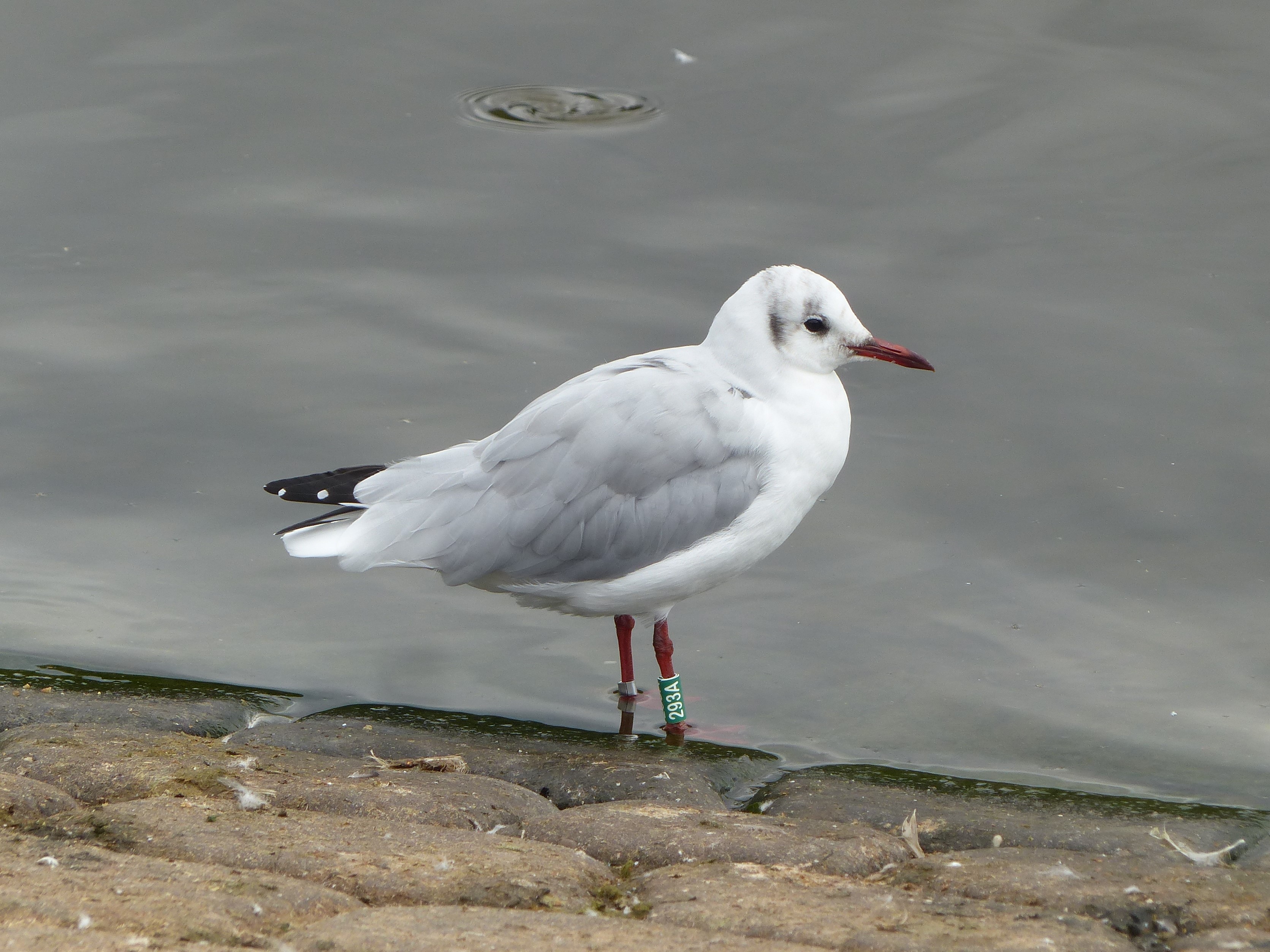
The first bird, 293A, was a familiar sight, this being the 20th record since ringing back in December 2021.

293A

The second bird, 245B, was my first sighting, since it was ringed in December 2022, at Center Parcs (2km away). The only other sighting was shortly after ringing, at Center Parcs.

245B

The third bird, 251B, was a special bird, as it was one I ringed, at Center Parcs, back in October 2022. It was aged as a 3 back then, i.e. born that year, making it just 1 year old. This sighting was the first since ringing.

251B

Other wildlife seen there included: Canada Goose (38, but no rings), Greylag Goose (4, no rings), House Martin (c.20), Swallow (6) and a single Volucella zonaria hoverfly - my first record at this site, and my first sighting of 2023.

Another of "our" gulls, 236B, a bird ringed as a pullus at Carsington Water in June 2022, was reported today. It was seen back there, so great to see another returning bird. 

Another 2 birds ringed there, 233B, and 222B, had previously been reported in Cheshire in December 2022 (60km away) and in Wales in July 2022.

Saturday, 16 October 2021

Derbyshire Snow Bunting - 9th October 2021

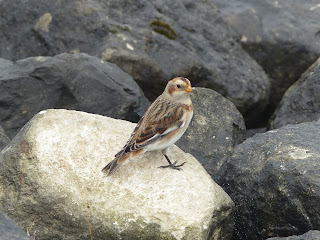
 Last Saturday, Jayne and I popped across to Carsington Water to see if we could see the Snow Bunting that had been reported. We found it, feeding on the weeds on the dam wall and performed beautifully for us. A great "Derbyshire tick".

Snow Bunting

Whilst there, we also had two flocks of Pink-footed Geese fly overhead (13 and a group of c40), which, amazingly, were a "Year tick".

Year List update:
173 - Pink-footed Goose
174 - Snow Bunting

Wednesday, 1 January 2020

Year List 2020 begins

Hello, and welcome to the first blog post of 2020. This year's birding began at about 7am, when I was woken up by a singing Robin. followed closely by an alarm calling Blackbird and chirruping House Sparrows. Not a bad way to start a new year!

The next few birds (numbers 4 - 15) were seen in and over the garden, including a very nice surprise of a skein of Pink-footed Geese heard flying above the fog.

The remaining birds (numbers 16 - 38) were recorded in a few hours at Carsington Water. The obvious highlights being a bobbing Jack Snipe on the Visitor Centre Island and a juvenile Great Northern Diver fishing off Stones Island (both species I missed out on in 2019).

Year List update:
1 – Robin
2 – Blackbird
3 – House Sparrow
4 – Carrion Crow
5 – Starling
6 – Magpie
7 – Great Tit
8 – Woodpigeon
9 – Goldfinch
10 – Dunnock
11 – Blue Tit
12 – Greenfinch
13 – Coal Tit
14 – Collared Dove
15 – Pink-footed Goose
16 – Jackdaw
17 – Canada Goose
18 – Barnacle Goose
19 – Coot
20 – Mallard
21 – Tufted Duck
22 – Wigeon
23 – Snipe
24 – Jack Snipe
25 – Lapwing
26 – Redshank
27 – Black-headed Gull
28 – Lesser Black-backed Gull
29 – Mute Swan
30 - Gadwall
31 - Great Northern Diver
32 – Long-tailed Tit
33 – Rook
34 – Pheasant
35 – Great-crested Grebe
36 – Willow Tit
37 – Wren
38 – Bullfinch

Sunday, 21 January 2018

Year List Update - 21st January 2018

It's been a while since I updated the Year List, and it's moved on quite a bit, so here goes. Numbers 47 to 50 were seen at Derbyshire Wildlife's Avenue Washlands reserve during a ringing session. Numbers 52 to 55 were seen during a walk around The Yorkshire Sculpture Park. Numbers 56 and 57 were recorded in my garden, whilst numbers 58 to 67 were seen last weekend at Carsington Water. The Goldcrest was seen yesterday during the ringing session at Linacre, and the Tawny Owl was heard in the early hours of this morning from my bed!!

47 – Little Owl
48 – Reed Bunting
49 – Yellowhammer
50 – Mistle Thrush
51 – Kingfisher
52 – Pochard
53 – Shoveler
54 – Canada Goose
55 – Teal
56 – Sparrowhawk
57 – Siskin
58 – Gadwall
59 – Wigeon
60 – Common Gull
61 – Great Northern Diver
62 - Pheasant
63 - Willow Tit
64 – Lapwing
65 – Snipe
66 – Fieldfare
67 – Treecreeper
68 - Goldcrest
69 – Tawny Owl

Thursday, 20 April 2017

Three New Birds

I was up at Carsington Water for a couple of hours on Tuesday evening (18th) walking around Stones Island. I was on my annual "wagtail hunt", as this site is usually a good place to catch up with passage Yellow and White Wagtails. As it was, I dropped lucky with White Wagtail, but "dipped" on the Yellow.

The White Wagtails (a minimum of 3, possibly more), were feeding around the back of Stones Island, along with several Pied Wagtails. Here's a picture of a male and  a female.

White Wagtail (male)

White Wagtail (female)

Unfortunately, White Wagtail can't be added to the "year list" as it isn't a species, it's just the European race of the British Pied Wagtail, but I did manage to add another 2 species with a Common Sandpiper and a beautiful breeding plumaged Dunlin being seen.

Common Sandpiper

Other species seen included: Little Ringed Plover, Lapwing, Great Northern Diver (breeding plumage, but distant), Black-headed Gull, Coot, Mallard, Canada Goose, Great-crested Grebe, Chiffchaff, Willow Warbler, Blackcap, Dunnock, Oystercatcher (2) and Redshank (2).

Redshank

Year List update:
134 – Common Sandpiper
135 – Dunlin

Wednesday, 6 April 2016

Carsington- 4th April 2016

After my walk around Linacre on Monday, I decided to pop across to Carsington Water to see what was about.

I had a walk around Stones Island and managed to find 3 White Wagtails, the European version of our Pied Wagtail. It isn't a species in its own right, so it won't appear of the Year List. Cracking bird, nonetheless.

White Wagtail

Also present was this Pink-footed Goose. It's a very unusual species to be found "on the ground" in Derbyshire. Normally, they're seen flying over the county throughout the winter months, so I'm not sure where this one's come from. It's either a feral bird, or possible a wild bird that's been injured and has found the area to its liking. Where ever its from, it was coming to bread with the local Mallards, and appeared very tame!

Pink-footed Goose

One last bird of note was Common Gull. There were six present sitting on buoys around the Sailing Club.

Common Gulls (4 of the 6 present)

Monday, 28 December 2015

Carsington Water Year Tick

I was out at Carsington Water yesterday with Jayne, with the hope of adding another species to the "year list". As you can probably guess from the title of this post I got lucky, spotting one of the three Great Northern Divers that were present on the reservoir. No photo though, as it was too far out.

Whilst there, we also had a walk down to the bird hide where we spotted several Tree Sparrows on the feeders along with Chaffinches and a single Willow Tit.

Tree Sparrow

Willow Tit

Year List update:
179: Great Northern Diver

Wednesday, 8 April 2015

Dovedale Walk and Carsington Water

Yesterday I went for a walk along Dovedale with my family and a good friend. We walked around the river from the car park at Dovedale to Mill Dale and back again, a long, but enjoyable 6 mile walk.

Dovedale
 During the walk we spotted a few nice birds and added a couple of "year ticks". The first "year tick" was a Dipper, which we spotted flying up the river. We also managed to find 3 Swallows feeding high above the valley at Mill Dale. Other birds seen along the way were: Grey Wagtail, Wren, Robin, Chaffinch, Jackdaw, Carrion Crow, Mallard and Grey Heron. Along with the birds, we also spotted this plant called Butterbur.

Butterbur
 
Today I spent a few hours at Carsington Water, and also added a couple more "year ticks"; namely Tree Sparrow and Barnacle Goose. The Tree Sparrows were looking in the nestboxes, and the flock of feral Barnacles were feeding on the bankside opposite the Wildlife Centre.
 
Year List update:
91- Dipper
92 – Swallow
93 – Barnacle Goose (F)
94 – Tree Sparrow

Saturday, 26 April 2014

Yellow Wagtails at Carsington

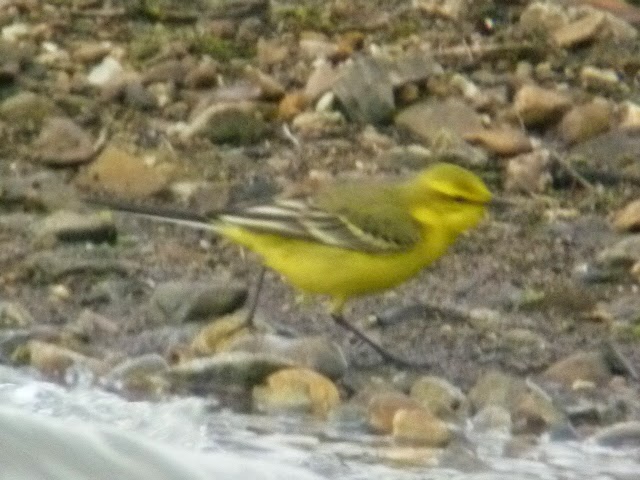
This time last year I went up to Carsington Water to see some passage Yellow Wagtails. I've been checking Birdguides all week, and spotted a few reports coming through, so I drove across tonight and managed to locate 3 very bright individuals on the Water Sports Island. Here's a couple of photos.


Yellow Wagtail
 
Also seen on this island were a Common Sandpiper,  a Redshank and an Oystercatcher, whilst flying around were dozens of Swallows, and a couple each of Sand and House Martins.
 
Year List update:
140 – Yellow Wagtail
141 – Common Sandpiper

Monday, 24 February 2014

Year List update

Just a quick post tonight to update the Year List with a Great Northern Diver that I saw yesterday at Carsington Water. Despite very choppy conditions on the water, it was pretty easy to see as it swam about 20m off Stones Island.

Carsington Water is a regular spot for this species, and this, or another bird, has been present all winter. Here's a photo of one coming into summer plumage that I took back in April 2012.

Great Northern Diver

More information about bird sightings are Carsington Water can be found on the website of the Carsington Bird Club here.

Year List update:
110- Great Northern Diver

Saturday, 20 April 2013

Yellow and White Wagtails at Carsington

Every year at this time there is a passage of Yellow and White Wagtails at Carsington Water. I popped across there this afternoon/evening and at about 7pm,managed to catch up with a flock of 7 Yellow and 2 White Wagtails feeding on the grass by the Visitors' Centre.

The Yellow Wagtails are absolutely superb birds, as this photo from this afternoon, hopefully shows.

Yellow Wagtail
 
The White Wagtail is the European race of our own Pied Wagtail, but differs from this bird by having a grey back and much less black on the head. Here's a not-so-good, slightly out of focus photo of two birds from today.
 
White Wagtail
 
Unfortunately, this isn't a species in its own right, so I can't add it to the Year List proper, but I'll note it down and add it on to the full list at the end of the year. The Yellow Wagtail, however, can be added along with 3 other species I saw at Carsington today, namely:
 
111 – Willow Warbler (several singing)
112 – Little Ringed Plover (1 on Horseshoe Island)
113 – Yellow Wagtail
114 - Blackcap (one on Stones Island)


Friday, 4 January 2013

Carsington Water - January 2013

Following on from yesterday's excursion I spent a few hours out at Carsington Water today. The weather wasn't great, but I had a short walk down to the Visitor Centre Hide where I managed several "year ticks".

First new bird of the year was a Redshank seen running along the shore of the reservoir, followed closely by a over-flying Common Buzzard. Out on the water I managed to locate one of the three Great Northern Divers that were present.

Around Horseshoe Island there were 9 Snipe feeding in amongst c.200+ Lapwings, dozens of Teal and Wigeon, a flock of 22 feral Barnacle Geese and 10s of Mallards. Pochard and Coots were out on the water.

Next to the hide there are 2 enormous bird tables and the final year tick of the day was a Willow Tit that was seen coming in. Also on the feeders was a very impressive flock of between 30 - 40 Tree Sparrows, which made a very good sight, along with Chaffinches, Blackbird, Collared Dove, Woodpigeon and Mallard!

Year List additions:

64 - Redshank
65 - Common Buzzard
66 - Great Northern Diver
67 - Snipe
68 - Barnacle Goose (feral)
69 - Willow Tit

Sunday, 30 January 2011

Cromford and Carsington Water - 30th January 2011

Welcome to my last blog of the month. Today saw the family head up to the Severn Trent reservoir of Carsington Water, via Cromford Wharf, for a spot of winter birding.

First stop was the Derbyshire County Council car park in Cromford Canal, a traditional winter birding spot for Hawfinch. Birds are regular here in the winter months and we were not disappointed as one was immediately spotted at the entrance to Willersley Castle. It sat at the top of a tree for a good 5 minutes and, despite the grey conditions, I managed to get a few decent shots. Note the enormous bill on the bird below!

Hawfinch

 Next stop was Carsington Water where a redhead Smew had been frequenting the dam area for a few weeks. Our search started at the Millfields Car park, and we spent a cold, but enjoyable, half an hour searching amongst the 150+ Tufted Duck, dozen or so Goldeneye, Canada Geese and Coot for the diminutive "sawbill". Unfortunately our first attempts were unsuccessful so we decided to warm up in the restaurant at the Visitors' Centre. After a spot of lunch (veggie breakfast- nice!!) we had a quick walk down to the main hide, which was surprisingly quiet, with "just" 50+ Wigeon, Tree Sparrows, a few Black-headed Gulls and Mallards.

Wigeon

We then headed back up to the dam wall to have another look for the Smew. Another search through the Tufties eventually paid dividends when the bird was spotted diving and fishing just 20m from the bank. Again, the bad light and the bird's constant diving didn't make it easy to get a photo, but, with persistence, we eventually managed a few record shots.


Redhead Smew

Whilst watching the Smew, we also noticed a couple of Ruddy Duck, a real rarity nowadays, a group of approximately 50 Lapwing feeding on the fields behind the dam and three Pink-footed Geese, which flew directly over our heads! Not quite sure where they came from or whether they're "real", but nonetheless a good record which I sent into the Derbyshire Ornithological Society.