Showing posts with label Small Heath. Show all posts

Sunday, 27 July 2025

Big Moor Dragons - 26th July 2025

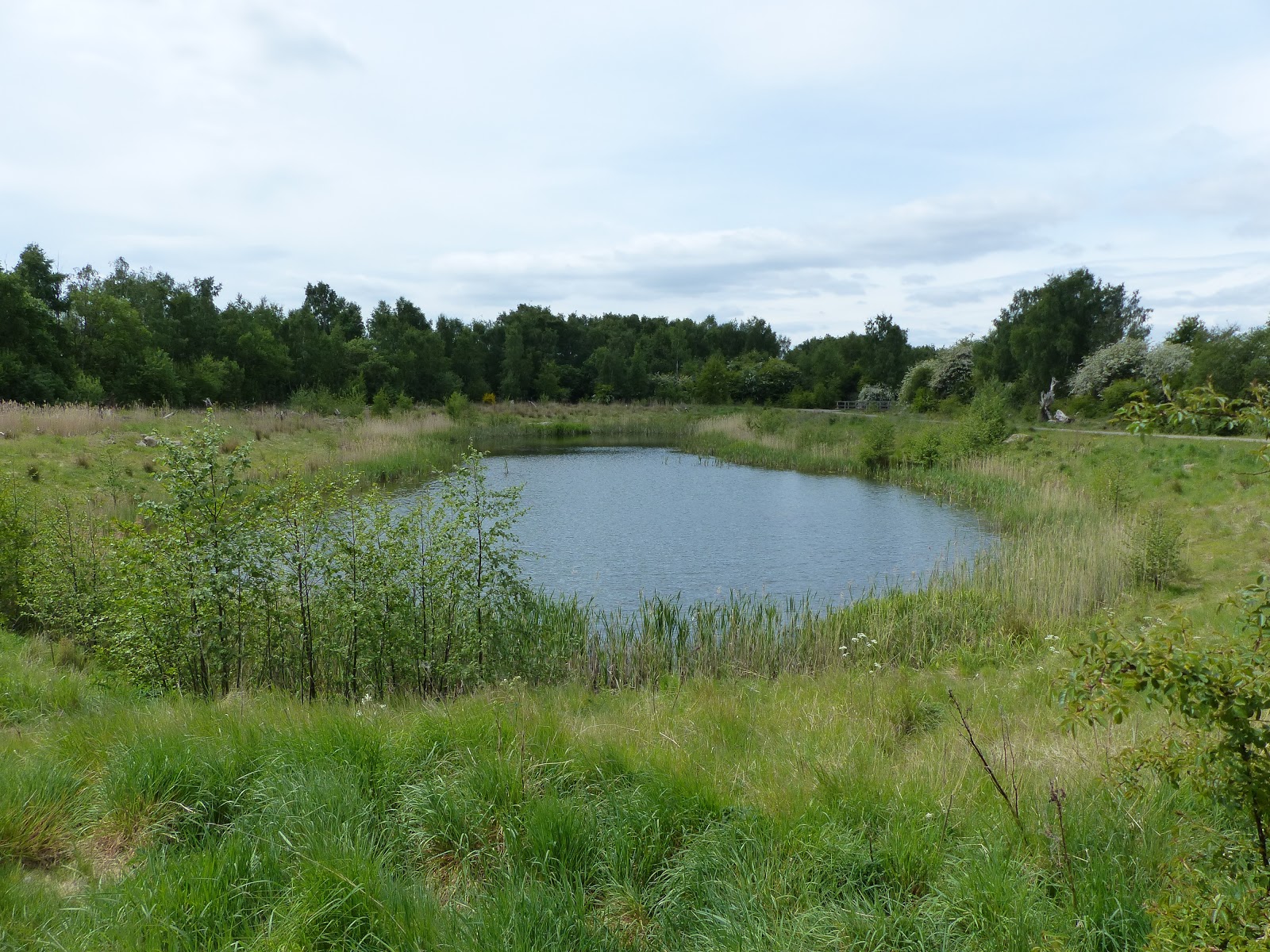
Yesterday, Jayne and I had a walk up to Little Barbrook Reservoir on Big Moor. We went to look for dragonflies, and managed to see a couple of new species for the year.

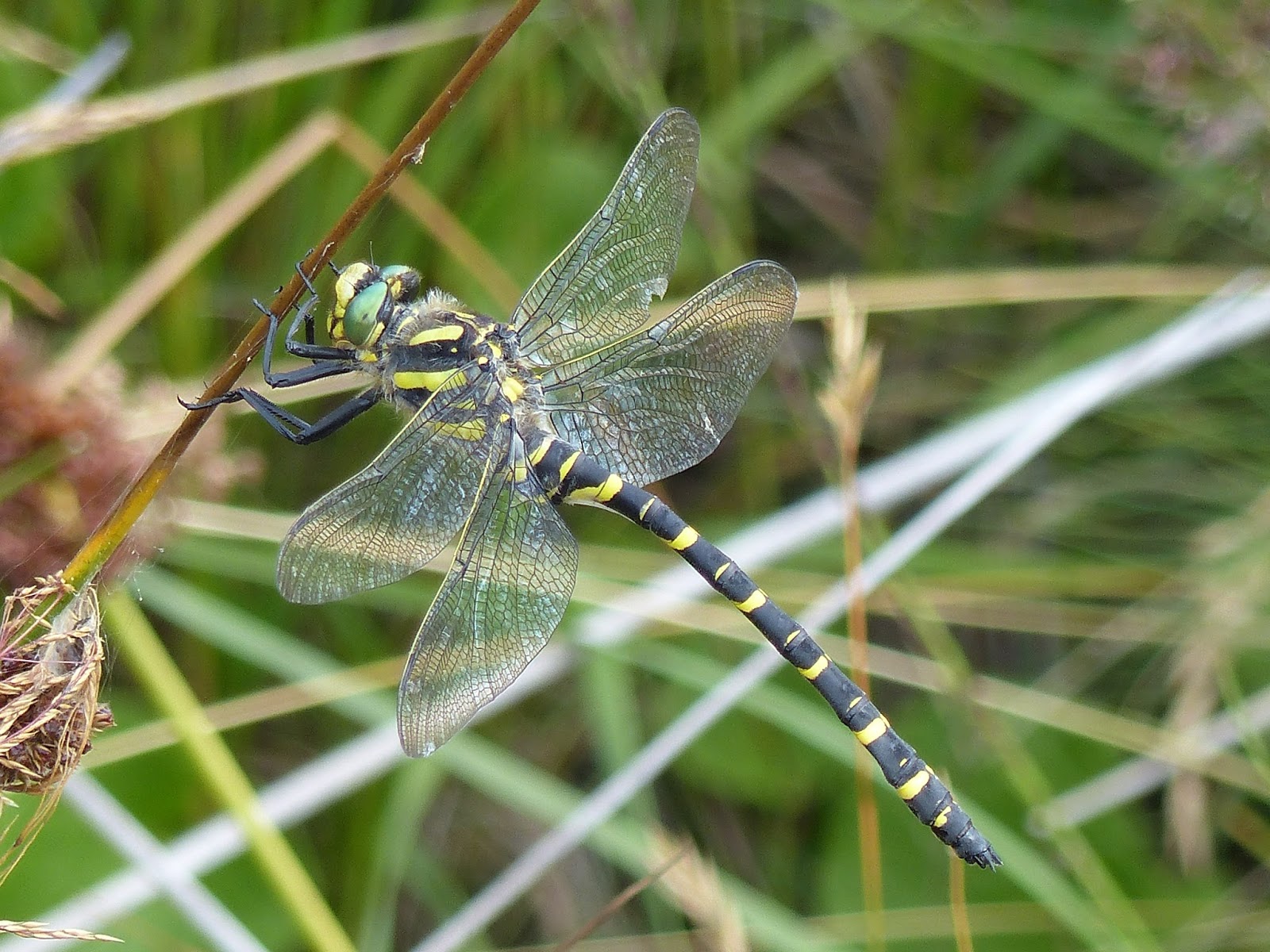
The highlight, as always, was our first Golden-ringed Dragonflies of 2025. We saw two individuals, both males, including this one that had, unfortunately, damaged its body, presumably whilst emerging. Despite this, it appeared to be doing ok, and we got very lucky, when it perched by the main path eating a wasp!

Golden-ringed Dragonfly

Undamaged male!

Other odanata seen were: Emerald Damselfly (new for year), Black Darter (1) and Common Blue Damselfly (2 males).

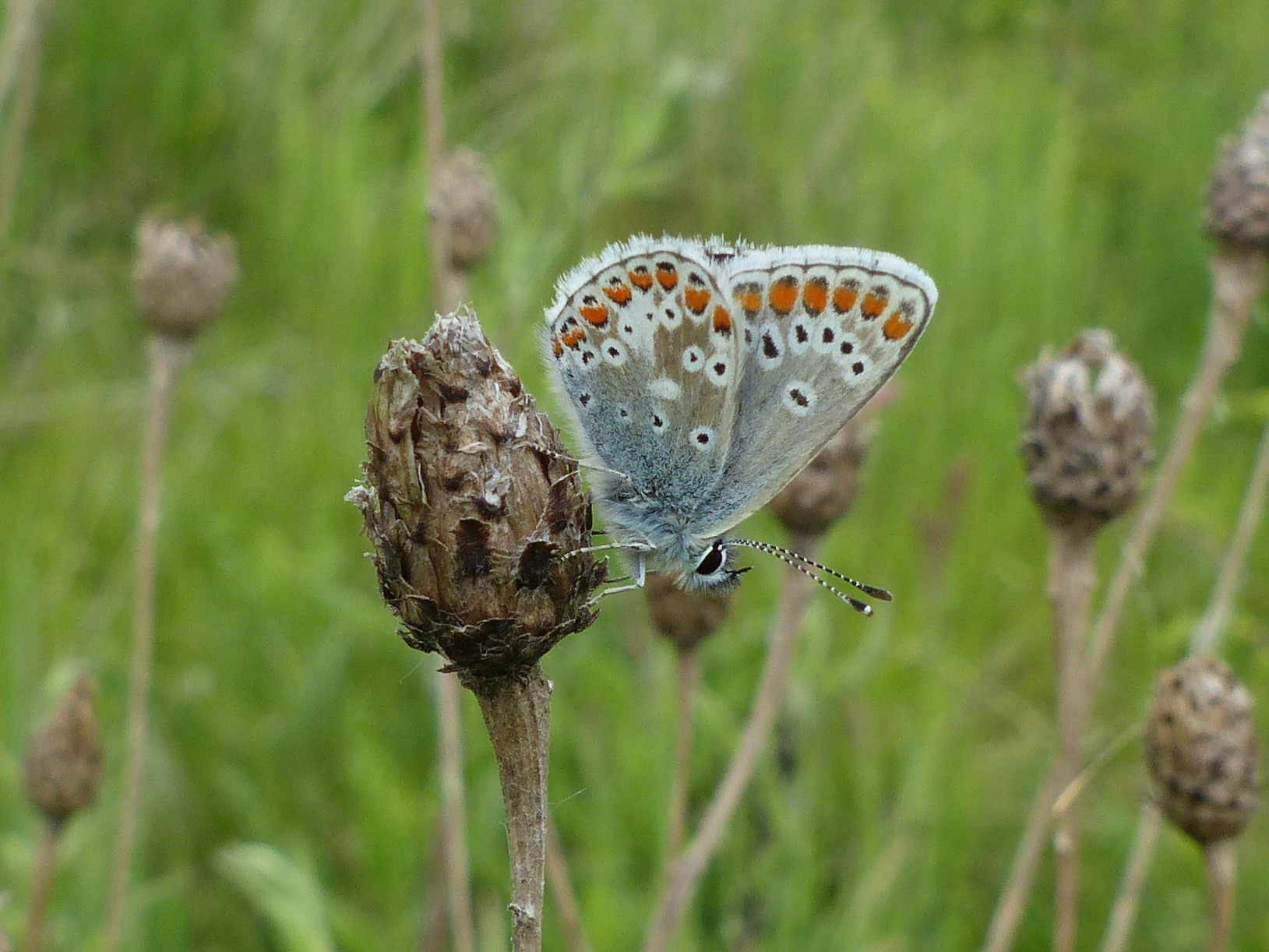
A few butterflies were on the wing: Gatekeeper (8), Small Heath (1) and Red Admiral (1).

Birdwise, it was very quiet, but we did manage to see a couple of Reed Buntings, Meadow Pipits, a Common Buzzard, and a single, juvenile Stonechat.

Monday, 16 June 2025

Large Blue - Lifer!

 At the weekend, Jayne and I were down in Bristol, so, on the way back, we decided to pop into the Gloucestershire Wildlife Trust's Daneway Banks nature reserve, to see some butterflies.

We arrived at about 11am, to  a mixture of clouds and sunshine. Our first species were Ringlet and Meadow Brown that were both present in good numbers. We carried on, adding Marbled White and Large Skipper 6-spot Burnet moth, Small Heath and Small Blue to the list. 

Our target species, Large Blue, was however, a little harder to find! Eventually, after about an hour on site, Jayne spotted a "blue" butterfly, which I managed to get onto as well. I grabbed a few photos, and was able to confirm a female Large Blue!! Unfortunately, in my rush to get a photo, I didn't pay attention to the settings, and the few shots I got weren't very well focused! 


Large Blue

Monday, 27 May 2024

Knepp Estate - 27th May 2024

 Today, Jayne and I went to the Knepp Estate, which is a large rewilding scheme, here in Sussex. We went to see the reintroduced White Storks (172), which now breed on the estate, as well as a couple of other key species: Turtle Dove (171) and Nightingale (173).

We walked around the 10km red route, and managed to see the three target birds. The first birds seen were the Turtle Doves. We managed to spot two birds, possibly a pair, sitting in a tree by the first treetop viewpoint, and I got a couple of half decent photos.

Turtle Doves (nearly!)

A bit better!

Shortly after these views, we saw our first White Storks, a distant view of a pair on a nest. We also saw another pair, with two young, and managed to get some photos (taken from a very safe distant and heavily cropped).


White Storks

The third species, Nightingale, wasn't so cooperative, but we did manage to hear at least 2 singing - a fantastic sound.

Whilst walking around the site, we also recorded many other species, including: Whitethroat, Dunnock, Robin, Blackbird, Woodpigeon, Stock DoveSong Thrush, Wren, Jackdaws, CrowsBlackcap, ChiffchaffBlue and Great TitGreen and Great Spotted Woodpecker, Buzzard, Red Kite, Fallow and Red Deer, Grey Squirrel, a vole species, a grasshopper sp, 2 Small Heath butterflies, 2 Mother Shipton moths and a male Beautiful Demoiselle!!

Beautiful Demoiselle

Tuesday, 4 July 2023

Lindrick Dale - 2nd July 2023

 On Sunday, I went across to Lindrick Dale to see if there were any butterflies. It was 18 degrees, overcast and quite windy, but I did still mange to see a few of the regulars.

The first butterflies seen were Marbled Whites, with c.20 in total. Dark Green Fritillaries were also about, but only 4 were flying. Other species seen were: Small Heath (1), Ringlets (4), 6-spot Burnet (1) and Meadow Browns (c.10). Unfortunately, no Silver-studded Blues were seen.

Marbled White

Dark Green Fritillary

Two species of orchid were also seen: Pyramidal and Common Spotted.

Wednesday, 31 May 2023

Wales Weekend - 26th - 28th May 2023

Jayne and I had a few days on Anglesey this weekend. We stopped in Treaddur Bay and visited a few well known spots and one new one.

Our first stop was the National Trust's Bodnant Garden, where we enjoyed a lovely walk around, including the beautiful Laburnum Arch, and spotted a few insects - Beautiful Demoiselle (male and female), Common Blue, Large Red and Azure Damselfly. We also spotted a Grey Wagtail feeding recently fledged young - with Large Red Damselflies!!

Beautiful Demoiselle (female)

Beautiful Demoiselle (male)

The following day, we popped into Holyhead Harbour to catch up with Black Guillemot, before heading off to RSPB South Stack. We had a wonderful couple of hours here, in bright sunshine, and spotted: Razorbill, Guillemot, Herring Gull, Fulmar, Linnet, Stonechat, Meadow Pipit, SkylarkHooded Crow, Raven, Peregrine Falcon, Chough, Small Heath, Small Pearl-bordered Fritillary, Wall Brown and Common Blue Butterfly.

Small Pearl-bordered Fritillary

Our final stop of day two was the North Wales Wildlife Trust's Cemlyn Lagoons, where we saw Common, Arctic and Sandwich Terns, as well as Black-headed Gulls and Oystercatcher. 

On our final day we visited  the National Trust's Plas Newydd site, in search of Red Squirrels. Unfortunately, we didn't manage to see any this time, but we did enjoy a lovely walk around the grounds and house.

Year List update: Black Guillemot (164), Sandwich Tern (165) and Arctic Tern (166).

Sunday, 22 May 2022

21st May 2022 - First Dragons and Damsels

 Jayne and I had a walk around Seymour Ponds yesterday, and saw our first Damsel and Dragonflies of the year.

The first species seen was Blue-tailed Damselfly, followed closely by Large Red and Azure Damselflies. Several Four-spotted Chasers were also seen flying around.

Four-spotted Chaser

In addition to the damselflies, we also saw a few butterfly species: Orange Tip, Brimstone, Green-veined White, Small Heath and one of my favourites, Brown Argus.

Brown Argus (underwing)

Brown Argus (upperwing)

Monday, 15 June 2020

Middleton Top - 13th June 2020

Since lockdown eased, Jayne and I have decided to go and visit some places that we've drived past for years, but have never actually stopped at. One such place is Middleton Top, near Wirksworth.

We parked up, and walked along the old railway line in the direction of Parsley Hay. As we walked along, we began to notice a profusion of bees, and it wasn't long before we spotted our first butterfly of the day, a pristine Small Tortoiseshell. In total, at least 12 were seen, possibly more, and were presumably, newly emerged. Along the walk, we also saw one Small Heath, one Small Skipper , 2 Chimney Sweepers (day-flying moth) and three Meadow Brown.

Chimney Sweeper

There were also many hoverflies, including a new species for me, Leucozona lucorum.

Leucozona lucorum

When we got back to the Visitors' Centre, we noticed a small nature reserve called Redhills Quarry, and had a short look around. The first thing Jayne spotted was a family of Redstarts flying around the bushes. In total, we saw 2 fledged family groups and 1 pair feeding young!

Redstart

We also had a couple of Common Blue Butterflies and, what I think is a Potter Wasp, possibly Ancistrocerus scoticus.

Wednesday, 20 May 2020

Seymour Ponds - 18th May 2020

On Monday, I visited a set of ponds called Markham Vale or Seymour Ponds in Staveley, Chesterfield. It was my first visit to this site, after spotting a Facebook post about the presence of Hairy Dragonflies there. Unfortunately, I didn't manage to spot any, but I did find an excellent site for dragonflies, damselflies and other insects.

1 of the 4 ponds on site

The first species spotted was Large Red Damselfly. This species was very common, with 30+ individuals seen, including many pairs "in tandem". Blue-tailed Damselflies were also present and mating, whilst 1 male Azure Damselfly was also seen.

Whilst on site, I spotted 2 species of dragonfly, namely Four-spotted Chaser and Broad-bodied Chaser. The "Four spots", at least 10 individuals, were all newly emerged and hanging around in the long grasses around the ponds. The Broad-bodied Chasers, 1 male and 1 female, were also newly emerged and also "warming up".

Four-spotted Chaser

Other insects seen included: Small Heath (very common, 30+), Peacock (1), Common Blue Butterfly (3+ males and at least 1 female), Mother Shipton moth (3 individuals), a Thick- or Swollen-thighed Beetle and a stunning Spiny Mason Wasp, Odynerus spinipes.

Mother Shipton moth

Swollen-thighed Beetle

Spiny Mason Wasp

I spoke to another photographer whilst there, and he mentioned there being Dingy Skippers and Brown Argus butterflies on site as well. I didn't see either species on my visit, but it will definitely be worth another trip here, later in the year, to try and catch up with them, along with some of the other summer-flying insects.

Bird wise it was quite quiet, but I did see and hear Reed and Sedge Warblers (year ticks), as well as Swifts (5), Swallows (1), Skylark, Chiffchaff, Blackcap, Willow Warbler ( all heard singing) and Common Buzzard (1).

UPDATE: I returned to this site today (21st May) in much sunnier weather, and managed to spot 2 Hairy Dragonflies. LIFER!!! I got great views as they flew around two of the ponds, chasing the Four-spotted Chasers. Unfortunately no photos, as they never stood still, so here's a link to see what one looks like.

Saturday, 29 June 2019

Summer Butterflies - 29th June 2019

We haven't yet had a great deal of decent sunny weather this summer, so, with the sun out, and a very decent temperature of 25 degrees today, I thought it was time to head over to Lindrick Dale near Worksop, to have a look at  the butterflies there.

I arrived at about 10am and straight away saw good numbers of Marbled White (15+), Dark Green Fritillary (c.20) and Silver-studded Blue (10+ males, no females).

Marbled White

Dark Green Fritillary

Dark Green Fritillary (underwing)

Silver-studded Blue (male upperwing)

Silver-studded Blue (male underwing)

Other butterflies seen were: Small Heath (2), Ringlet (10+), Meadow Brown (c.10), Large Skipper (1 male), Painted Lady (1 - my first record here) and a day flying moth, the Narrow-bordered Five-spot Burnet moth.

Narrow-bordered Five-spot Burnet Moth

Flowers seen were: Bladder Campion and 3 types of orchid: Bee (3), Common Spotted and Pyramidal.

Wednesday, 16 August 2017

Dragonfly and Butterfly News

Over the summer period I like to get out and about recording dragonflies, damselflies and butterflies. Recently I've added a few new species.

The first new insects were spotted last week on a walk around Cupola Ponds, Stanedge. Emerald Damselflies were very common here, along with several Common Blue Damselflies, several Common and Brown Hawkers and an Emperor dragonfly.

Emerald Damselfly (male)

Afterwards, I drove up to Big Moor, where, again, many Emerald Damselflies were flying about, including several pairs "in cop" i.e. mating. Also seen here were Common Darter (pairs in cop and newly emerged individuals), Common Hawker and a very nice Wall Brown butterfly.

Emerald Damselflies (mating pair)

The last new species were Ruddy Darter and Black Darter. The Ruddy Darter, a male, was seen on Monday at RSPB Old Moor, and the Black Darter, males, females and newly emerged, (tenerals) were seen at Little Barbrook Reservoir on Big Moor.

Ruddy Darter (male)

Black Darter (female, I think)

Black Darter (male)

Tuesday, 23 August 2016

Big Moor Year Tick

Last Thursday I spent a few hours up on Big Moor. Whilst there I added Whinchat to the "year list", with one adult and at least 3 juveniles present.

Whinchat (juvenile)

Whilst up there, I also saw juvenile Stonechat, Meadow Pipits, Skylark and 5 Red Deer.

Red Deer

Insect wise, I saw Black Darter, Small Heath, Common Darter, Common Hawker (2) and Emerald Damselfly.

Black Darter

Common Darter (female/immature)

Small Heath on Harebell

Emerald Damselfly (male)

Year List update:
166 - Whinchat

Monday, 17 August 2015

Golden-ringed Dragonfly

Now that I'm back in Derbyshire, I thought I'd have a day exploring the moorlands, looking, in particular, for a very attractive dragonfly species - the Golden-ringed Dragonfly.

The Golden-ringed Dragonfly, or Cordulegaster boltonii, is the only member of this family of dragonfly to live in Britain and it prefers to live on areas of high land in acidic rivers and streams. As a result, the larvae can take up to 5 years to develop into this stunning adult.

Golden-ringed Dragonfly (male)

The individual I saw today was a male, and it was patrolling a small section of the Bar Brook on Big Moor. I saw a female "ovipositing" in this area back in 2011. See here for details. See details on the British Dragonfly Society's website here for details of this species. 

Other dragon and damselflies seen in the area were: Large Red Damselfly, Emerald Damselfly, Common Hawker (2 males) and Common Darter.

Whilst looking for the dragonfly, I spotted several other insects, including Small Heath, Gatekeeper, Meadow Brown, Small SkipperGreen-veined and Large White butterflies. 

Male and female Gatekeepers

Birds were thin on the ground, but 2 Common Buzzards were seen, along with a couple of Meadow Pipits and a Yellowhammer

I also came across a Water Vole, and its latrine.

Water Vole

Water Vole's latrine

Thursday, 2 July 2015

Return to Lindrick Dale

Last year I discovered a really great butterfly site that held 3 species that are very uncommon in this area, namely Dark Green Fritillary, Marbled White and Silver-studded Blue. I visited a couple of times and managed to catch up with all three species (click on the label Lindrick Dale below to see these posts). Last weekend (28th June) I had another visit and managed to see the first two species.

Last year I managed to get some really nice shots of the upperwing of the Dark Green Fritillary, so this year I was really keen to try and get some photos of the green underwing. Here are my efforts.


Dark Green Fritillary

The other species, Marbled White, was also present, but in quite small numbers, (fewer than 6 were seen). I got a nice photo of a pristine male.

Marbled White

As well as the key species, there were also a couple of Large Skippers, one Small Heath and dozens of Ringlets present. 

Ringlet

Finally, there were some nice flowers present too. Here are pictures of Pyramidal, Common Spotted and Bee Orchid.

Pyramidal Orchid

Common Spotted Orchid (I think)

Bee Orchid

Now I need to get back to try and find the Silver-studded Blues!