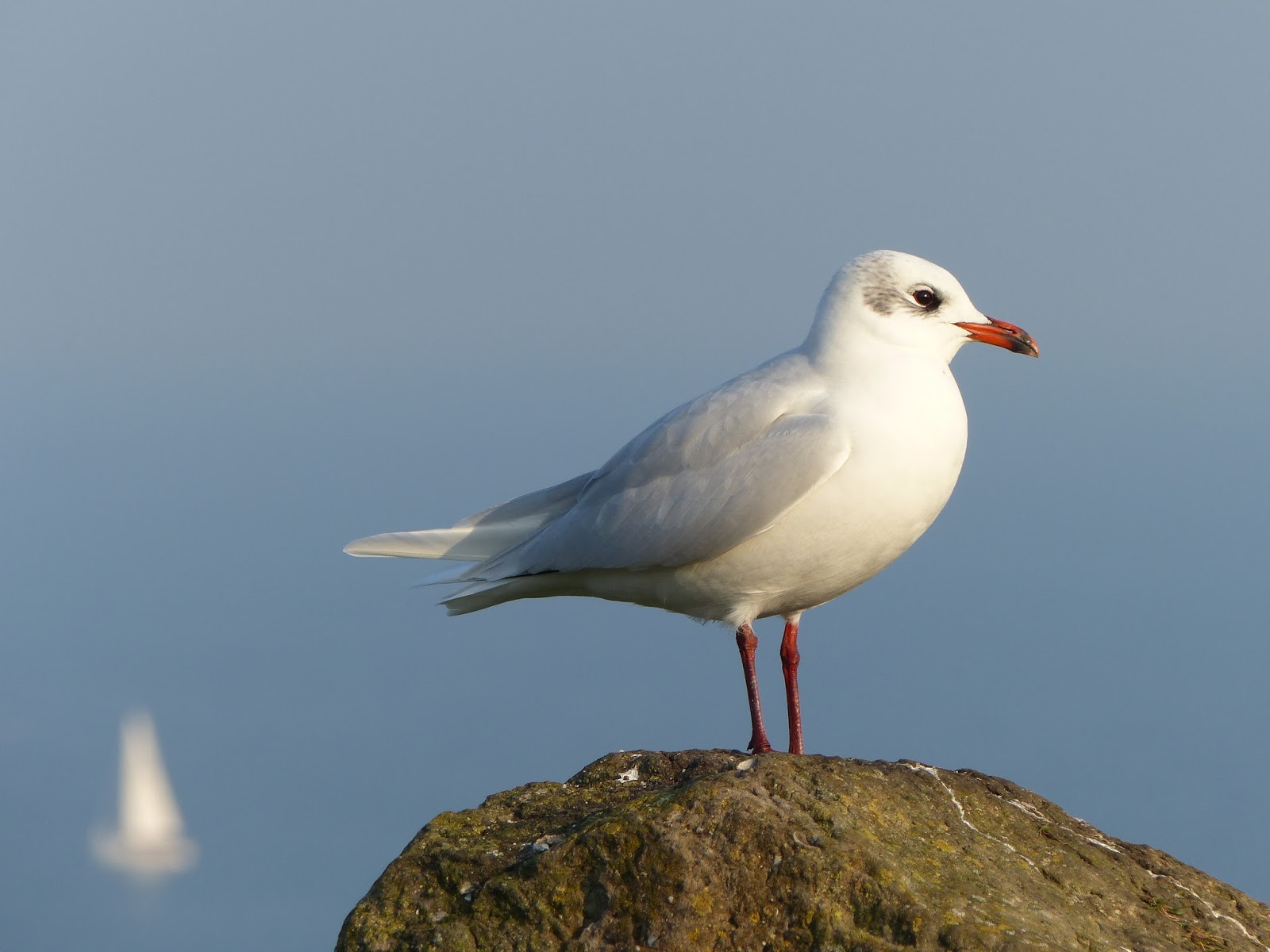
Saturday 4th April was our last day on Fuerteventura. We weren't being picked up until 5pm, so we spent the entire day walking around the town.
Sunday, 12 April 2026
End of the Trip
Sunday, 5 April 2026
Corralejo- March 28th and 29th
Jayne and I arrived in the resort of Corralejo on Saturday afternoon. We spent the rest of the day, and the Sunday in the resort.
The first species seen on the island was.... Rock Dove/Feral Pigeon. This species was seen on everyday, at every location visited. Other species seen on the journey to the resort were: Kestrel, Yellow-legged Gull, Collared Dove (very common everywhere) and Buzzard (our 1 and only sighting).
On arrival at the hotel, we saw many more Collared Doves, Spanish Sparrow (very common across the island), Barn Swallow and Whimbrel (common on the rocky foreshore, and seen on every visit).
The next day, Sunday 29th, we walked around the town, and recorded the same species, as well as our first "lifer", Plain Swift, with 2 over the hotel. Other species added were: Turnstone (common, in small groups on the foreshore), Common Sandpiper (seen on every visit in 1s and 2s), Ringed Plover (3 seen), Sanderling (5 seen), Raven (1 over) and Little Egret (1 fishing on the shore).
Monday, 28 October 2024
St Ives - 26th - 27th October 2024
Jayne and I arrived in St Ives on Saturday afternoon, and, after settling in to our accommodation, we had a walk around the town, enjoying the lovely sunshine and sunshine.
As always, I had my eyes peeled for darvic-ringed Herring Gulls, and soon found two new birds; W916 and W918. I'll send off the details, but I'm sure they'll have been ringed in and around the harbour.
We spent the whole of Sunday in and around the town. We started off walking around the town, where we saw W916 and W918 again. A small group of c.40 Turnstones were also around the harbour, along with a single Black-headed Gull and a single Great Black-backed Gull. We then walked up onto The Island and spent a couple of hours in and around that area, adding Gannet (c.10), Red Admiral (1) and, best of all, a female-type Black Redstart (Year Tick 194).We found the bird feeding on rocks below the Coastguards' Lookout. Amazingly, another bird was found a couple of hours later, feeding around the rook of The Guildhall!!
Walking back along the harbour, we spotted another ringed Herring Gull,W917. This was a new bird, seen on the railings around the harbour.
Saturday, 24 February 2024
Scarborough - 23rd February 2024
Yesterday, we had a lovely family day in Scarborough. It was just 7 degree, but really sunny, and the birds put on a good show too.
The first birds seen, Fulmar (125), were up on the cliffs by Marine Drive. From here, we also saw a couple of Red-throated Diver (126), a single winter-plumaged Guillemot (127) and about half a dozen Harbour Porpoise.
Wednesday, 5 January 2022
Stag Rocks - 2nd January 2022
Jayne and I were still up in Northumberland on the 2nd, so we had a few hours at Stag Rocks aka Harkess Rocks, near Bamburgh. When we got there, it was nearly high tide, so we sat on the rocks and watched the Purple Sandpipers (100+), Sanderling (50+), Turnstone, Redshank and Dunlin, feeding on the seaweed.
One of the Purple Sandpipers was colour ringed. It was ringed on 20th September 2020 at Filey Brigg, and mine was the first sighting since.
Year List update:
56 - Great Tit
57 - Rook
58 - Common Buzzard
59 - Barnacle Goose
60 - Sanderling
61 - Purple Sandpiper
62 - Goldeneye
Tuesday, 14 January 2020
Scarborough Turnstones 2020
White over red was first ringed on 21/03/18. I first saw it on 22/02/19, and again on Saturday. The only other record that I'm aware of was in Shetland on 22/05/18.
Sunday, 12 January 2020
Scarborough 11th January 2020
74 – Mediterranean Gull
75 – Peregrine Falcon
76 – Great Black-backed Gull
77 – Turnstone
78 – Red-throated Diver
79 - Fieldfare
Monday, 30 December 2019
Northumberland Birding - December 2019
Whilst there, we visited Embelton Bay, Seahouses, Alnmouth, Stag Rock at Bamburgh, St Mary's Island and the Fish Quay at North Shields. Birds seen included; Purple Sandpiper (20+) at Stag Rocks, Turnstones (everywhere), Eider Ducks, Stonechat, Red-throated Diver and Sanderling (Alnmouth beach).
As always, I kept my eyes peeled for Black-headed Gulls, and managed to see a Polish ringed bird at Stag Rocks and a Lithuanian-ringed bird at North Shields Fish Quay.
Monday, 25 February 2019
Colour-ringed Turnstones - 22nd February 2019
The five new birds were all ringed in Scarborough Harbour on 21st March 2018, and my sightings were the first since then for 4 of the 5 birds. 1 bird, white over red, was recorded in Shetland on 22nd May 2018, presumably on its way back North to breed. Here are Friday's birds.
Saturday, 23 February 2019
Scarborough Birding - 22nd February 2019
Year List update:
112 – Fieldfare (seen on 3rd Feb)
113 – Willow Tit (seen ringing 17th Feb)
114 – Mediterranean Gull
115 – Shag
116 – Fulmar
117 – Rock Pipit
Saturday, 15 July 2017
Whitby and Scarborough
Friday, 27 January 2017
Colour ringed Turnstone - an update
This bird has been reported 18 times since it was ringed, all but once in Scarborough harbour. The only other location where it has been reported so far is Bridlington harbour on 19th October 2015. Interestingly, in 2014 and 2015 it was reported into July, whilst in 2016 it wasn't reported between March and the 30th August. Had it stayed around Scarborough in 2014 and 2015, before returning to its breeding grounds in 2016, or was it just not seen/reported in 2016? A sighting in the summer months away from Scarborough would be great to find out where this bird goes.
Here's a photo from last week.
Monday, 23 January 2017
Scarborough Birds
First up, as always, was a stop at the Holbeck Car Park, just above The Spa, for my first Mediterranean Gulls of the year. There were 2 adult birds feeding on the grass as soon as I arrived, but the number of this species and the Black-headed Gulls increased quickly to about 30 birds, as soon as I got the bread out! In total I saw at least 4 adults, 1 2 year old bird and 2 2nd calendar year Mediterranean Gulls. The birds here come within a metre or so, allowing excellent views and photographic opportunities.
59 - Sparrowhawk (1 seen on 21st)
60 – Rook
61 – Mediterranean Gull
62 – Black Redstart
63 – Redshank
64 – Turnstone
65 – Purple Sandpiper
66 – Great Black-backed Gull
67 – Black-necked Grebe
68 – Great Northern Diver
69 – Guillemot
70 – Shag
71 – Peregrine Falcon
72 - Fulmar
Monday, 19 December 2016
Wader Ringing
Well, this weekend I decided to spread my wings (pardon the unintended pun), and join up with the SCAN Wader Ringing Group in North Wales, to try my hand at wader ringing. Our first session took place on the Friday night. We met up at 8pm at Llanfairfechan, where we set out mist nets on a nearby nature reserve to catch Dunlin and Redshank. We were successful with both species, and I was able to learn the techniques of ageing as well as to ring both species. Several of the birds were retraps, but 1 of the Dunlin was especially interesting as it also carried a coloured flag. Steve, the leader of the group, thought it was most likely from a scheme in mid Wales. In addition, we also caught 1 Snipe. Ringing finished at about 1am, and we got to bed at 2am.
Saturday morning started with a 7am wake up call, and we were out by 8am. This time we set up a short distance down the coast, and set up 2 canon nets. This type of bird capture was completely new to me, and very interesting to see and take part in. After a few hours the tide had come in, and there were enough Redshanks in the catching area. This time we caught 53 Redshank and a single Turnstone. The Turnstone was ringed by another member of the group, but I was able to ring more Redshank, and also began to take a few more measurements, such as wing length, length of tarsus and toe,bill length and head and bill length. The latter measurements involved using set of callipers, which, again, was something new for me. One of the more experienced members of the group did the measurements first, and then I measured the same bird. Unsurprisingly, our measurements differed somewhat, so more practise is needed!
After an early night, I was up again at 7am on Sunday, and out to Beaumaris on Anglesey to set up the cannon nets.
Unfortunately, the Oystercatchers that we were hoping to catch didn't settle in the area where we'd set the nets, so we didn't catch any. We then tried a different area in Beaumaris for some Dunlin and Turnstone, again without luck. By this time we'd lost the light and the tides had turned, so we called it a day.
As a first introduction to wader ringing, the weekend was a great success and I'll hopefully be back out with the group again in 2017.
Wednesday, 6 April 2016
Scarborough, Bempton and Bridlington
We started off in Scarborough so that Luke could see his first Black-necked Grebe. Luckily the bird was still present in the harbour, and we managed to see it straight away, swimming around the boats. The Turnstones were around (no colour rings today though), as were Herring Gulls, Kittiwakes, and, best of all, a single male Wheatear, hopping about on the sea defences, presumably having just arrived in the country. Luke managed to grab this distant record shot, before it continued on its journey to who knows where...
131- Wheatear
132 - Gannet
133 - Razorbill
134 - Puffin
135 - Common Scoter
Thursday, 31 March 2016
Black-necked Grebe and Colour-ringed Turnstones
Year List Update:
125 - Black-necked Grebe
126 - Kittiwake
127 - Rock Pipit