Showing posts with label Broad-bodied Chaser. Show all posts

Wednesday, 27 May 2026

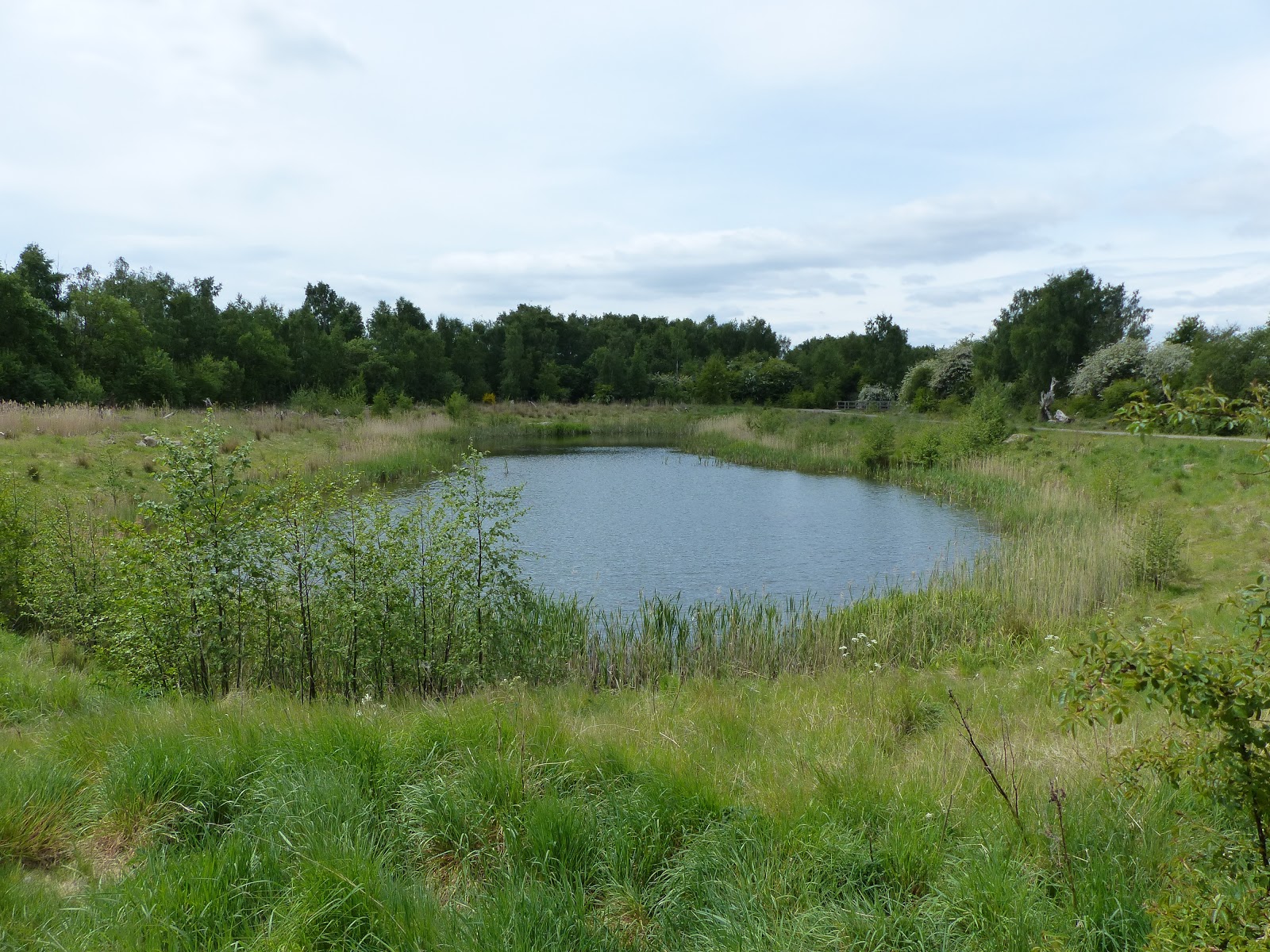
Pleasley Pits - Butterflies and Dragonflies

Yesterday, in the 32 degree heat (!), I decided to have a drive over to Pleasley Pit to try and see my first dragonflies of the year and a few butterflies. 

The first species I saw was Small Blue. There weren't that many flying, but I did manage to see a few individuals and a mating pair. Other butterflies seen were: Common Blue (2 males), Brimstone (1 male) and a single Comma. One Burnet Companion and one Silver-ground Carpet (day-flying moths) was also seen.


Small Blue

Damselflies seen were: Common Blue, Blue-tailed, Large Red and Azure.  Two species of dragonfly: Four-spotted and Broad-bodied Chaser were also seen.

Four-spotted Chaser

Broad-bodied Chaser

Monday, 12 May 2025

Pleasley Dragons and Butterflies

 Yesterday, the temperatures hit 23 degrees, with lots of sun and blue skies, so Jayne and I drove across to Pleasley Pit to see if there were any dragon and damselflies about. In total, we saw 5 species and 6 species of butterfly.

The first damselflies we saw were Large Red Damselflies. In total, we saw a minimum of 15 pairs "in tandem" and ovipositing. Next up, were Azure and Blue-tailed Damselflies, with just 1 of each seen. 

Two species of dragonfly were seen: Broad-bodied Chaser (1 male seen) and Four-spotted Chaser (2 seen).

Four-spotted Chaser

After the dragonflies, we had a quick check on the Small Blues. 10+ were seen, along with 1 Common Blue,  1 Holly Blue, 1 Orange Tip, 1 Brimstone, Large White and a single Burnet Companion (day-flying moth). 

Monday, 12 June 2023

Linacre - 11th June 2023

 Yesterday, Luke and I went down to Linacre to check on, and ring, the last few chicks. There were four boxes left, but when we got there, just two still had chicks, and two had been predated. The first box contained 3 Pied Flycatcher chicks and the other held 3 Blue Tits.

Pied Flycatcher

Now that all the boxes have been checked the totals for 2023 are as follows: Blue Tit; 14 broods and 93 chicks, Great Tit; 7 broods and 46 chicks and Pied Flycatcher; 1 brood and 3 chicks. This gives a total of 142 chicks ringed.

Whilst on site, we also spotted 5 adult Great-crested Grebes, with 2 juveniles and one pair on a nest, 45 adult Mallards and 7 broods of ducklings totally 34 young, 11 adult Coots and 10 juveniles (3 broods), 6 Moorhens and 8 juveniles (5 broods), 24 adult Tufted Ducks, 40 Mandarin Ducks (28 adults and 11 ducklings (3 broods), 3 Grey Wagtails (1 adult and 2 juveniles), 1 Lesser Black-backed Gull, 3 Swallows, 4 Chiffchaffs, 4 Blackcaps, 1 Willow Warbler, Goldfinch, Skylark, 5 Song Thrushes (singing and 1 adult seen), 2 Bullfinches (1m and 1fm) and 1 singing Garden Warbler.

Coot chicks

Insect wise, we saw 3 Common Blue Damselflies, 1 female Broad-bodied Chaser (first record of the year),  Volucella bombylans (hoverfly), 1 Marbled White Spot (moth, a first record for the site), 1 Silver Y moth, 1 Hairy Shieldbug (my first Linacre record since 2013!), 1 Black-headed Cardinal Beetle, Thick-thighed Flower Beetles,  1 Dark-edged Bee-fly, 1 Speckled Wood, Scorpion Fly, and several Eristalis hoverflies.

Marbled White Spot

Saturday, 30 May 2020

Linacre Insects - 30th May 2020

I was down at Linacre this morning, checking the nestboxes and ringing some of this year's pulli (more on that in a future blog). With the temperature being around 19 degrees whilst there, I also managed to get some good insect records, including a new species for me at Linacre.

Insects seen today were: Large Red Damselfly (1 male), Common Blue Damselfly (c5 males), Blue -tailed Damselfly (1 male, the first Linacre record of 2020), Broad-bodied Chaser (1 female, my first Linacre record since 2014!), Swollen-thighed Beetle, Red and Black Froghopper, Cinnabar Moth (1), Silver Y moth (1), Silver-ground Moth (1), a long-horned moth, Nemophora degeerella, bees including Tree, Red-tailed and Common Carder,  and a couple of yet-to-be identified micro moths.

Broad-bodied Chaser

The new species was Britain's largest species of Crane fly, Tipula maxima. It was very big indeed! Apparently, it can have a leg span of up to 100mm.

Tipula maxima

Wednesday, 20 May 2020

Seymour Ponds - 18th May 2020

On Monday, I visited a set of ponds called Markham Vale or Seymour Ponds in Staveley, Chesterfield. It was my first visit to this site, after spotting a Facebook post about the presence of Hairy Dragonflies there. Unfortunately, I didn't manage to spot any, but I did find an excellent site for dragonflies, damselflies and other insects.

1 of the 4 ponds on site

The first species spotted was Large Red Damselfly. This species was very common, with 30+ individuals seen, including many pairs "in tandem". Blue-tailed Damselflies were also present and mating, whilst 1 male Azure Damselfly was also seen.

Whilst on site, I spotted 2 species of dragonfly, namely Four-spotted Chaser and Broad-bodied Chaser. The "Four spots", at least 10 individuals, were all newly emerged and hanging around in the long grasses around the ponds. The Broad-bodied Chasers, 1 male and 1 female, were also newly emerged and also "warming up".

Four-spotted Chaser

Other insects seen included: Small Heath (very common, 30+), Peacock (1), Common Blue Butterfly (3+ males and at least 1 female), Mother Shipton moth (3 individuals), a Thick- or Swollen-thighed Beetle and a stunning Spiny Mason Wasp, Odynerus spinipes.

Mother Shipton moth

Swollen-thighed Beetle

Spiny Mason Wasp

I spoke to another photographer whilst there, and he mentioned there being Dingy Skippers and Brown Argus butterflies on site as well. I didn't see either species on my visit, but it will definitely be worth another trip here, later in the year, to try and catch up with them, along with some of the other summer-flying insects.

Bird wise it was quite quiet, but I did see and hear Reed and Sedge Warblers (year ticks), as well as Swifts (5), Swallows (1), Skylark, Chiffchaff, Blackcap, Willow Warbler ( all heard singing) and Common Buzzard (1).

UPDATE: I returned to this site today (21st May) in much sunnier weather, and managed to spot 2 Hairy Dragonflies. LIFER!!! I got great views as they flew around two of the ponds, chasing the Four-spotted Chasers. Unfortunately no photos, as they never stood still, so here's a link to see what one looks like.

Friday, 2 June 2017

RSPB Minsmere - A Final Visit

Today was our last day in Suffolk, so we had a final visit to RSPB Minsmere (thanks Jayne). It was 21 degrees, and the sun was shining when we arrived, and we went straight down to the pond by the Reception to check on the dragonflies. The most numerous by far was Four-spotted Chaser, with at least a dozen flying around and perching on the reeds.


Four-spotted Chaser

A male Broad-bodied Chaser was also present on the pond, along with one Southern Hawker, Large Red, Common Blue and Azure Damselflies.

Broad-bodied Chaser

Away from this pond, we also managed to spot another four species of odanata; namely Red-veined Darter, Variable Damselfly, Norfolk Hawker (my first record at this site) and Black-tailed Skimmer

The Red-veined Darter, a male, was my first ever confirmed record. Unfortunately, it was a brief view, and it flew away before I could get a photo. Here's a link for more information about this species. The Variable Damselfly, a female, and , again a "lifer", was seen by South Hide, and I managed to get this photo. Again, details about this species can be found here.

Variable Damselfly

The Norfolk Hawker, and the Black-tailed Skimmer, were also seen on the path by South Hide. 

As well as the dragon/damselflies, we also added 3 new species to the ornithological "year list". The first new species was Sandwich Tern, with several breeding pairs seen. Next up were two gull species; Caspian and Yellow-legged.

Caspian Gull

Yellow-legged Gull

Year List update:
167 - Sandwich Tern
168 - Yellow-legged Gull
169 - Caspian Gull

Tuesday, 30 May 2017

RSPB Strumpshaw Fen

Jayne and I had a few hours at RSPB Strumpshaw Fen, Norfolk, on Sunday. We went in search of Swallowtail butterflies, and Norfolk Hawker dragonflies, and got great views (but no photos) of both species. The Swallowtails were newly emerged, and we saw 6 in total, including 2 pairs in courtship or territorial fights.

As well as these insects, we also saw several Banded Demoiselles, Azure Damselflies, Hairy Dragonflies (new species for us, but unfortunately, no photos), Broad-bodied and Four-spotted Chasers. A Ruby-tailed Wasp sp was seen in the Reception garden, and several Red Admiral , Brimstone and Green-veined White butterflies were also seen.

Banded Demoiselle (male)

Birdwise, we saw Marsh Harrier, Hobby (one hunting from the Reception hide), Reed Warbler, Sedge Warbler, Garden Warbler (singing in the car park), Moorhen and Coot.

Finally, a Water Vole was seen on the pond by the Reception Hide.

Year List update:
158 – Garden Warbler
159 - Hobby

Sunday, 22 June 2014

Linacre June WeBS and new insects

This month's WeBS count was carried out today by Mandy from the Chesterfield RSPB Group (thanks Mandy). Wildfowl numbers were good, and a confirmed breeding record for Tufted Duck was also a really good record.

Counts this month were: Mallard 57; 51 adults and 6 juveniles, Coot 25;13 adults and 12 juveniles, Moorhen 7; 1adult and 6 juveniles, Great-crested Grebe 2; 1adult and 1 juvenile, Tufted Duck 10; 5 adults and 5 juveniles, Mandarin 23; 14 adults and 9 juveniles, Canada Goose 1, Grey Wagtail at least 4; 2 adults and 2 juveniles.

Whilst Mandy was doing the WeBS count , I spent some time looking at some insects! 5 species of butterfly were seen; Small Tortoiseshell, Speckled Wood , Ringlet (my first of the year), Large Skipper (also a first for the year, and a new species for the site, as far as I am aware), and a Red Admiral (seen by Mandy).

Large Skipper

I also spotted one species of damselfly; a pair of Common Blues "in cop" i.e. mating, and most excitingly, another brand new species for Linacre; Broad-bodied Chaser! Not only did I see 2, a male and  a female, but I also got a photo of both sexes.

Broad-bodied Chaser (male)

Broad-bodied Chaser (female)
 
Final note on the insects goes to two hoverfly species that were seen. The first, Great Pied Hoverfly, is one I first recorded last year.
Great Pied Hoverfly
 
At least 2 individual were seen, along with a couple of another species, Volucella bombylans, a stunning bee mimic (see last post for a photo).