Showing posts with label Year List 2014. Show all posts

Thursday, 1 January 2015

Ring-billed Gull ends the Year List

Happy New Year everyone.

I've been away to Hampshire for a few days, so this post is a little late for the end of 2014. However, better late than never. Whilst down in Hampshire I managed to get along  to see a Ring-billed Gull that has spent the last 12 winters on a small pond in a park in the middle of Gosport. Here are a few pictures showing the "ringed bill" and, most importantly, the pale iris, which helps differentiate this species from the similar Common Gull. It's my first RB Gull since 2010 (see here), and this time I got some better photos, as it came to within 20ft.


Ring-billed Gull

 Here's a photo of an adult Common Gull that was also present. It's slightly smaller than the Ring-billed Gull, and has a dark iris.

Common Gull
The Ring-billed Gull is my last new bird for 2014, and takes me to 177 species seen in Britain since January 1st 2014.

177 - Ring-billed Gull.

Sunday, 21 December 2014

Siberian Chiffchaff

Common Chiffchaff (Phylloscopus collybita) is, as the name implies, a common summer visitor to Britain. These birds are recorded throughout the country during the summer months, with a several birds also over wintering. Today I saw a couple of these at the Derbyshire Wildlife Trust's Carr Vale reserve, whilst I was looking for a much more uncommon bird, the Siberian Chiffchaff (Phylloscopus collybita tristis). Again, as the name implies, this subspecies of Common Chiffchaff originates from much further east, and is an annual, but scarce, winter visitor to the UK.

Telling these two birds apart is very difficult in the field, but one of the main identifying features is the over all grey tones of the Siberian Chiffchaff. Today's bird showed quite well, if somewhat briefly, and was noticeably greyer than the accompanying Common Chiffchaffs. I managed to grab a very poor photograph, which I heavily cropped.

Siberian Chiffchaff (honestly!)
 
To see some much better photographs of other Siberian Chiffchaffs see the Birdguides website here.

As this bird is still a subspecies of Common Chiffchaff it can't be added to my Year List.

Saturday, 1 November 2014

Norfolk Highlights

It's been half term this week, so I spent a couple of days in Norfolk with Jayne. We were based in Wells-next-the Sea, and whilst there, we spotted a few nice birds, including a couple of "year ticks".

On arrival in Wells we walked down the estuary to the beach. Black-headed, Common and Herring Gulls were present all along the river. There were dozens of Dark-bellied Brent Geese  present on the river, including this family party of 2 adults and 4 juveniles.

Brent Goose
 
When we arrived on the beach there were dozens of Redwings and a few Fieldfares flying "in-off" the sea.

Next morning we drove down to Holkham Hall, and parked up on St Ann's Drive where we saw Pink-footed Geese grazing in the surrounding fields. We then walked down through the woods, and out on to the beach to scan the sea. We spotted 4 Red-throated Divers, half a dozen Common Scoters, and the two "year ticks"; Velvet Scoter and a winter-plumaged Razorbill. A couple of Oystercatchers and 5 Sanderlings were also seen feeding along the edge of the water. On our way back to the car we spotted a couple of Redwings and this Blackbird feeding on berries in the dunes. I think the white scalloping on the back of this bird points to it being a "continental" bird.

Blackbird

Our last stop in Norfolk was RSPB Titchwell. We only had an hour or so here, but we did get some great views of this winter-plumaged Black-tailed Godwit, along with hundreds of  Golden Plover, a few Dunlin, Teal, Shoveler, a Little Egret and a calling Cetti's Warbler.

Black-tailed Godwit

Year List update:
175 -Velvet Scoter
176 - Razorbill

Saturday, 20 September 2014

Black Redstart

Black Redstarts are very uncommon birds in Derbyshire, so when news of a summering bird at a site just 30 minutes from home, came out in July (see Darley Dale Wildlife blog here), I decided to have a drive over for a look. Unfortunately I didn't catch up with it then, but another record this week on Birdguides, made me decide to have another drive across today. This time I dropped lucky, with the bird showing within 10 minutes of me arriving.

The weather wasn't great (bit drizzly and misty), so, although I managed to get a quick photo, it isn't the best. You can just about make out the red tail.

Black Redstart
 
I also managed a short piece of video (see here).
 
Year List update:
174 - Black Redstart

Saturday, 13 September 2014

More Mipits and a (near) record Goose Count

After last week's success ringing my first Meadow Pipit of 2014  I was very pleased to hear that we were heading back up to a moorland site at Ringinglow, Sheffield, for our annual Meadow Pipit ringing session (see here for details of last year's visit).

As in previous years, we arrived on site nice and early (5.30am), and got the nets up as quickly as possible. The MP3 players were set to Meadow Pipit, and after a bit of low cloud had cleared, we started to catch birds. Four hours later we'd managed a very respectable 107 new birds, all Meadow Pipits. The vast majority were juvenile birds, with just 4 adult birds ringed.

Other birds seen during today's session included Raven, Red Grouse (Year Tick), Carrion Crow, Jackdaw, and a Sparrowhawk, that kept buzzing the nets, thankfully, without success!

Thanks to Sean and Kevin for another brilliant session!

In the afternoon, I went for a walk around Linacre with Jayne. There wasn't too much going on, except a couple of "wheeting" Chiffchaff and an amazing 58 Canada Geese on the top reservoir. The group appeared to be one made up of adults and juvenile birds, and is the second highest count I've had there after 80 in October 2011 (see here). We'll see if they hang around, or move on. Here's a poor camera phone photo of some of today's geese.

Canada Geese


Year List update:
173 - Red Grouse

Saturday, 30 August 2014

Northumberland News

After our holiday in Suffolk at the start of the summer (see here and here), Jayne and I went up to Northumberland for a break last week. Although not a birding trip, we did visit a few regular spots, and also managed to add 3 birds to the "Year List".

The first new bird was an adult Caspian Gull (see here), which had been present in the harbour at Amble for a couple of weeks.

Caspian Gull

As you can see, this bird was colour-ringed, which showed that it had been ringed at a Caspian Gull colony in Poland. Nice and easy to identify!! Other birds seen around the harbour included Black-headed, Lesser Black-backed , Great Black-backed and Herring Gulls, Eider Ducks, Cormorants, Common Terns, Shags, Goosander, Mute Swan, Mallard, Redshank, Dunlin, Ringed Plover, Knot , Shelduck and Starling.

On the Tuesday, we went to Bamburgh and Seahouses. Whilst there, we took a "sunset cruise" around the Farne Islands with Serenity Tours. Unfortunately, all the auks had left, but we did see lots of Kittiwakes and Shags, along with several Fulmars one Purple Sandpiper and a couple of Gannets. The Atlantic Grey Seals have also returned to the islands to breed, so we got some pretty good views of them too.

Grey Seals

The final new bird of the week was a Pectoral Sandpiper, that was found on a flash at North Charlton. It was feeding along with 10 Ruff, 2 Snipe, 1 Little Ringed Plover and several Moorhens. Here's a link to a much better photo than I got.

Year List update:
170 - Caspian Gull
171 - Gannet
172 - Pectoral Sandpiper

Sunday, 17 August 2014

Bird Fair 2014

On Friday I went down to Rutland Water with my nephew, Luke, to visit this year's British Bird Fair. I like to go along every year to look around all the different trade stands, spot a few celebrities, buy a new book (or two) and get a few "year ticks".

The day started at the BTO's Ringing Demo. The weather conditions were perfect, and the nets were full, including a smart looking Marsh Tit. This was the first I've seen "in the hand", and was a very nice year tick too. Whilst there, Luke also got the chance to release a Blackcap and a couple of Great Tits.

After the ringing, we walked around the stands, where I bought a new moth book,  helped the BTO celebrate 75 years of the Nest Record Scheme, by eating a slice of their birthday cake, and then went along to a moth talk featuring a celebrity, Richard Lewington, the illustrator of many superb wildlife books, most of which I've bought (see here for details of the books he's illustrated). The talk was great, and included a few new moths (Canary-shouldered Thorn, Swallow Prominent and Lesser Swallow Prominent), but the highlight for Luke was a very photogenic Elephant Hawkmoth (his first), which posed very nicely for him.

Luke and an Elephant Hawkmoth

The final part of the day was a visit to the Osprey Project to see.... the Ospreys. We walked along to the Wader Scrape hide and saw the Manton Bay Pair, who were sitting on the perch next to the nest. Unfortunately, this pair hasn't managed to raise any chicks this year, but a total of 11 chicks have been born around the reservoirs. Whilst here, we also spotted a couple of Little Egrets, a few Common Terns, 2 Egyptian Geese and 4 Common Sandpipers.

Year List Update:

167 – Marsh Tit
168 – Osprey
169 – Egyptian Goose

Friday, 8 August 2014

RSPB Frampton Marsh

Yesterday I drove over to the RSPB Frampton Marsh reserve in Lincolnshire and spent a few sunny hours watching the birdlife, including couple of "year ticks".

On arrival I walked straight down to the Reedbed Hide, where there were a couple of migrant juvenile Ruff, feeding with the resident Mallards, Great-crested Grebes, Mute Swans, Coots and Moorhens. I then went across to the 360 Hide to see if I could spot the Glossy Ibis that had been present throughout the summer. Unfortunately it wasn't in view, but I did manage to find a couple of Spoonbills, including this juvenile bird with a completely pink bill, approximately 700(!) Black-tailed Godwits,  a couple of summer plumaged Curlew Sandpiper, juvenile Redshank, Teal, Wigeon, Canada and Greylag Geese.

Spoonbill (juvenile)

I had a short walk around the rest of the reserve and then returned to the 360 Hide. This time, the Ibis was feeding just in front of the hide, and I managed to get a few photos, showing the glossy feathers that give this bird its name.

Glossy Ibis

Also spotted in front of this hide was a stunning Wood Sandpiper, that I also managed to get a shot of. I'm pretty sure it's a juvenile, due to the prominent supercilium behind the eye, and the  fine streaking on the breast. Please tell me if I'm wrong!

Wood Sandpiper

Driving home I spotted a dead Barn Owl by the side of the road. I managed to stop and look to see if it had been ringed, but unfortunately it hadn't.

Year List update:

164 – Whinchat (a family party seen on Big Moor on 27th July)
165 – Spoonbill
166 – Glossy Ibis

Monday, 28 July 2014

Carr Vale Ringing - 2 new species

On Saturday I was out ringing with my trainer and Brian from The Sorby Breck Ringing Group, at the Derbyshire Wildlife Trust's Carr Vale reserve. It was the first visit for a while, and hopes were high for a few warblers. We were not disappointed as we caught 27 individuals of 7 different species, including 2 new species for me.

The first new species was a Lesser Whitethroat. It was one of the first birds out of the nets, and also my first sighting of the year. Unfortunately no photos as I was busy getting all the information from it!

The second new species for me was a Sedge Warbler- 1 of 3 birds processed today. The bird I ringed was a new bird, born this year, while the other 2 were retraps. 1 had been ringed by my trainer at Carr Vale last year, and we're still waiting for information about the other bird. Here's a couple of photos- the first is the bird held safely in the "ringers' grip", whilst the second is a close up of the bird's head. What a super bird!

Sedge Warbler

Sedge Warbler's head

Along with these 2 birds I was also lucky enough to ring another 27 birds of 13 species -Whitethroat (2), Chiffchaff (2), Wren (1), Blackcap (2), Reed Warbler (2), Reed Bunting (1), Bullfinch (1), Great Tit (2), Blue Tit (2), Long-tailed Tit (2), Dunnock (1), Robin (1) and Song Thrush (1). All these birds were new birds, except the Dunnock, which was a retrap.

Year List update
163 - Lesser Whitethroat

Friday, 25 July 2014

A Week in Suffolk

I've just been down to Suffolk for a week's holiday, and in between visits to Southwold and Aldeburgh, and sitting on the beach in amazing 25 degree heat, I managed to see a few birds and increase the Year List, including a  new British Tick, in the form of a Collared Pratincole. Here's a terrible picture that I managed to get.

Collared Pratincole
 
Most of the birding, including the Pratincole,  took place at the superb RSPB Minsmere reserve, which was just 10 minutes drive from our cottage. I managed to see all of the year ticks except the Dartford Warbler and the Garden Warbler, at this site. Here's another poor shot, this time of the part breeding plumaged Curlew Sandpiper.
 
Curlew Sandpiper
 
Year List update:
153 – Red-legged Partridge
154 – Green Sandpiper
155- Curlew Sandpiper
156- Collared Pratincole
157 – Little Gull (20+ every day at Minsmere)
158 – Little Tern
159 – Sandwich Tern
160 – Arctic Tern (1)
161 – Dartford Warbler (Dunwich Heath)
162 – Garden Warbler (1 ringed at The Avenue, Chesterfield on 12th July)

As well as the birds I also managed to see a few butterflies and moths, so I'll add another post about those later.

Wednesday, 25 June 2014

RSPB Nightjar Walk

On Friday I spent 4 hours in Clumber Park with several members of the Chesterfield RSPB Group, on our annual trip to see the Woodcocks and Nightjars that breed there.

We met at 7.30pm, and spent the first couple of hours looking round the main lake and grasslands by the Chapel. Despite super weather conditions, warm and sunny, we didn't see too many birds, just the expected water birds (Mute Swan, Canada and Greylag Goose, Mallard, Gadwall, Coot, Moorhen, Great-crested Grebe), and a few summer visitors (Swallow, Swift and House Martin).

We moved over to the regular area to see the Nightjars at about 9.15pm, and, within half an hour, we spotted the first birds. We were lucky enough to see 3 Nightjars over the next hour, along with about half a dozen Woodcocks, and a calling Cuckoo.

Here's a photo of one of the male Nightjars taken by a fellow RSPB member and friend, Norman Crowson.

Nightjar

Year List update:
151 - Woodcock
152 - Nightjar

Tuesday, 3 June 2014

Barn Owl chicks

Earlier in the year I was talking to another member of the Sorby Breck Ringing Group at an event, when he told me about a nestbox on one of his sites that holds breeding Barn Owls. He promised to get in touch if they were successful again this year, so I was very pleased to receive a text over the weekend telling me there were four chicks ready to ring! Obviously, Barn Owls are a highly protected, Schedule 1 breeding bird, which means that you need a special licence from the BTO to ring them- something our group has.

Anyway, on Sunday, I set out to a secret site to ring my very first Barn Owl. There were four chicks in the box, and I got to ring 1.

Barn Owl chicks
After ringing, we put the chicks back in the box, and noted 4 dead mice/voles, which is a good sign that food is in good supply. We also saw an adult bird flying around the area hunting.
 
Whilst on site, we also took the chance to check another box, which had had 2 Stock Dove eggs in it earlier in the year. When we got there we found 2 well grown chicks, and again I got to ring 1.
 
Stock Doves
 
Both these species are "ringing ticks" for me, which is always nice. The Barn Owl was also a "year tick", which along with a Dipper a few weeks ago means I'm now on 150 species for the year.
 
Year List update:
149 - Dipper
150 - Barn Owl


Sunday, 11 May 2014

Year List update and a new bird for Linacre

In the 9 years that I've been watching and recording the birdlife at Linacre there is one species of bird that, although very common in the surrounding area, I've never managed to record there, namely Greenfinch. I'm not sure why this is, but on Saturday, while leading a walk for the rangers, I spotted a male bird in the woodland by the bottom reservoir. A very nice new addition!

Apart from the Greenfinch, the walk was quite quiet, the highlights being my first Linacre Swift of the year, a couple of Common Buzzard, singing Chiffchaff, Willow Warbler and Blackcap, and 2 Coot chicks.

Today (Sunday), I spent a few hours with Jayne, at RSPB Old Moor. We'd just gone, for a walk and a spot of lunch, but, in the end, we ended up with super views of a hunting Hobby, 12 Whimbrels, a booming Bittern along with singing Reed Warblers, a Common Sandpiper and a lovely summer-plumaged Dunlin.

Year List update:

143 – Tree Pipit (Longshaw Estate on 5th May)
144 – Cuckoo (Longshaw Estate on 5th May)
145 – Swift
146 – Hobby
147 – Whimbrel
148 – Reed Warbler

Sunday, 4 May 2014

Ringing, Nesting, Year List addition and a new insect

I thought today's title should give you some idea of what I got up to at Linacre yesterday morning, so I hope it does exactly that.

First up, the ringing. I met at 05.45am with 4 other members of the Group for a mist netting session. When we arrived, it was zero degrees and there was a heavy frost covering the Cowslips and Red Campion. The sun soon came up, the frost melted, and we began to catch birds in the nets. First bird of the day was a Nuthatch, our first for Linacre this year. We also caught another one later on. Blackcaps seemed to be everywhere this morning, and we managed to catch 3 different birds. A Whitethroat (Year Tick) was heard singing and seen a short distance from the nets, but wasn't caught. The final migrant of the day was Chiffchaff, of which we caught 3, including a retrap from last year. We also managed a stunning male Bullfinch, several Dunnocks, Robins, a female Chaffinch, a male Blackbird  and Great Tits.

After the ringing finished at about 9.30am I decided to do a "quick" round of the boxes. Two and  a half hours later I'd been round all the tit boxes and had recorded 34 active nests with eggs and/or sitting adults, an increase of 10 nests since my last visit. This number is an occupancy rate of 39%, up from 29% on my last visit (see here). Very pleased to say the least! As before, all the nests were Blue or Great Tits, and there was still no sign of any Pied Flycatchers. Whilst walking around the site I also managed to spot a Grey Wagtail nest with 4 eggs, and saw a female Chaffinch carrying food, which is the first time I've recorded proof that Chaffinches actually breed on site. Other evidence of breeding today included the  Coot nest on the top reservoir which contained at least 1 small young today, 3 broods of Mallard (1,1 and 7), and the 2 Great-crested Grebe nests which are still being incubated.

The last item on my title today is a new insect. The insect in question is a species of ladybird; the Eyed Ladybird. As you can see from this link, this insect is found in conifer woodlands, which is exactly where I found today's specimen, so it should be relatively common at Linacre. I'll have to keep my eyes peeled for more examples over the summer.

Eyed Ladybird

Year List update:
142 - Whitethroat

Saturday, 26 April 2014

Yellow Wagtails at Carsington

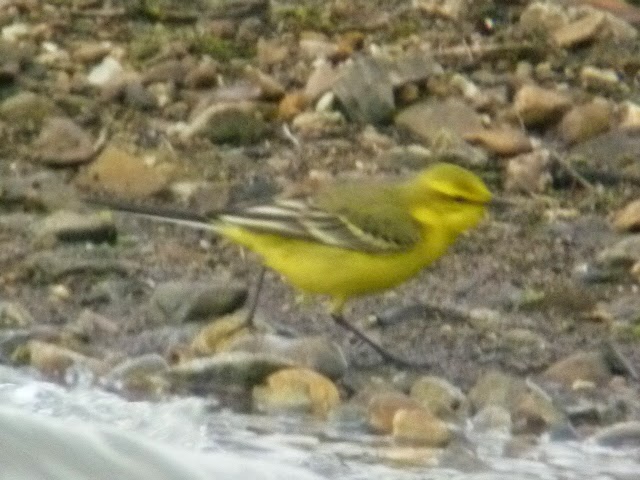
This time last year I went up to Carsington Water to see some passage Yellow Wagtails. I've been checking Birdguides all week, and spotted a few reports coming through, so I drove across tonight and managed to locate 3 very bright individuals on the Water Sports Island. Here's a couple of photos.


Yellow Wagtail
 
Also seen on this island were a Common Sandpiper,  a Redshank and an Oystercatcher, whilst flying around were dozens of Swallows, and a couple each of Sand and House Martins.
 
Year List update:
140 – Yellow Wagtail
141 – Common Sandpiper

Friday, 25 April 2014

Year List update

I've had a chance to "tick" a few birds over the last couple of days, so I thought I'd update the old "Year List" with the new additions.

The first two species; Stonechat and Pied Flycatcher, were both seen last night at the National Trust's Padley Gorge. The Stonechats, a pair, were seen on the moor side at the top of the gorge, whilst the Pied Flycatcher, a male, was heard singing in the woods and seen visiting one of the nest boxes.

When I got home, I looked at the sightings page of the Sheffield Bird Study Group, and saw that a Grasshopper Warbler had been heard "reeling" at the pond on the nearby Longshaw Estate, so I popped across this morning to pick it up. I arrived at 6.30am, and heard it straight away. Afterwards I went down to Linacre to check the nest boxes, and saw my first House Martin of the year.

Year List update:
136 – Stonechat
137 – Pied Flycatcher
138 – Grasshopper Warbler
139 – House Martin

Wednesday, 23 April 2014

Norfolk Highlights

Just back from a couple of days in Norfolk, where I visited a couple of good reserves and added 17 species to the "Year List".

First stop was the Norfolk Wildlife Trust's Weeting Heath reserve. This heathland reserve is the place to see Stone Curlews, and we were lucky to see a pair from one of the hides.

Stone Curlew

After seeing the curlews, we drove across to RSPB Titchwell on the north Norfolk coast and spent 2 hours walking around, where we added another 16 new species for the year. Highlights here were a pair of Bearded Tits, breeding  plumaged Spotted Redshank and Grey Plover and a booming Bittern.

Grey Plover

Year List update:

119 – Stone Curlew
120 – Brent Goose (Dark-bellied)
121 – Red-crested Pochard
122 – Bearded Tit
123 – Spotted Redshank
124 – Greenshank
125 – Common Scoter
126 – Common Tern
127 – Bittern (booming)
128 – Little Egret
129 – Sand Martin
130 – Little Ringed Plover
131 – Grey Plover
132 – Knot
133 – Bar-tailed Godwit
134 – Sedge Warbler
135 – Cetti’s Warbler

Tuesday, 15 April 2014

Linacre Birds and Nestboxes- an update

This morning I went down to Linacre to have a first check of the nestboxes, following reports from around the country and from Stewart at The Avenue, that eggs had been laid in the boxes there.

I walked around all the "tit boxes" (87 in total), and found evidence of nests being built in 30, which is quite good for a first visit. Most of the nests were just beginning, with a few being lined, but without any eggs. Just 1 box contained 2 eggs, which were the first of the season. They were uncovered and cold, which means the adult was still laying her clutch. A pair of Blue Tits were seen nearby, so I guess they could be Blue Tit eggs. I'll wait to confirm that on further visits. These eggs are a full month earlier than last year(!), but then we had a very late spring then. Looking back at my notes, the first eggs in 2012 and 2011 were all recorded on or around the 14th April, so it seems that we're spot on this year. I'll check again in about a week, when hopefully there'll be a few more active nests and some more eggs.

First eggs of 2014
 
Other evidence of breeding activity around the site today included the usual resident woodland birds in good voice (tits, Chaffinch, Wren etc...) several singing Chiffchaffs (4), Blackcaps (3) and the first Willow Warblers of the year (3). The Coot nest found last week was still being incubated, as were the 2 Great-crested Grebe nests, and a new Moorhen nest was also found (first of the year). Unfortunately none of these nests are accessible to monitor for the BTO's Nest Record Scheme, unlike the boxes that will all be followed and reported as the season progresses. Last, but not least, was a brood of 8 Mallard ducklings seen on the middle reservoir. They were very young, most likely just a day or so old. Again, this is very early, as the first brood last year wasn't seen until 6th June!
 
After Linacre I popped across to Barbrook Plantation to see if I could catch up with a Redstart that had been recorded, a few days ago. I dropped lucky and got good views after just a few minutes.
 
Year List update:
116 - Swallow
117 - Willow Warbler

118 - Redstart

Whilst checking the boxes I also noted 5 species of bee, 2 species of hoverfly, 6  species of butterfly and a new fly species! Details to come.

Saturday, 5 April 2014

Returning Chiffchaff, Blackcap, Cowslips and Tawny Owl success

This morning's ringing session at Linacre was excellent with 3 Chiffchaffs (2 new and a retrap from last year),1 Blackcap (the first Linacre record for 2014 and a "Year Tick" for me), 2 Jays (1 new and 1 retrap), and, best of all, a sitting Tawny Owl in one of the "owl boxes"!

The Chiffchaffs were the first to be caught and ringed at Linacre this year. The first bird, ring number ECA340, was ringed by David from the Sorby Breck Ringing Group, at Linacre, on 20th April last year, as a 5, which means it was born in 2012. The other 2 Chiffchaffs were new, so hopefully, we'll retrap them later in the year and perhaps in future years too.

The Blackcap, a 5 male (born last year), was also caught early on this morning. The picture below shows this bird and the remaining juvenile brown feathers on the "blackcap"can just be seen. Whenever we catch migrants, we like to check their fat levels. The scale goes from 1- 8, and today's bird was assessed as a 5, which means it was fat! This stored fat, obviously, helps the bird when migrating, so chances are this Blackcap was still en route.

Blackcap
As stated above, this is our first record at Linacre, and much earlier than last year (21st April).
 
The other big bird news of the morning was our first record of Tawny Owls using the "owl boxes" that were put up in October 2011 (see here). They have been used by Mandarins in previous years, and hopefully the others will be this year as well, but we were very pleased to find this female sitting tight this morning. An empty eggshell was found on the ground below the nest box, so hopefully there'll be at least 1 chick this year. A brilliant record for the BTO's Nest Record Scheme
 

Tawny Owl
After all the excitement we also caught and ringed/retrapped a good number of commoner birds (Blue, Great, Coal Tit, Chaffinch and Robin). My numbers were (new/retrap):
 
Coal Tit 1/2, Great Tit 2/2, Blue Tit 0/2 and Robin 0/2.
 
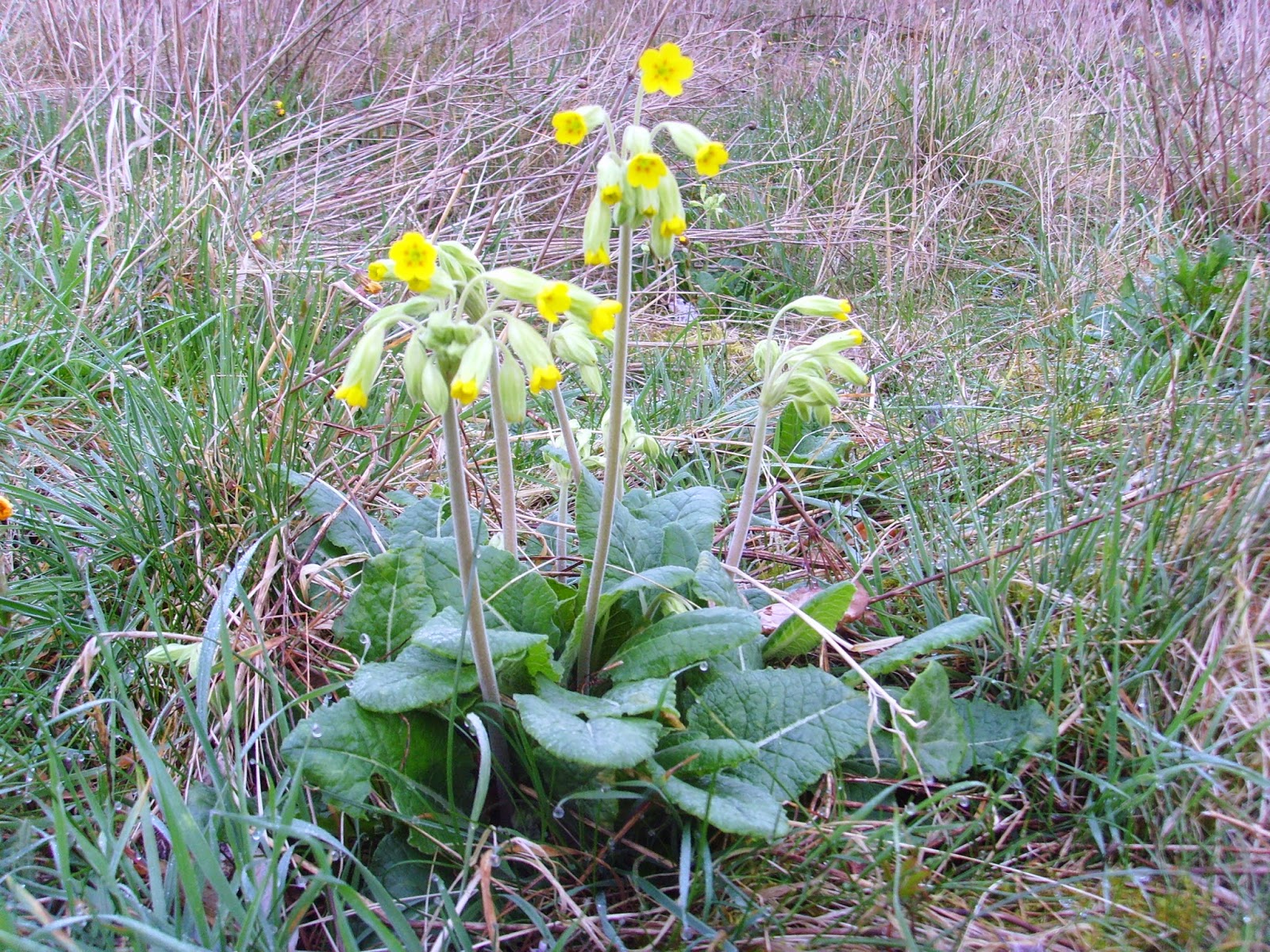
As well as the excellent birding we also spotted the first Cowslips of the year in the ringing area, along with dozens of Coltsfoot.
 
Cowslips
Several large queen Bumblebees were also flying about and feeding up on the Willow blossom. I think they were either White or Buff-tailed Bumblebees, but I couldn't get close enough to check.
 
Year List update:
115 - Blackcap

Sunday, 30 March 2014

Chiffchaff ringing

Following on from last week's blog about my first Chiffchaff sightings of the year, today I was out ringing with The Group, and I managed to ring my first Chiffchaff of 2014.


Chiffchaff
 
Our session this morning took place at the Derbyshire Wildlife Trust's Avenue Washlands site near Chesterfield. In total we caught and ringed 3 different Chiffchaffs (all aged as 5s; born last year). These were the only summer migrants of the day, but we did see and hear 2 Bramblings, and I also added a new species to the Year List; 2 Stock Doves that were investigating an owl box.
 
Year List update:
114 - Stock Dove
 
As well as the Chiffchaffs, I also managed to ring the following birds (new/retrap):
 
 Great-spotted Woodpecker 1/0, Great Tit 1/1, Greenfinch 0/1 and Reed Bunting 1/0.