Back at the start of the month I was down at Linacre with Sorby Breck Ringing Group for the first mist netting session since April. We had an early start, arriving on site at 4.45am, and caught a very respectable 74 birds of 13 species.
Birds ringed (new/retrap): Dunnock 1/0, Robin 7/0, Blackbird 1/0, Blackcap 9/0,
Chiffchaff 2/0, Goldcrest 1/0, Long-tailed Tit 2/0, Blue Tit 24/4, Great Tit
13/3, Nuthatch 1/0, Chaffinch 1/1, Goldfinch 3/0 and Bullfinch 1/0.
The best thing about the birds caught was that the majority were young birds, possibly indicating a good breeding season? We also had 3 of the re-trapped Blue Tits and one of the re-trapped Great Tits were young birds ringed by Sara from the Group in the nest boxes at Linacre a month earlier.
Three species, however, that were missing from the ringing totals were Willow Warbler, Garden Warbler and Whitethroat. All 3 species have been recorded singing in the area this year, so hopefully, we'll be able to confirm breeding next time we're down ringing.

Welcome to my blog all about my birdwatching, wild bird ringing activities and moth recording at Linacre Reservoirs, Derbyshire; in Great Britain and abroad.
Thursday, 19 July 2018


Monday, 18 June 2018
Linacre Insects - June 2018
This is my first post of 2018 about the insect life that can be found at Linacre. I had a visit on 1st June when it was a lovely sunny day. I spent some time walking around the ringing site and then walked up to the top reservoir.
During the visit I recorded 3 species of damselfly: Blue-tailed, Common Blue and Large Red. The first 2 species are common around all 3 reservoirs, whilst I only saw 2 Large Reds, 1 by the boardwalk around the top reservoir and 1 in the ringing area.

I also saw 2 species of Volucella hoverfly, Volucella pellucens and Volucella bombylans, along with 3 other species of hoverfly: Episyrphus balteatus a.k.a. Marmalade Hoverfly, Eristalis nemorum (a dronefly sp), Helophilus pendulus and Myathropa florea.


Butterflies seen were Common Blue (3 males in the ringing area), and a single Peacock (1 in the ringing area). Moths seen here were Cinnabar Moth (1) and Silver Y (1).
I was down again on Saturday (16th). The weather wasn't so good, so the number of insects was smaller. New species included Red and Black Froghopper, Straw Dot (moth), Yellow Shell (moth) and Black Snipefly.

During the visit I recorded 3 species of damselfly: Blue-tailed, Common Blue and Large Red. The first 2 species are common around all 3 reservoirs, whilst I only saw 2 Large Reds, 1 by the boardwalk around the top reservoir and 1 in the ringing area.

Large Red Damselfly

Volucella pellucens

Volucella bombylans
Butterflies seen were Common Blue (3 males in the ringing area), and a single Peacock (1 in the ringing area). Moths seen here were Cinnabar Moth (1) and Silver Y (1).
I was down again on Saturday (16th). The weather wasn't so good, so the number of insects was smaller. New species included Red and Black Froghopper, Straw Dot (moth), Yellow Shell (moth) and Black Snipefly.

Black Snipefly
Sunday, 17 June 2018
Linacre WeBS - 16th June 2018
Luke and I were down at Linacre yesterday to carry out June's WeBS walk. We had 2 hours on site and recorded the following: Mallard (70; 43 adults and 27 ducklings, 4 broods of 5, 7, 2 and 13), Mandarin Duck (30; 19 adults and 11 ducklings, 2 broods of 8 and 3), Tufted Duck (14 adults), Great-crested Grebe (3 adults), Grey Wagtail (2 adults), Grey Heron (1), Moorhen (7; 4 adults and 3 young chicks) and Coot (4; 3 adults and 1 juvenile).


Mandarin ducklings
Other birds seen around the site included: Swallow (2), House Martin (2), Swift (c.15- 20), Chaffinch (1 juvenile bird), Treecreeper (1) and Skylark (1 singing).
We also saw 2 Brown Hares in the fields as we drove down the main entrance.
Saturday, 2 June 2018
RSPB Old Moor
Luke and I spent 4 hours at RSPB Old Moor on Thursday. It was warm with sunny spells and we walked all around the hides and ponds.
The first area we visited was the so called "Bittern bus stop", an area overlooking the large reedbed. As the name suggests, this is a great area to spot the Bitterns (3 breeding pairs this year apparently), and we got very lucky, seeing our first bird within 10 minutes of arriving. We also recorded Common Tern here. On the walk here we also got excellent views of both male and female Dingy Skipper.


Year List update:
152 - Common Tern
153 - Bittern
The first area we visited was the so called "Bittern bus stop", an area overlooking the large reedbed. As the name suggests, this is a great area to spot the Bitterns (3 breeding pairs this year apparently), and we got very lucky, seeing our first bird within 10 minutes of arriving. We also recorded Common Tern here. On the walk here we also got excellent views of both male and female Dingy Skipper.


Dingy Skipper (female top, male below)
We next walked down to Wath Ings hide where we were very surprised to find 2 Pink-footed Geese in amongst the Greylags and Canada Geese.
Walking back to the Visitors' Centre we popped into Wader Scrape and Family Hide adding a very nice breeding plumaged Mediterranean Gull to the list.
The best part of the day, however, was still to come, as we managed to record some super new insects, namely Mother Shipton (a day-flying moth), Common Blue, Azure and Blue-tailed Damselflies, Orange Tip, Brimstone butterfly and 3 beautiful Four-spotted Chasers, including one very obliging individual.

Mother Shipton

Four-spotted Chaser
Year List update:
152 - Common Tern
153 - Bittern
Friday, 1 June 2018
North Wales' Insects
Following on from my last post about some of the insects Jayne and I saw at RSPB South Stack I thought I'd write another post to show some of the species we saw in the Happy Valley Park in Llandudno, and at the National Trust's Bodnant Garden.
First off, Llandudno. We found this small park on the base of the Great Orme and spent a couple of hours here over two days. The highlight for me was finding a new species, Brown Argus. This is quite a tricky species to identify, but, eventually, I managed to identify both males and females.



First off, Llandudno. We found this small park on the base of the Great Orme and spent a couple of hours here over two days. The highlight for me was finding a new species, Brown Argus. This is quite a tricky species to identify, but, eventually, I managed to identify both males and females.

Brown Argus (female)

Brown Argus (male)
We also had Common Blue Butterflies and a Silver Y moth here, along with another new species for me, Mullein Moth. We didn't see the moths, but we did manage to see the very colourful caterpillars.
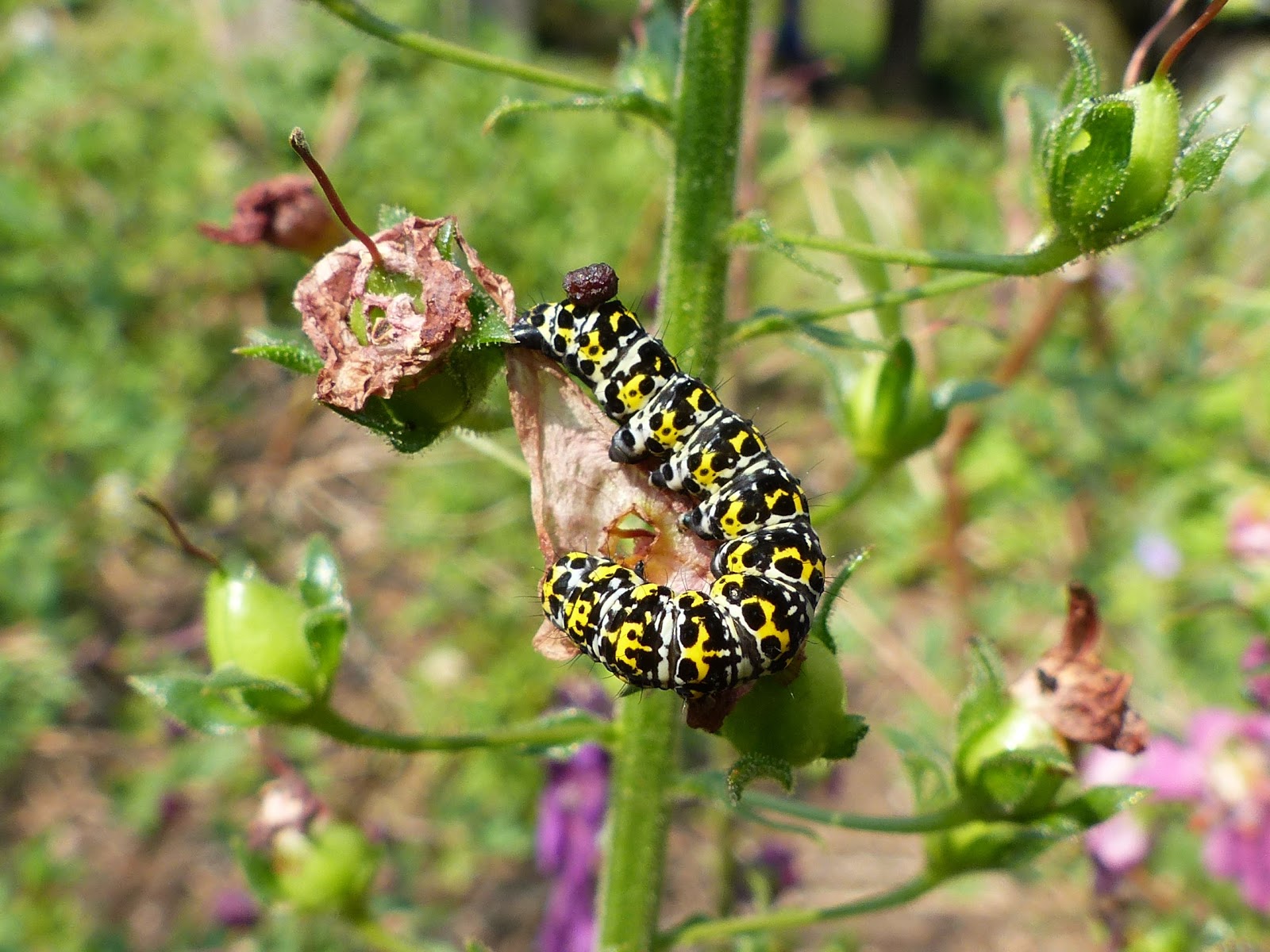
Mullein Moth
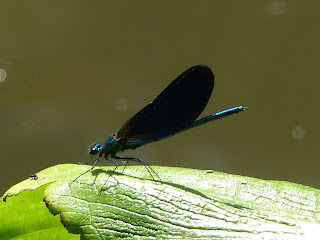
On Tuesday, Jayne and I spent a couple of hours at Bodnant Garden, just outside Llandudno. The weather was great, very warm and sunny, and we managed to spot some damselflies including Common Blue, Azure, Large Red and Beautiful Demoiselles, all of which were breeding.

Beautiful Demoiselle (male)

Beautiful Demoiselle (female)
Wednesday, 30 May 2018
North Wales Weekend
The title of this post isn't quite correct, as I didn't spend the weekend in Wales, but I did have a couple of days over the Bank Holiday there with Jayne. We were based in Llandudno and had a visit to RSPB South Stack to try and catch up with a few "year ticks".


Year List update:
149 - Puffin
150 - Chough
151 - Black Guillemot

South Stack lighthouse
The "year ticks" in question were Puffin (2 seen on the water), Chough (2 seen flying around the cliffs) and Black Guillemot (1 seen in the Old Harbour in Holyhead). Other species seen included Raven, Guillemot, Razorbill, Herring Gull, Jackdaw and Linnet.
Along with the birds we were also lucky enough to see several insects, including a "lifer". The first insect we saw was Wall Brown (a minimum of 4 individuals) feeding along the cliff tops. We also spotted a Painted Lady, a Drinker moth caterpillar, a Green Tiger Beetle and, best of all, a Small Pearl-bordered Fritillary (a new species!!).

Small Pearl-bordered Fritillary
149 - Puffin
150 - Chough
151 - Black Guillemot
Linacre Nestboxes - an update
Saturday morning (26th) saw the second of this year's nestbox ringing outings at Linacre with Sorby Breck Ringing Group. This time Sarah and I were able to ring the first tit chicks of the year, with a total of 12 broods of Blue Tit and 4 broods of Great Tits ringed.
The Pied Flycatcher and Nuthatch nests were still active (chicks recently hatched), as was the female Mandarin Duck, who was still incubating eggs. The Tawny Owl nestbox was empty, so hopefully the oldest chick has fledged successfully. All records will be forwarded to the BTO's Nest Record Scheme.

The Pied Flycatcher and Nuthatch nests were still active (chicks recently hatched), as was the female Mandarin Duck, who was still incubating eggs. The Tawny Owl nestbox was empty, so hopefully the oldest chick has fledged successfully. All records will be forwarded to the BTO's Nest Record Scheme.

Nuthatch chicks
Subscribe to:
Posts (Atom)