Sunday, 4 September 2016

Linacre - 4th September 2016

According to meteorologists Autumn begins on 1st September, so today's visit to Linacre was the first autumn visit of 2016. When I arrived at 6.45am it was still, 13 degrees, grey and overcast, but dry. Minutes later the wind had picked up, and a thick drizzle had started, that came down, on and off for the next two hours! Despite this, the birds were good, and numbers were pretty reasonable for the time of year.

Rainbow over the bottom reservoir

The first water bird I saw was, as usual, Mallard. In total, 90 were seen, which was  a very good start, and the highest count of 2016, so far. Mandarin Duck numbers of 39,were the highest since the start of July. 26 Tufted Ducks were also counted (down from a maximum of 44 in July and 40 in August), along with the immature Shag (on its usual perch on the bottom reservoir), 3 Grey Herons, 6 Grey Wagtails (all together on the overflow of the top reservoir), 5 Coots (all adults), 5 Moorhens (3 adults and 2 juveniles), 1 breeding plumaged Little Grebe on the middle reservoir and 4 Great-crested Grebes (1 adult and 1 juvenile on the middle reservoir, and 1 adult and 1 juvenile on the top reservoir).

Other birds of note were a singing Chiffchaff by the top reservoir, a Green Woodpecker heard "yaffling" by the top reservoir, 4 Swallows (3 over the top reservoir and 1 over the fields by the main entrance) and singing Goldcrests.

Friday, 2 September 2016

Frampton Marsh RSPB

Yesterday I spent 5 hours at RSPB Frampton Marsh with my nephew, Luke. Luke saw 5 new species of birds, and I managed to get 8 new "year ticks".

The first new bird for me was Little Stint. We saw at least 4 different birds, but there have been up to 40 birds present recently. 1 bird in particular came feeding very close in to the 360 hide, and we managed to get some nice photos.

Little Stint (juvenile)

The second bird that I really wanted to see was Curlew Sandpiper. Last week there were over 200 present, but this week the numbers had dropped off, and we managed to see about 6. They were quite distant, but 1 came in close to 360 hide along with a Little Stint.

Curlew Sandpiper and Little Stint

Other "year ticks" were: Green Sandpiper (1 seen), Ruff ( a minimum of 6 seen), Yellow Wagtail (1 flew over), Marsh Harrier (3 seen), Little Ringed Plover (1 seen) and Spoonbill (4 birds).

Spoonbills (1 adult and 3 juveniles?)

Spoonbills and Black-tailed Godwit

As well as these birds we also saw: Avocet, Sparrowhawk, Kestrel, Snipe, Greenshank, Common Sandpiper, Cormorant, Wheatear (1 juvenile), Teal, Little Egret (10+), and Ringed Plover (1 juvenile).

Ringed Plover (juvenile)

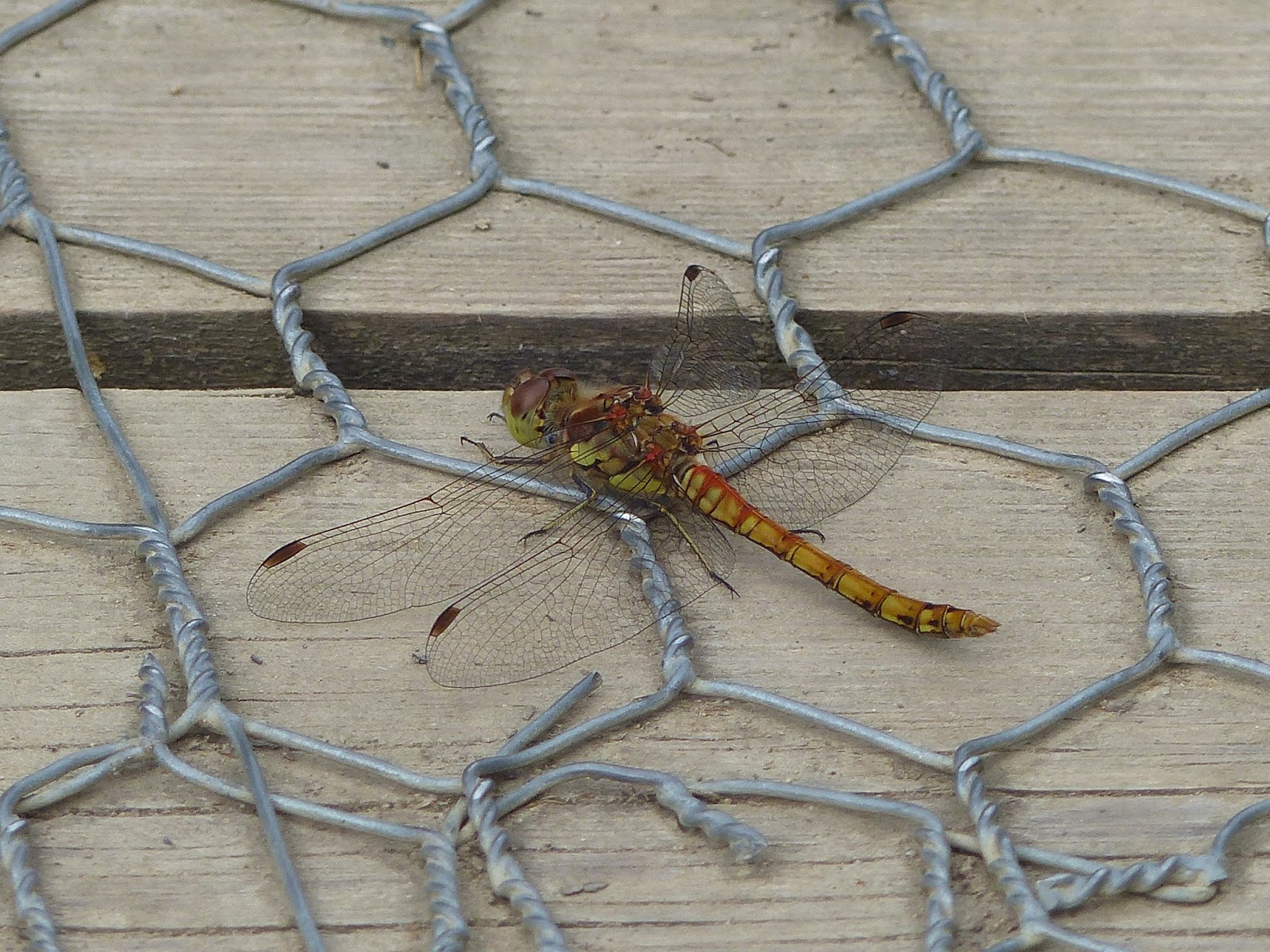
It was quite sunny, so we also managed to see a few insects; Common Darter, Migrant Hawker and Common Blue Butterfly.


Common Blue Butterfly

Year List update:
167 – Green Sandpiper
168 – Little Stint
169 – Curlew Sandpiper
170 – Ruff
171 – Spoonbill
172 – Yellow Wagtail
173 – Marsh Harrier
174 - Little Ringed Plover

Sunday, 28 August 2016

Liancre - Two new Insects

Last week whilst walking around Linacre in the sunshine, I took some photos of a couple of insects that I couldn't identify at the time. I put them on Twitter, and managed to get a positive i.d. for one species, and the family name for another.

The first species, was a type of Solitary Bee called Nomada goodeniana. This bee is a kleptoparasitic species that lays its eggs in the nest of other bees, mainly Andrena (Mining Bees) species. Interestingly, I've never recorded any Andrena bees at Linacre, so they're probably out there somewhere too! Its flight period is usually up to June, so this record is quite late. Anyway, here are a couple of pictures.


Nomada goodeniana

The second species was a type of Sawfly (Tenthredo spp). Unfortunately, we weren't able to identify it to species level. Here are a couple of photos if anyone knows the species.


Tenthredo spp

Along with these 2 species, I also had my first record of Helophilus pendulus on the 23rd August. This is a common hoverfly species at Linacre, but, for some reason, its the first one I've seen this year.

Helophilus pendulus

Tuesday, 23 August 2016

Big Moor Year Tick

Last Thursday I spent a few hours up on Big Moor. Whilst there I added Whinchat to the "year list", with one adult and at least 3 juveniles present.

Whinchat (juvenile)

Whilst up there, I also saw juvenile Stonechat, Meadow Pipits, Skylark and 5 Red Deer.

Red Deer

Insect wise, I saw Black Darter, Small Heath, Common Darter, Common Hawker (2) and Emerald Damselfly.

Black Darter

Common Darter (female/immature)

Small Heath on Harebell

Emerald Damselfly (male)

Year List update:
166 - Whinchat

Monday, 22 August 2016

Linacre WeBS - 21st August 2016

This Sunday was the set date for this month's WeBS count, so Luke and I went down for a couple of hours to see what was about. Numbers were average for this time of the year, and the highlight was the immature Shag that celebrated its 9 month anniversary today, being first recorded on 21st November 2015 (see details here). The Shag was on the bottom reservoir, fishing just by the wall. I managed to get a  quick photo, looking into the early morning sun, before it swam off.

Shag

Other waterbirds seen this month were: Mallard (60), Grey Heron (4; 1 on the bottom reservoir and 3 together in trees on the middle reservoir), Mandarin Duck (16), Coot (6; 4 adults and 2 well grown juveniles), Moorhen (3; 1 adult and 2 juveniles), Grey Wagtail (2), Great-crested Grebe (5; 1 adult and 1 juvenile on the middle reservoir and 1 adult and 2 juveniles on the top reservoir), Kingfisher (1 heard on the middle reservoir) and Tufted Duck (30; 28 adults and 2 "fluffy" ducklings).

Tufted Duck (duckling)

The woodland birds are pretty quiet at this time of the year, so we didn't hear too much else, although one bird, the Green Woodpecker, was a good record, being just the second record for 2016. Other birds seen or heard were Common Buzzard (1 heard), Nuthatch (heard), Wren (singing), Blue, Great and Long-tailed Tit, Robin (juvenile), Great-spotted Woodpecker (heard) and Willow Warbler (1 singing).

Thursday, 18 August 2016

Sunny Linacre

The weather this week has been super, with lots of sun and temperatures in the low 20s, so I thought it would be a good idea to have a few hours down at Linacre to see which insects were about. I've been down twice this week, and have managed to see 9 species of butterfly, 3 species of dragonfly, 2 species of damselfly, 4 species of bee and at least 9 species of hoverfly.

The butterflies seen were: Peacock (5; 3 on buddleia by the middle reservoir and 2 on buddleia in the ringing site), Red Admiral (2 on buddleia in the ringing site), Small Copper (2 battling males on Ragwort on the wall of the middle reservoir), Meadow Brown (5 all around the site), Gatekeeper (2 at the bottom of the top reservoir),  Comma (1), Large White (10 all around the site), Green-veined White (1 male) and Speckled Wood (7 around the site).

Red Admiral

Speckled Wood (underwing)

The 3 dragonfly species seen were Brown Hawker (at least 5 flying around the site, mainly on the top reservoir), Migrant Hawker (2, flying around the bottom of top reservoir dam wall) and Common Dater (1 male basking on the boardwalk by the top reservoir on the 18th- the first record of 2016).

Common Darter

The two damselfly species seen were Blue-tailed and Common Blue Damselfly.

Blue-tailed Damselfly

Common Blue Damselfly

The bees seen were: Tree, White-tailed, Red-tailed and Carder Bee (Common, I think).

Tree Bumblebee

Common Carder Bee

At the start of the post I mentioned I'd seen at least 9 species of hoverfly. I say at least, because I'm sure there were more there that I couldn't identify! Anyway, I'm going to write another post about hoverflies, so here's a picture of one of my favourite species, Volucella inanis to be going on with.

Volucella inanis

As well as the insects, I also saw the immature Shag again (now into it's 9th month!!), 1 juvenile Cormorant, 14 Mandarin Ducks, 43 Mallards, 7 Great Crested Grebes ( 3 adults and 4 juveniles), 1 Grey Heron, 4 Grey Wagtails, 18 Tufted Ducks, 5 Coots ( 3adults and 2 juveniles), 5 Moorhens ( 3 adults and 2 juveniles), 12 Swallows, a group of c.50 House Martins and a young Common Toad, my first adult toad at Linacre.

Common Toad

Wednesday, 17 August 2016

Smashing Sunday

Four years ago, during the London Olympics, the British athletes celebrated what was called Super Saturday, when lots of medals were won. At the time, I "borrowed" the title for a blog post about a really good ringing session I took part in with Sorby Breck Ringing Group (see post here). Well, four years down the line, the Rio Olympics are taking place and the British athletes have had a "Super Sunday", with lots of medals won again, and guess what? I've "borrowed" the slightly amended title to describe a "smashing" ringing session I took part in with 2 other ringers on Sunday at Linacre Reservoirs.

In total, we caught 64 birds of 15 species, which, in itself is great, but what made it even more amazing was the number of warblers in the total. The most numerous warbler was Willow Warbler, with 12 juveniles ringed!! To put this total into some kind of context, since we started ringing at Linacre in 2012, we've only ever caught 13 adults, and have never caught any juveniles before, so Sunday's total was outstanding.

Willow Warbler (1 of 12 juveniles)

In addition, we also caught several other warblers, Chiffchaff (4 juveniles and a retrap adult), Blackcap (7 juveniles and 1 adult) and Whitethroat, (2 juveniles). I'm particularly pleased with the Whitethroat record, as I'd only heard and seen the male bird singing once this year, so proof of breeding was very welcome.

Whitethroat (1 of 2 ringed)

Along with the warblers, we also had a good morning with the Linacre "regulars" (new/re-traps): Blackbird 1/0, Robin 3/0, Wren 1/0, Song Thrush 1/0, Coal Tit 2/0, Dunnock 1/0, Blue Tit 12/0, Great Tit 8/0, Goldfinch 1/0, Bullfinch 4/0 and Goldcrest 3/0. Phew!