Tuesday, 28 June 2016

RSPB Old Moor- 26th June 2016

It was quite warm and sunny on Sunday afternoon, so Jayne and I spent a few hours at RSPB Old Moor. We walked around the wildlife ponds and the hides, enjoying the nice weather, the damselflies and dragonflies and even managed to spot a "year tick".

Wildlife ponds

We started our walk on the wildlife ponds spotting dozens of blue damselflies. Looking at the photographs, these turned out to be Azure Damselflies.

Azure pair "in tandem"

Azure Damselfly (male)

We also saw a couple of Four-spotted Chasers and a male Banded Demoiselle. Butterflies were far and few between, with just 1 Ringlet, a Small Skipper and a female Common Blue seen.

After the insects, we also spent some time looking around the hides. Black-headed Gull chicks were everywhere, with many now fledged.

Black-headed Gull chicks

Whilst looking through the hundreds, possibly thousands of Black-headed Gulls, we were lucky enough to spot the single adult Mediterranean Gull that has spent the summer here. Can you spot the bird in this photo?
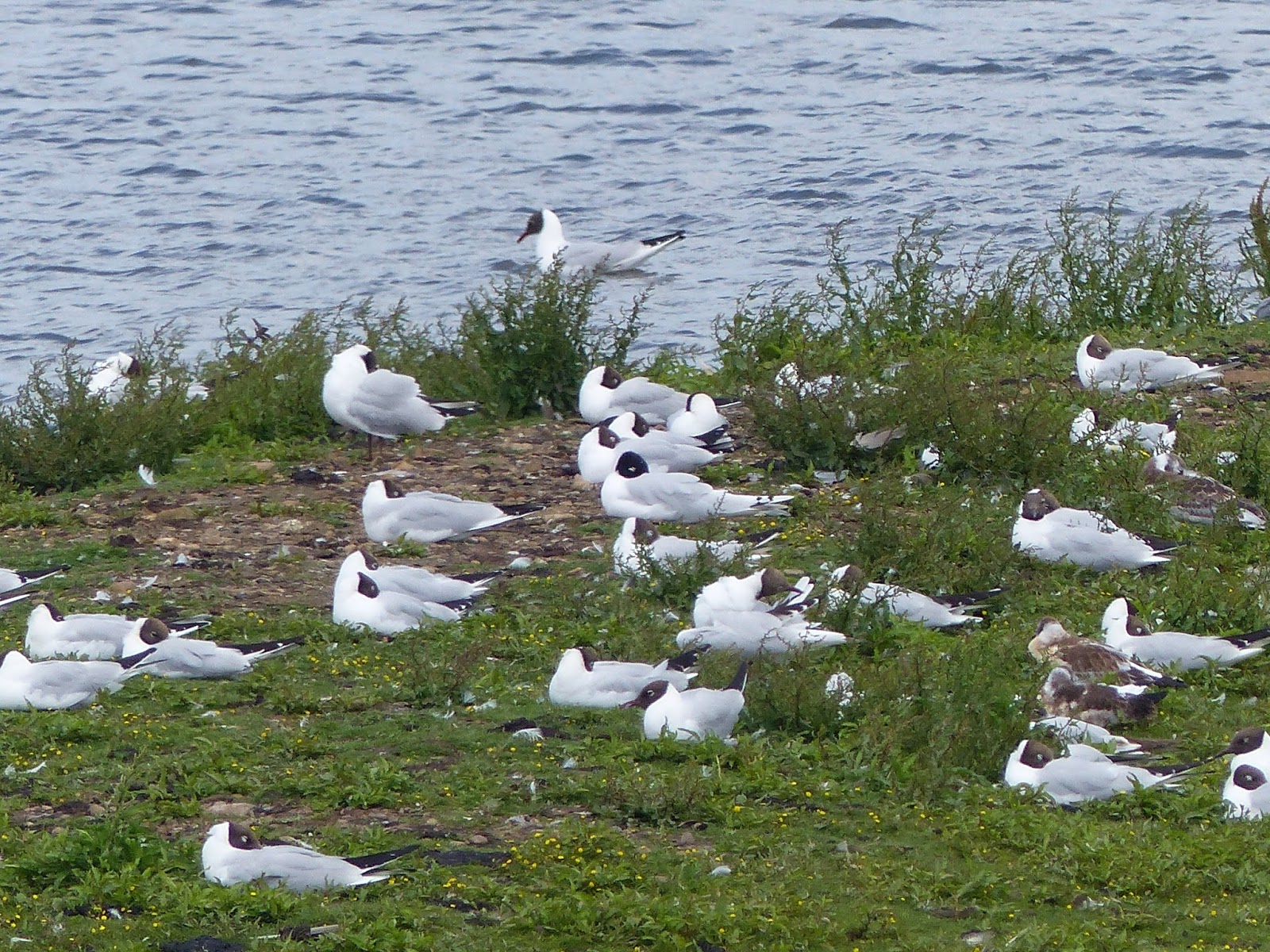
Black-headed and Mediterranean Gull

Here's a cropped picture of the bird when it had moved a few minutes later.

Mediterranean Gull

We also spotted, amongst others, Gadwall, a single adult Avocet and 4 Shelduck chicks.

Year List update:
154 - Mediterranean Gull

Monday, 27 June 2016

Linacre Orchids

Every year the field by the top reservoir at Linacre erupts into flower with a wide variety of different plants, most of which, I'm ashamed to admit, I can't identify. While I was there on Saturday I noticed, among others, a huge number of orchids, many more than I've ever spotted before. Hopefully, this photo will give some idea of the numbers involved.

Orchids!

I got a few photos of individual spikes, and, according to one of the people I follow on Twitter, they are Common spotted Orchids.


Common spotted Orchid

Another plant that was also in bloom this weekend was the Foxglove. This is a very common plant, but one that, surprisingly, hasn't been included in this blog before! Here's a picture of one from Saturday, again, from the top reservoir.

Foxglove
Whilst looking at the flowers, Luke and I also noticed a number of wasps chewing the wood off the boardwalk! Luke managed to get a few close ups, including this lovely, face-on shot (thanks for the copy Luke). I looked ont t'internet, and think it's a Common Wasp, due to the anchor shaped mark on its face (see here).

Common Wasp

This second photo, of a different individual, also shows the line of wood that the wasp has chewed off.

Common Wasp

Sunday, 26 June 2016

Nightjars and Woodcock

Every year, at the end of June, I lead a walk for the Chesterfield RSPB Group around Clumber Park, to see Woodcock and Nightjar. We were there on Friday, and managed to record both species, and another "year tick", Spotted Flycatcher.

We started the walk at 7pm, and spent an hour or so walking around by the lake, where we had sightings of Wren, Blackbird, Swallow, Swift, House Martin, Pied Wagtail, Jackdaw, Blackcap, Chiffchaff, Song Thrush, Woodpigeon and the first of 2 Spotted Flycatchers. Down on the water, we recorded Mute Swan, Mallard, Gadwall, Coot (2 nests), Tufted Duck and Canada and Greylag Goose, including this leucistic individual.

Greylag Goose

At about 8.30pm, we moved across to the south side of the lake for a short walk, and added Kestrel, Willow Warbler and Yellowhammer to the group's list, before moving again, to the area where we knew we'd see the star birds! Woodcock put on a good show as soon as we got in place, with about half a dozen birds seen and heard flying around. The Nightjars, however, made us wait a little longer, however, with first "churring" heard at about 10.15pm. Unfortunately, for the first time on our trips, we didn't manage to see the Nightjars, most likely as the area we use is now becoming a little over grown.

Year list update:
151 – Spotted Flycatcher
152 – Woodcock
153 - Nightjar

Saturday, 25 June 2016

Linacre June WeBS - ducklings everywhere!

I spent 2 hours at Linacre this morning with Luke walking around all three reservoirs. Whilst there, we saw 6 species of water birds with young, some for the first time this year. We also spotted a couple of Brown Hares, the first Meadow Brown butterfly of the year, and had a singing Yellowhammer on the hedge on the main drive (the first Linacre record since 2013).

Meadow Brown

Brown Hares

The water birds with young were: Mallard (73 birds; 43 adults and four broods of 6, 14, 5 and 10), Mandarin Duck (16 birds; 6 adults and 3 broods of 1,6 and 3), Moorhen (3 adults and 1 large, well-grown chick), Tufted Duck (14 adults and 1 brood of  9- first record of 2016), Coot (7 adults, 1 nest and 1 brood of 5) and Great-crested Grebe (2 pairs, both with young, minimum of 3 chicks seen).
Mallard

Tufted Duck

Mandarin ducklings

Great-crested Grebe and chick

Other birds seen were: Grey Heron (2), Swallow (1),Wren (singing), Chiffchaff (2 singing), Grey Wagtail (2) and the juvenile/2nd year Shag.

We checked the Pied Flycatcher nest, and were very pleased to find it empty and undisturbed, suggesting a successful fledging of the 4 chicks.

Wednesday, 22 June 2016

Starling Update

I haven't blogged about the Starling nest on my house for a couple of weeks now, so I thought it was about time for an update.

My last post was on 8th June when the chicks had just hatched. I've enjoyed listening to the chicks being fed every day and  checked the nest this evening. This is what I found.... 3 chicks.

Starling chicks

As you can see, the chicks were looking very fit and healthy, and have grown a lot since the start of June. I ringed the birds, and updated the details on the BTO's Nestbox Challenge website. Hopefully I'll see them in the garden soon.

Monday, 20 June 2016

Linacre Ringing, a new damselfly and a Year Ticks

Yesterday saw the first mist netting session at Linacre since April with 3 members, including me, from Sorby Breck Ringing Group. To say it was quiet would be an understatement, with just 10 birds of 5 species ringed, but at least this consisted of 3 species of warbler, including a "year tick" .

The first bird out of the nets was the "year tick" - a Garden Warbler! Not only was this my first record of this species this year, but it was also a juvenile bird, proving breeding at Linacre. The next couple of birds were Chaffinch (re-trapped adult) and Nuthatch (new, juvenile bird), and then, about half an hour later, we caught a couple of Blackcaps (both adults, 1 new and 1 a re-trap) and a new juvenile Chiffchaff. The last four birds of the morning were a Blue Tit (new juvenile), Chaffinch (new juvenile), and 2 more Blackcaps ( new, adult birds).

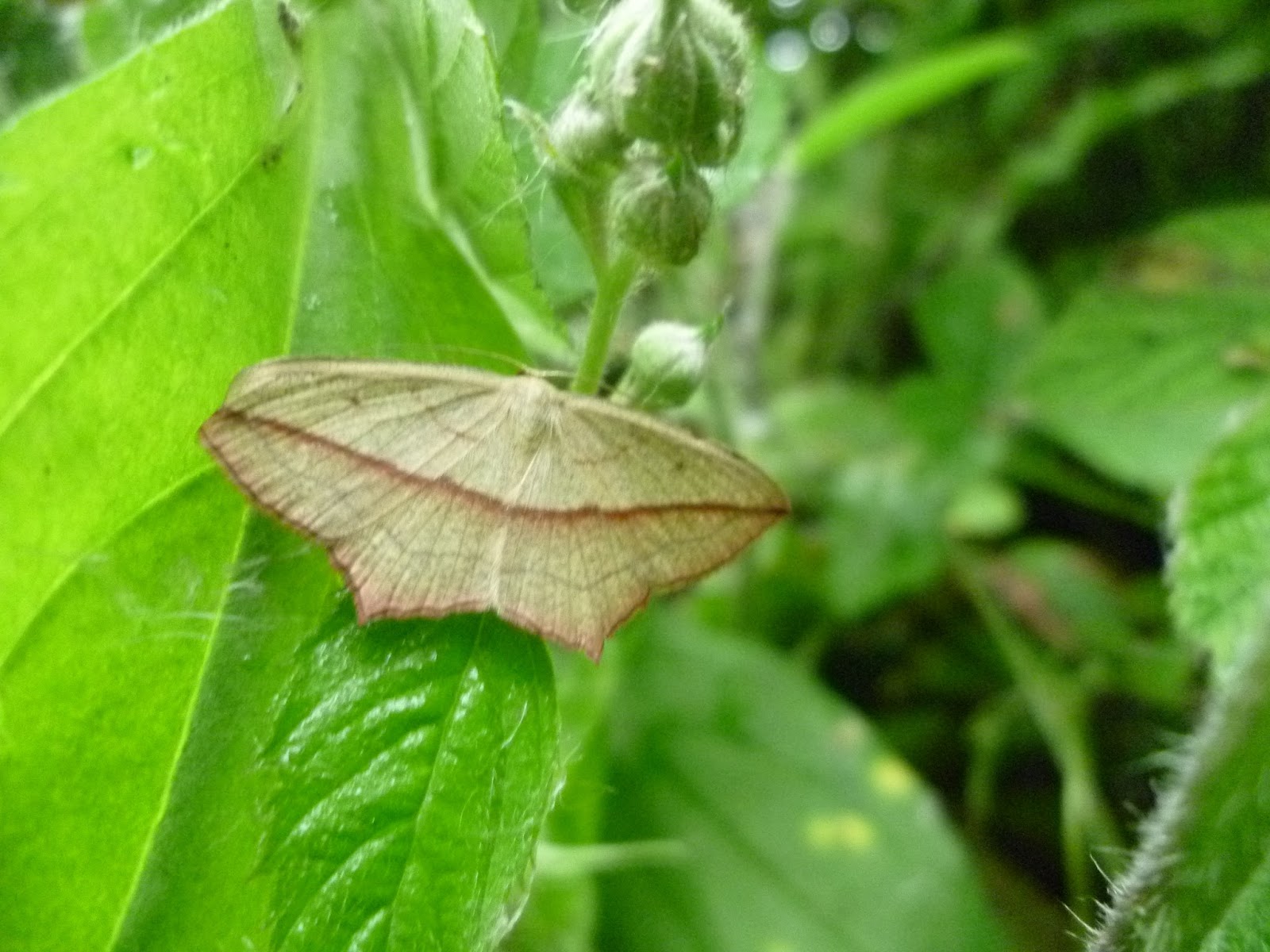
After the ringing, we spent some time clearing some of the vegetation from the net rides, and managed to record a few insects, including  Red-tailed, White-tailed and Tree Bumblebees, a Small Skipper, a Bloodvein moth and a Large Red Damselfly, my first record of this species at Linacre. The damselfly, a female, was found resting on the Yellow Flag Irises in a very small pond on the ringing site.

Bloodvein

Large Red Damselfly

Other birds seen around the ringing site included a singing male Whitethroat (first Linacre record of 2016), 3 Swifts, 2 Swallows, and a  Mistle Thrush mobbing a hunting Kestrel.

Monday, 13 June 2016

Linacre nestboxes checked

Yesterday morning I was down at Linacre with Ray from the Sorby Breck Ringing Group to check the nestboxes and ring the last few broods of chicks.

We started off checking the box that contained a Mandarin Duck nest with 10 eggs last week. Unfortunately, as we approached the nestbox, a Grey Squirrel jumped out! We checked the box and, as was expected, it was devoid of eggs or chicks. Obviously we don't know exactly what happened here, but there are, in my mind, 2 possible scenarios. Either, the Mandarin eggs hatched and the young left the nest with the female bird, after which the squirrel moved in (my preferred option), or the squirrel found the nest of eggs, chased off the female Mandarin and ate the eggs. The only silver lining is that a female bird with 10 ducklings was reported on the reservoirs ,so lets hope it was the female from this nest.

After the Mandarin box, we moved on to check the remaining 7 tit boxes. Out of the 7, 6 contained chicks that were ready to ring, including 4 Pied Flycatchers (the first successful breeding at Linacre since 2010). 1 box had been destroyed by what looked like a squirrel.

Now that all the nestboxes have been ringed I can give the totals for the year: Blue Tit (17 broods and 108 chicks), Great Tit (4 broods and  26 chicks), Pied Flycatcher (1 brood and 4 chicks), Mandarin Ducks (2 nests of 13 and 10 eggs).

Both Blue and Great Tit numbers are down on the previous 2 years. The Great Tit total of just 4 broods is very disappointing compared to 11 broods and 76 young in 2014 and 13 broods and 72 young in 2015. Likewise, Blue Tits numbers were lower than in the previous two years (19 broods and 160 chicks in 2014 and 16 broods and 132 chicks in 2015). Hopefully, 2017 will see a return to previous year's results, especially for Great Tits.

All the results will be sent of to the BTO's Nest record Scheme.