Showing posts with label Common Carder Bee. Show all posts

Wednesday, 7 April 2021

Linacre Lifer - Orange Underwing!!

 The weather was a very pleasant 15 degrees and sunny on Easter Sunday afternoon, so I decided to go down to Linacre for a couple of hours to see if there were any butterflies flying about.

I started off by walking down from the car park along the edge of the farmer's field where I spotted my first Linacre butterflies of the year: 2 Small Tortoiseshells and a Peacock. Whilst walking, a small day-flying moth literally dropped down onto the path in front of me. I grabbed a few photos, and realised that it was an Orange Underwing, a lifer and a new record for Linacre!! Here's a link to this new moth species.

Orange Underwing

Whilst on site I also managed to see many Dark-edged Bee Flies (c.10 - 15), along with  a Tawny Mining Bee (1 female), 1 Common Carder Bee, 1 Garden Bumblebee, Clarkson's Mining Bees and an Early Mining Bee.

Friday, 29 July 2016

Linacre Insects -28th July 2016

Yesterday, while I was down at Linacre looking at the birds. I also spent some time photographing some of the insect and plant life to be found at this site. All these records refer to species that I spotted on the banks of the middle and top reservoirs in a 2 hour period. This area is very good for insects, especially this year, because the grass there has been left uncut, which has allowed a good number of flowers and grasses to grow. I'm not an expert on flowers, but I recognised knapweeds, Betony, Cow Parsley, clovers, plantains, Harebells and Hawkbit, amongst the grasses.

Knapweeds

Betony

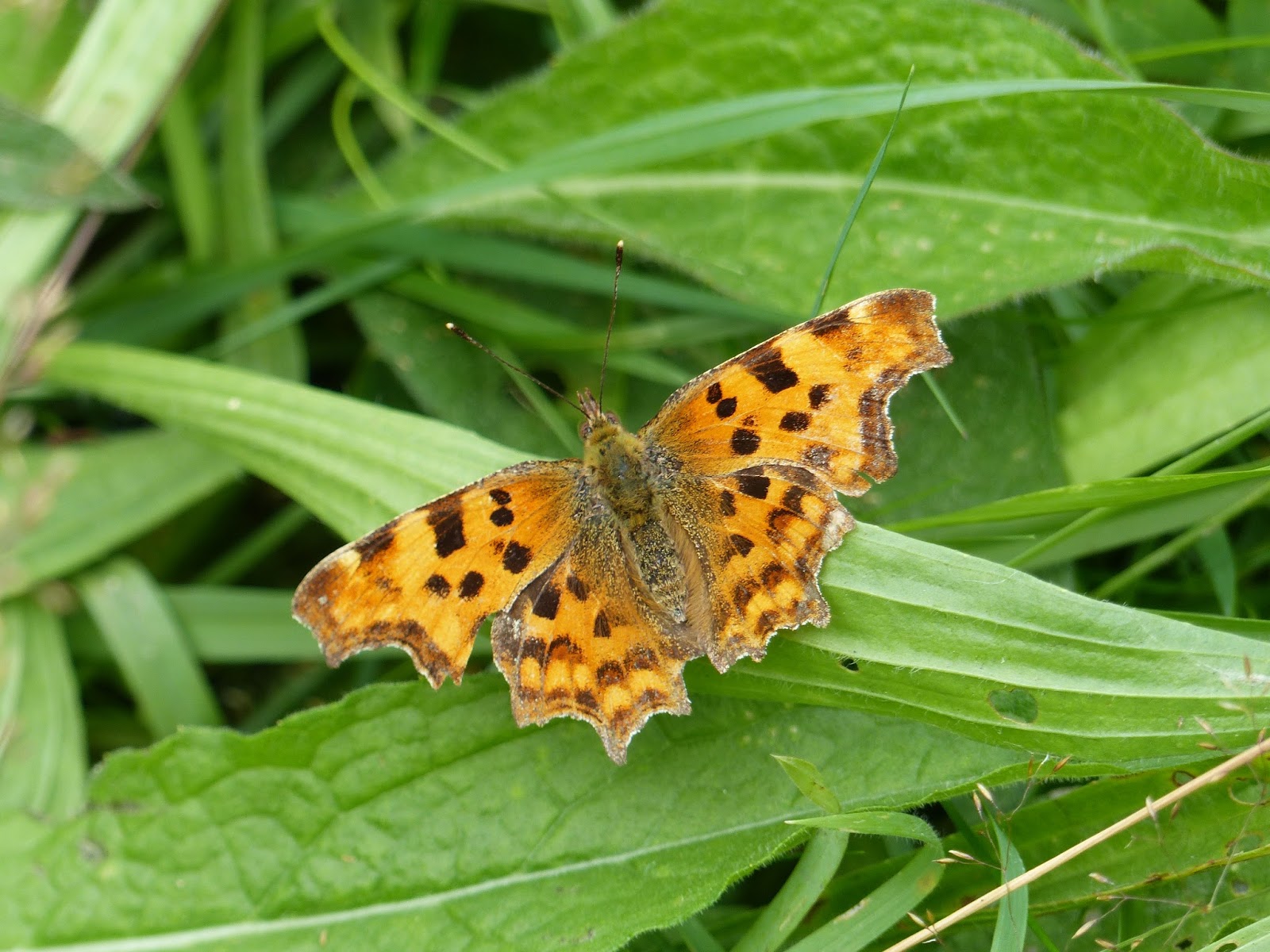
The most obvious insects on site are, of course, the butterflies. This year doesn't appear to be great for butterflies, but I still managed to spot the following species: Meadow Brown (10+), Large White (1), Comma (1) Green-veined White (1) and Small Tortoiseshell (1).

Meadow Brown on knapweed

Comma

Small Tortoiseshell

One species of damselfly; Common Blue Damselfly, and 1 species of dragonfly; Brown Hawker, were seen. The hawker was flying and feeding over the banks, while the damselflies, including young ones (tenerals), adults and pairs "in tandem" were all over!!

Common Blue Damselflies "in tandem"

The final two group of insects, the hoverflies and bumblebees, were also present in good numbers. I identified Red-tailed, White-tailed and Common Carder Bumblebees.

The hoverflies are a bit trickier(!), but I think I managed to identify five different species, none of which have English names. There were: Eristalsis pertinax, Eristalsis tenax, Eristalsis horticola (known collectively as Drone Flies), Myathropa florea and a Syrphus species, possibly Syrphus ribessi. Please let me know if you think otherwise.

Eristalsis pertinax

Eristalsis tenax

Eristalsis horticola

Myathropa florea

Syrphus ribesii

Hopefully, these photos will inspire you to stop and have a look at the many hoverfly species that can be found on a sunny day. If you would like a good field guide, have a look at this one here, it's very informative, with super photos and explanations about the different species.

Tuesday, 5 July 2016

Dronfield Nature Park - 3rd July 2016

After Sunday's visit to Lindrick Dale, I popped into the Dronfield Nature Park, a small grassland site with a  pond.

Pond at Dronfield Nature Park

Despite the warm weather, the pond was quite quiet, with just 3 damselflies seen. These were a pair of blue damselflies in tandem, and another male blue damselfly. Unfortunately, I couldn't get a good view to identify to species. The only other animal seen in the pond was a newt. Again, I wasn't able to identify it to species level.

Newt species

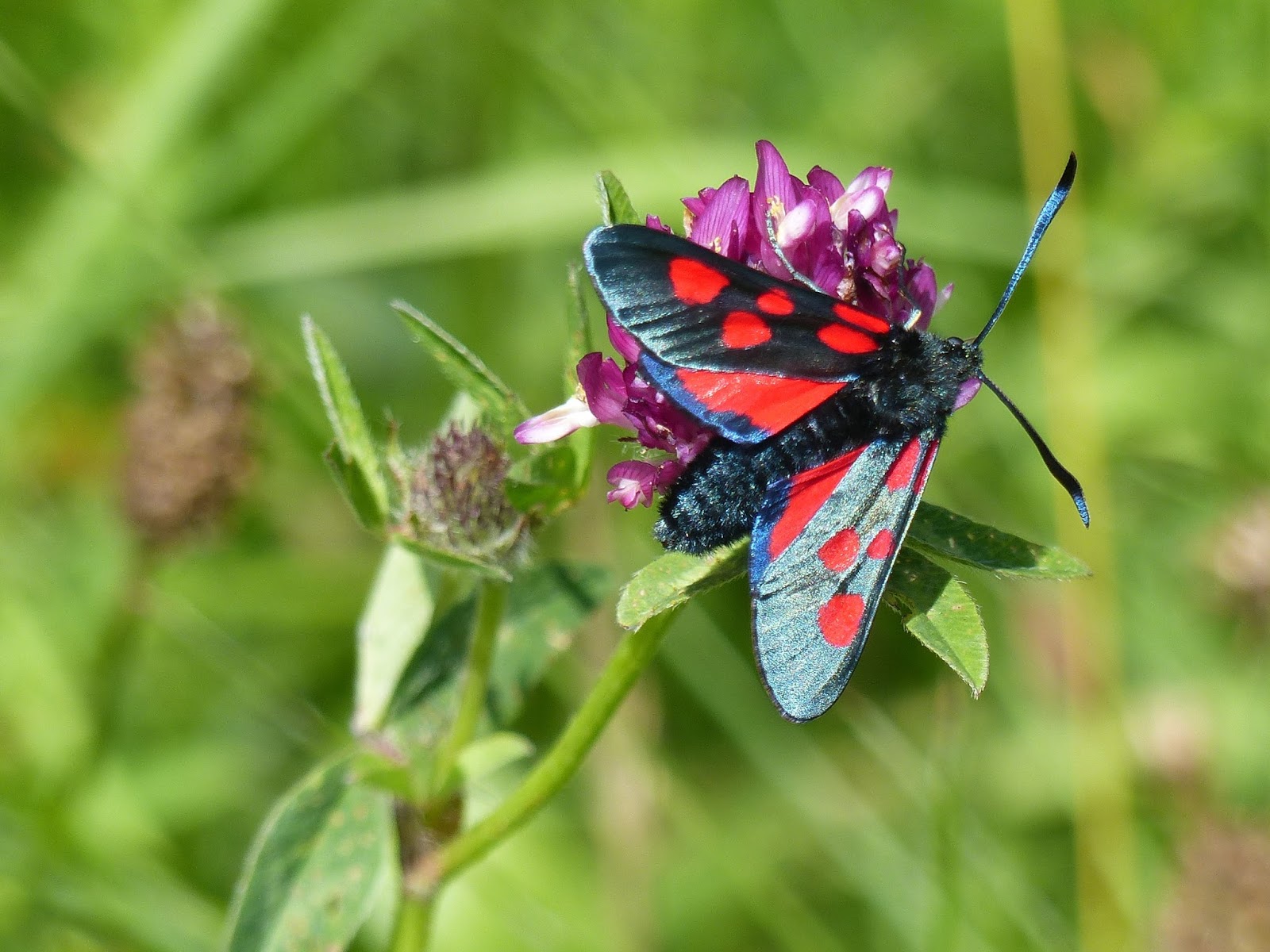
Other insects seen included Common Carder Bee, Holly Blue and 3 Narrow-bordered Five-spot Burnet moth.

Narrow-bordered Five-spot Burnet moth

Wednesday, 16 April 2014

Bees, Butterflies and a Bee-Fly

The weather yesterday was gorgeous, with temperatures of 13 degrees, blue skies and bright sunshine. As a result I decided to have a look at the insects at Linacre, and I'm very glad I did, with 5 species of bee, 6 species of butterfly, 2 species of Hoverfly and a new species of Bee Fly seen!

First up the bees. The species seen today were: White-tailed, Buff-tailed, Common Carder, Honey and Tree Bumblebee. All these, with the exception of the Tree Bumblebee, were the species that I've recorded before at Linacre. The Tree Bumblebee is a relatively new arrival in the UK, and is slowly spreading North. More details on the Bumblebee Conservation website here.

Tree Bumblebee
 
Next, the butterflies. In total I saw 6 species in just 1 spot, at the base of the top reservoir dam wall. Species seen were: Green-veined White (c.6), Comma (1), Peacock (minimum of 8), Small Tortoiseshell (2), Orange Tip (2 males) and a Brimstone (my first record for Linacre).
 
Green-veined White

Comma

Orange Tip

Brimstone

Whilst watching the butterflies, I also managed to spot a Bee Fly - a brand new species for me! Looking on the web, I'm pretty sure it was a Dark-edged Bee Fly (Bombylius major). Details here.

Dark-edged Bee Fly

Tuesday, 13 August 2013

Linacre Insects

Every summer I spend some time looking at the insect life at Linacre. Today I spent  three hours walking around the bottom and middle reservoirs and recorded some lovely things. Here are some photos:

White-tailed Bumblebee

Black and Yellow Longhorn Beetle

Common Carder Bee

Great Pied Hoverfly

Green-veined White

Small Copper

Other species seen, but not photographed were: Small White, Large White, Peacock and a Southern Hawker dragonfly that chased, caught and ate a Speckled Wood butterfly.

Saturday, 8 October 2011

Linacre - 2nd October 2011

Birdwatching in the afternoon is never the best idea, due to birds' relative inactivity and the desire by many other human beings and their dogs to get out and about to walk off their lunch! Added to this was the fact that today's temperature topped 24 degrees which meant even more people than normal were out. Despite all the negatives however, my hour long walk did manage to include a few nice sightings and a new record for one particular species. More on that later....

The woods were, as expected, pretty quiet, with just a few of the usual suspects seen and heard, namely Great-spotted Woodpecker, Nuthatch, Blue, Great and Long-tailed Tit.

Out on the water things were more interesting with 2 Cormorants present on the lower reservoir, 67 Mallard, 14 Mandarins, 2 Pied Wagtails, 2 Grey Wagtails,15 Tufted Duck, 6 Moorhen, 1 Little Grebe, 9 Coot and an amazing 13 Canada Geese (my highest ever count!!)

13 Canada Geese on the top reservoir

The warm weather meant that there were a few insects around including a "white butterfly" and this bee, which is some kind of carder bee.

Carder Bee

Friday, 3 June 2011

Linacre - 3rd June 2011 - Butterflies, Bees and Damselflies!!

When I first started visiting Linacre on a regular basis it was primarily to enjoy and record the bird life around the reservoirs. Very quickly, however, I realised that there was a lot more to this area than just the birds. At the this time of the year the birds around the site tend to be be pretty quiet and it is at these time that I turn my attention to the much smaller inhabitants, namely the invertebrates.

With the temperatures hitting an amazing 24 degrees Celsius for two consecutive days I thought today was the day to start this year's "bug hunt" and I was to be rewarded  with some lovely sightings and a new species for me and for Linacre.

The first species I want to show you is the new one for me and is called a Red-and-Black Froghopper.

Red-and Black Froghopper

Froghoppers or "spittle bugs" are species that lay their eggs on a grass stem. When the young hatch they blows bubbles out of their bottoms to create a froth which is also known as "cuckoo spit" and acts as a defence against predators. As I said before this is a new species for me and, as far as I know, for Linacre. I saw a total of 6 individuals around the top reservoir today.

There are lots of different bee and hoverfly species around Linacre, most of which I can't correctly identify(!), but here are a couple of pictures of some that I think I've identified correctly.

White-tailed Bumblebee

Common Carder Bee

Also seen today was a Mayfly, which I think is a Drake Mackerel ...

Mayfly "Drake Mackerel"

6 Small Copper buterflies and my first damselfly of the year, a teneral or newly emerged Common Blue Damselfly. As you can see from the photograph the damselfly isn't blue yet, which tells me it is newly emerged. The blue colour should develop over the next day or so.

Small Copper

Common Blue Damselfly

Other species of butterfly seen today included a single Speckled Wood, 2 Peacocks and 1 Small White. A butterfly larvae was found feeding on a nettle and is either a Peacock or a Small Tortoiseshell.

Butterfly larvae

All in all, a great start to the season, with hopefully lots more to tell you about as the summer progresses.