Showing posts with label Latticed Heath. Show all posts

Sunday, 28 June 2026

Linacre Ringing and a new Moth!

 This morning I was down at Linacre, with 3 other members of Sorby Breck Ringing Group, for our first mist netting session since 2nd May 2026. Although it was quite quiet, with just 10 birds of 5 species, ringed, it was great to be back, and also resulted in the first juveniles of the year, 3 retraps of birds ringed previously and a new moth species for the site!

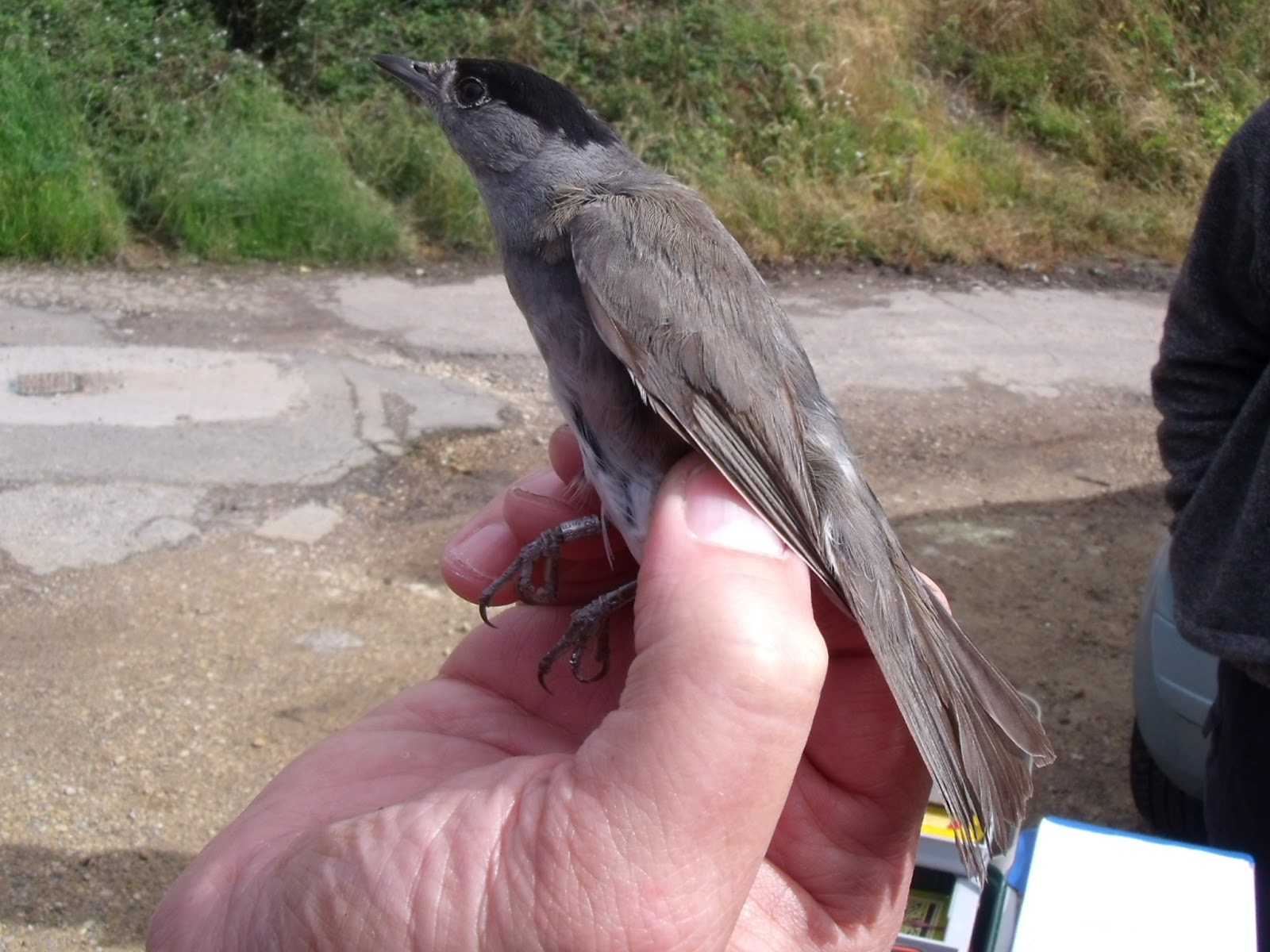
First up, the ringed birds (new/retrap): Blackcap 2/1 - the two new birds were this year's juveniles, whilst the retrap was a male bird ringed, at Linacre, as a juvenile, on 23rd August 2025, and presumably back, as a nesting bird this year (!) I wonder where it spent its first winter - Spain, Northern Africa?, Chiffchaff 2/0 - both new birds were juvenile birds, Blue Tit 1/2 - a new adult bird and two retraps, both ringed at Linacre, on 26th April and 13th July 2025 respectively, Wren 1/0 - a juvenile bird and Robin 1/0 - a 1 year old bird (age 5). Other birds seen/heard on site were Swift (5 overhead), Willow Warbler (1 singing), Garden Warbler (1 singing), Woodpigeon (dozens in the fields), Nuthatch (heard) and Lesser Black-backed Gull (heard).

Away from the birds, we also spotted a few insects: Common Blue Damselfly (1 male), Latticed Heath (1), Red Admiral (1), Cinnabar Moth (1), Painted Lady (1), Ringlet (1), Meadow Brown (1), Small White (1) and, best of all, a new moth species; Clouded Border! Details of this moth can be found on Butterfly Conservation's website  here and its status in Derbyshire here.

Clouded Border

Sunday, 22 June 2025

Linacre WeBS and Insects

 This month's WeBS count took place yesterday, and whilst there, a few butterflies, 1 species of moth and two damselfly species were also recorded.

Birds seen were: Mallard (38; 36 adults and 2 ducklings), Mandarin Duck (11 adults and 2 ducklings), Tufted Duck (25 adults), Coot (21 birds; 11 adults and 10 young), Moorhen (4 adults), Great-crested Grebe (7 adults and 8 young), Grey Heron (1 young bird), Grey Wagtail (2), Chiffchaff (4 singing), Blackcap (2 singing), Garden Warbler (1 singing), Willow Warbler (1 singing), Swallow (4 juveniles feeding over the top reservoir), Swift (1 - the first Linacre record of 2025!), Skylark (1 singing), Stock Dove (heard), Lesser Black-backed Gull (2 adults) and 3 Racing/Feral Pigeons (complete with rings), drinking in the bottom reservoir.

Racing Pigeon

The butterflies seen were: Ringlet (12 - the highest ever count?), Speckled Wood (3), Comma (2), Meadow Brown (7), a white butterfly, possibly Small White, and a Small Skipper (1st record since 2023).

Small Skipper

The two damselfly species seen were: Common Blue (c.6), and, the best by far, a female Banded Demoiselle - my first female at this site.

Banded Demoiselle (female)

Other species seen were 1 Myathropa florea (hoverfly), Harlequin Ladybirds, 1 Latticed Heath (moth) and a single Brown Hare.

Sunday, 30 June 2024

Linacre - 30th June 2024

 It hasn't been a great summer for butterflies so far, but a walk around Linacre this morning got me two new species for the year, along with a new moth and a record count of Common Sandpipers.

The two new butterflies were: Meadow Brown and Ringlet, with 2 of each species seen, on the dam banks and the ringing site respectively.

Meadow Brown

Ringlet

Two moth species were identified: Latticed Heath (2nd record of the year) and a Shaded Broad-bar (1st record of the year).

Shaded Broad-bar

Birdwise, it was a decent morning too, with some very good post breeding counts, a new (for the year) breeding record and, as already mentioned, a new high record of Common Sandpipers. Birds seen were: Mallard (114 adults and 4 broods of 1, 3, 5 and 1;124 birds in total), Mandarin Duck (62 adults and 3 broods of 5,1 and 1; 69 birds in total), Tufted Duck (26 adults), Grey Wagtail ( 7 birds; 2 adults and 5 juveniles), Grey Heron (1),  Moorhen (3 adults - no young!), Coot (1 adult and 3 juveniles), Common Sandpiper (3 flew from the wall on the middle reservoir - my first ever record of more than 1 bird - possible breeding?), Lesser Black-backed Gull (1), Kingfisher (1), Swift ( a nice record of 7 birds over the middle reservoir), Swallow (1 bird!), Common Buzzard (1), Skylark (1 singing), Chiffchaff ( 5 singing), Blackcap (6 singing), Garden Warbler (1 singing),  Great-crested Grebe ( 12 birds; 6 adults and 2 broods of 2 and 4) and Little Grebe (1 juvenile on the middle reservoir - first young of the year).

Little Grebe

Sunday, 16 June 2024

Linacre Insects - 3 new species!

 The summer of 2024 has, so far, been pretty awful weather wise, with very few periods of dry, warm weather. Today, the temperature managed to drag itself to 17 degrees (!), and there were a few sunny spells, so Jayne and I had a couple of hours at Linacre, and managed to find 3 new species!!!!

Although it was sunny, the number of insects seen was still pretty low, but it did, at least, have a few new records for the year, along with the new ones. Firstly, we spotted Common Blue Damselflies (c15), followed by 1 Speckled Wood, Swollen-thighed Beetles, Red and Black Froghopper, 3 Green-veined White, 1 Volucella pellucens (Great Pied Hoverfly), Eristalis sp, 1 Myathropa florea, 1 male Sericomyia silentis, 1 Mayfly sp, 3 Cinnabar Moths, 1 Latticed Heath and White-tailed and Common Carder Bumblebees.

Sericomyia silentis

The three new species that we saw today were: 1 Speckled Longhorn Beetle, an Agapeta hamana moth and a Orthotaenia undulana moth!

Speckled Longhorn Beetle

Agapeta hamana

Orthotaenia undulana

Saturday, 24 June 2023

Linacre - 24th June 2023

 This morning I had three hours walking around Linacre, checking the nestboxes, carrying out this month's WeBS count, and looking at the insects that were out and about in the 20 degree temperature. 

First up the nestboxes. I walked around and checked the last few remaining nests, and the great news is that they had all fledged successfully, including the three Pied Flycatchers- hurrah!! I'll write another blog post about the totals later in the year.

Next, the WeBS walk. Species (and numbers seen) were: Mallard (99; 83 adults and 16 ducklings), Tufted Duck (41 adults), Mandarin Duck (42; 32 adults and 10 ducklings), Coot (22; 12 adults and 10 juveniles), Moorhen (20; 11 adults and 9 juveniles), Great-crested Grebe (8; 5 adults and 3 juveniles), Little Grebe (2;1 heard on the middle reservoir and 1 seen on the top reservoir), Grey Heron (1), Grey Wagtail (1), Lesser Black-backed Gull (1 adult), and, best of all, a Common Sandpiper on the bottom reservoir - the first record of the year!). Other birds seen or heard were: Song Thrush (2 heard), Chiffchaff (3 heard), Blackcap (4 heard) and Garden Warbler (1 heard in the ringing site). 

Insects were the best I've had so far this year, with several first sightings. Meadow Brown (15 - an excellent count across the site, and the first Linacre record of the year), Ringlet (2 in the ringing site - first Linacre record of 2023), Speckled Wood (5), Red-tailed and Tree Bumblebees, Red and Black Froghopper, Common Blue and Azure Damselflies (the latter species, the first Linacre record of 2023), Swollen-thighed Flower Beetle, Volucella bombylans (white-tailed variety), Volucella pellucens (first 2023 record), Latticed Heath (2) and a Harlequin Ladybird larvae.

Volucella bombylans

Azure Damselfly

Black and Yellow Longhorn Beetle

Red and Black Froghopper

Sunday, 28 June 2020

Linacre WeBS - 28th June 2020

After a week of temperatures in the high 20s, this month's WeBS walk was a pretty chilly affair, with 12 degrees and a strong, cold wind! All in all it was pretty quiet, with very little to get excited about.

Totals were: Mallard (109, including just 1 obvious duckling), Tufted Duck (16 - all adults), Moorhen (6 adults, including 1 bird sitting on a nest, but no young), Coot (10; 7 adults and 3 well grown young), Mandarin (9 adults and 1 brood of 10 ducklings), Grey Wagtail (4; including 2 juveniles). As I said, nothing too exciting, and no grebes, cormorants or gulls!

Moorhen on nest

After walking around the reservoirs, I had an hour in the ringing site, looking for any insects. As you can imagine, given the cool weather, it was quite quiet again, but I did manage to spot my first Linacre Ringlet of the year, along with one male Common Blue Damselfly and 3 species of hoverfly (yet to be identified).

Ringlet

Monday, 6 June 2016

Derbyshire Damselflies and Moths

After the ringing session on Saturday I spent a short time at Cupola Pond and Wragg's Quarry on Beeley Moor with Jayne, looking for some dragonflies and damselflies.

The first species we saw when we arrived at Cupola Pond was Large Red Damselfly. There were at least a dozen individuals flying around the site, including 3 pairs ovipositing (egg laying).

Large Red Damselfly

We also saw 1 male Blue-tailed Damselfly and several Azure Damselflies, both male and female.

Azure Damselfly (female)

Azure Damselfly (male)

Whilst watching the damselflies, Jayne spotted a dragonfly exuvia on grass approximately 2m from the pond. This is the skin that a dragonfly nymph  sheds when it leaves the water to become an adult. I think it's a Four-spotted Chaser dragonfly. 

Four-spotted Chaser?

After visiting Cupola Pond, we drove about 2 miles to Wragg's Quarry, were we saw another 4 Large Red Damselflies along with single Common Heath  and Latticed Heath moths.

Common Heath

Latticed Heath

Monday, 8 July 2013

Linacre Highlights

No ringing this weekend due to family commitments, but I did manage a walk around Linacre on Sunday morning, which resulted in a new breeding record and a new species of moth for the site.

First up was the breeding record. Whilst walking around the site I noticed a pair of Grey Wagtails with food in their mouths. I thought they must be feeding some fledged young, but then noticed them going into a hole in the dam wall! A quick check resulted in this photo:

Grey Wagtails
 
Although juvenile wagtails have been recorded every year, this is the first time I've found a nest and actually recorded breeding on site.
 
Next up is the new moth species. I spent about an hour around the ringing site trying to catch up with some of the flowers and insects that can be found there. Amongst others I spotted a Latticed Heath, a first for the site as far as I'm aware.
 
Latticed Heath
 
Whilst walking around the site I also recorded the following birds: Mallard (25 adults and 6 broods of ducklings totalling 43), Cormorant (2 white-fronted juveniles), Kingfisher (1 bird seen flying east down the valley with a fish in its beak), Tufted Duck (14 adults and 1 brood of 4 ducklings), Common Sandpiper (1 on the bottom reservoir), Grey Heron (1 on the middle reservoir), Great-crested Grebe (3 adults and 5 juveniles), Little Grebe (2 adults and a nest), Bullfinch (male and female birds) and  Little Owl (1 unringed adult bird perched by the nest - the male bird?).

The only butterflies seen on this visit were Meadow Brown, with approximately 12 seen on the dam banks.

Sunday, 1 July 2012

A quiet session at the Avenue

This morning's session at The Avenue was the first mist netting that we've been able to carry out for a few weeks due to the poor weather. In all we spent 4 hours on site and managed to ring just 11 birds.

My first birds of July were a juvenile Great Tit and an adult male Blackcap. Other birds ringed were 2 Wrens, a Dunnock, 2 juvenile Blackbirds, a male Bullfinch and another juvenile Great Tit. The Blackcap was interesting as he had a large brood patch, which is normally only found in female birds. Apparently though other male "Sylvia" warblers also have brood patches.
Blackcap

Also seen and heard on site were: Grasshopper Warbler, Chiffchaff, Kestrel, Black-headed Gulls, but very little else!

A moth called a Latticed Heath was spotted in the grass around the net lanes.

Latticed Heath